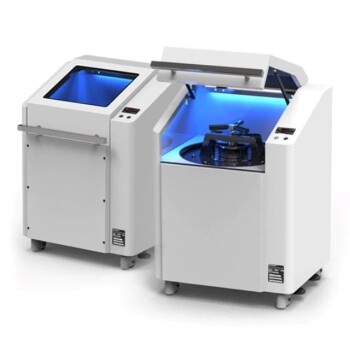
Laboratory grinding equipment and high-precision sieving systems serve as the critical physical preparation step in the treatment of anaerobic granular sludge. These tools mechanically reduce the sludge particle size—often utilizing standards such as 850 µm sieves—to significantly increase the specific surface area of the material.
Core Insight By mechanically optimizing particle size, these systems transform the sludge matrix to allow deep, uniform penetration of thermal or chemical agents. This physical restructuring is the prerequisite for successfully inactivating hydrogen-consuming bacteria and enriching the hydrogen-producing microbial community.
Mechanically Optimizing the Sludge Matrix
To understand the value of these systems, one must look beyond simple crushing. The goal is precise control over the physical architecture of the sludge.
Increasing Specific Surface Area
The primary function of grinding is to break down the dense structure of granular sludge.
By reducing the particle size, you drastically increase the specific surface area available for reaction. This exposes more of the sludge's internal structure to the surrounding environment.
Ensuring Particle Uniformity
Sieving systems are not merely for separation; they are for standardization.
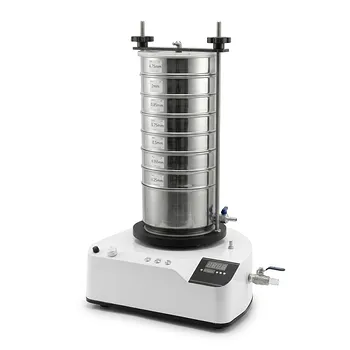
Using high-precision sieves (e.g., 850 µm) ensures that every particle falls within a specific, narrow size range. This uniformity is essential for predicting how the sludge will react in subsequent processing steps.
Enhancing Pretreatment Efficiency
The physical changes caused by grinding and sieving directly dictate the success of chemical and thermal treatments.
Deep Penetration of Agents
In raw, unground sludge, chemical or thermal agents often fail to reach the core of the granule.
Grinding opens up the sludge matrix, removing physical barriers. This allows pretreatment agents to penetrate deeply and evenly, rather than just reacting with the outer shell.
Eliminating Reaction Dead Zones
Without precise sieving, larger particles may remain in the mix.
These larger particles can create "dead zones" where the pretreatment is ineffective. Precision sieving eliminates this variable, ensuring that the entire batch of sludge receives the same level of treatment.
Controlling Microbial Communities
The ultimate objective of this physical processing is biological control.
Inactivation of H-Consuming Bacteria
To maximize hydrogen production, specific bacteria that consume hydrogen must be neutralized.
Because grinding ensures deep penetration of pretreatment agents, it guarantees the thorough inactivation of these hydrogen-consuming microorganisms. There are no safe havens inside the granule for them to survive.
Enrichment of Target Microorganisms
Once the competitors are removed, the environment becomes favorable for the desired microbes.
The prepared sludge matrix promotes the effective enrichment of the hydrogen-producing microbial community, leading to more efficient bio-hydrogen production systems.
Understanding the Trade-offs
While size reduction is beneficial, it requires a balance to avoid processing inefficiencies.
The Risk of Inconsistency
If sieving is neglected or performed with low-precision equipment, the particle size distribution will be wide.
This lack of uniformity leads to inconsistent reaction kinetics. Some particles may be over-treated (degrading valuable biomass), while larger particles remain under-treated (harboring unwanted bacteria).
Equipment Dependency
Achieving the specific 850 µm standard requires reliable, high-precision equipment.
Relying on generic crushing without verifying the output size via sieving creates a false sense of security regarding the pretreatment's effectiveness.
Making the Right Choice for Your Goal
When configuring your pretreatment protocol, align your physical processing parameters with your biological objectives.
- If your primary focus is Hydrogen Yield: Prioritize the 850 µm sieving standard to ensure total penetration of agents and complete inactivation of hydrogen-consuming competitors.
- If your primary focus is Process Consistency: Invest in high-precision sieving systems to strictly control particle distribution, eliminating variable reaction rates across the sludge batch.
Precision in physical preparation is the defining factor that enables biological efficiency.
Summary Table:
| Process Step | Equipment Used | Primary Function | Impact on Pretreatment |
|---|---|---|---|
| Grinding | Crushing & Milling Systems | Particle size reduction | Increases specific surface area for deeper agent penetration |
| Sieving | High-precision Sieving Systems | Standardization (e.g., 850 µm) | Ensures particle uniformity and eliminates reaction "dead zones" |
| Biological Control | Combined Systems | Microbial restructuring | Inactivates H-consuming bacteria and enriches H-producing communities |
Elevate Your Bio-Hydrogen Research with KINTEK Precision
Achieving consistent results in anaerobic sludge pretreatment requires more than just crushing—it demands absolute precision. KINTEK specializes in high-performance laboratory equipment designed to help researchers and industrial labs achieve the perfect material matrix.
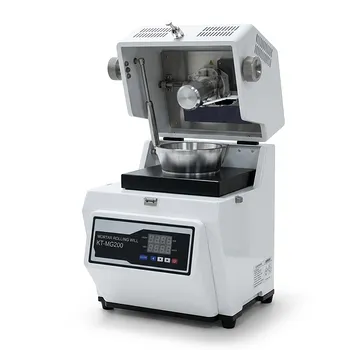
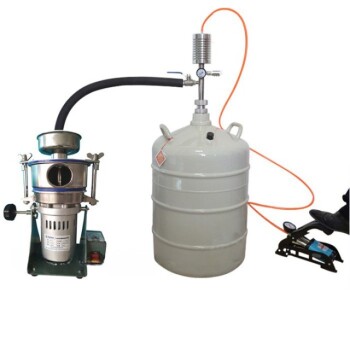
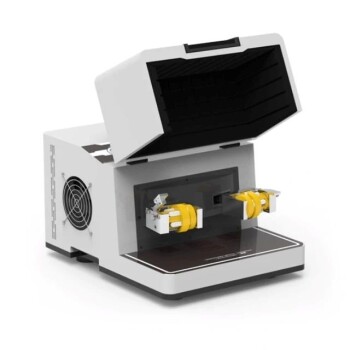
Our comprehensive range of crushing and milling systems and high-precision sieving equipment ensures your sludge samples meet the rigorous 850 µm standards necessary for total agent penetration and microbial enrichment. Beyond physical preparation, we provide the high-temperature furnaces, high-pressure reactors, and centrifuges needed to complete your workflow.
Ready to optimize your hydrogen yield and process consistency? Contact KINTEK today to discover how our expert solutions can streamline your laboratory operations!
References
- Vinayak Laxman Pachapur, Gerardo Buelna. Seed Pretreatment for Increased Hydrogen Production Using Mixed-Culture Systems with Advantages over Pure-Culture Systems. DOI: 10.3390/en12030530
This article is also based on technical information from Kintek Solution Knowledge Base .
Related Products
- Laboratory High Throughput Tissue Grinding Mill Grinder
- Laboratory Test Sieves and Sieving Machines
- Laboratory Grinding Mill Mortar Grinder for Sample Preparation
- Small Cryogenic Grinder Cryomill Cryogrinder with Liquid Nitrogen for Laboratory Use
- Laboratory Hybrid Tissue Grinding Mill
People Also Ask
- What is the purpose of using a laboratory grinder and standard sieves? Unlock Precise Rice Husk Pretreatment
- What is the purpose of using a laboratory grinder with specific mesh sieves for oat straw? Optimize Pellet Quality
- What is the role of laboratory-grade grinders and sieves in sample prep? Ensure High-Precision Corrosion Analysis
- How do laboratory grinders and standard sieving systems ensure the quality of feedstock for torrefaction?
- What does a grinder do in a laboratory? Achieve Homogeneous Sample Preparation for Accurate Analysis