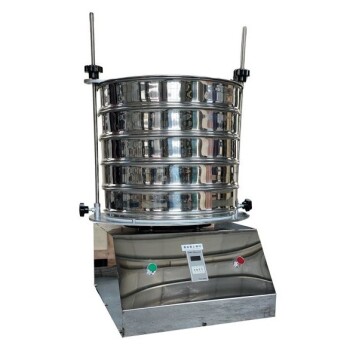
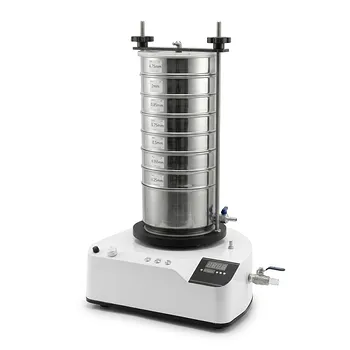
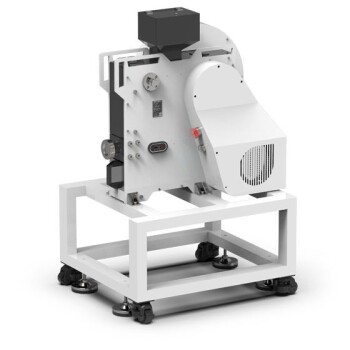
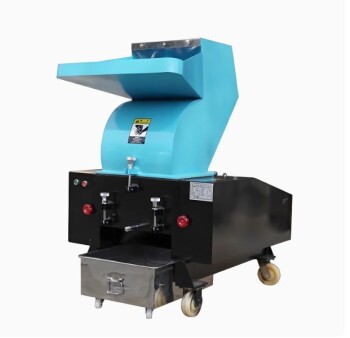
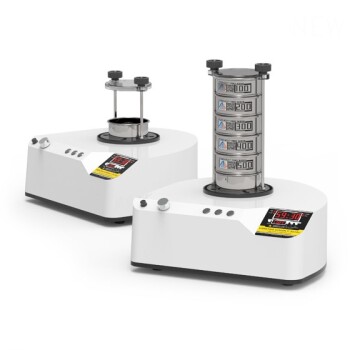
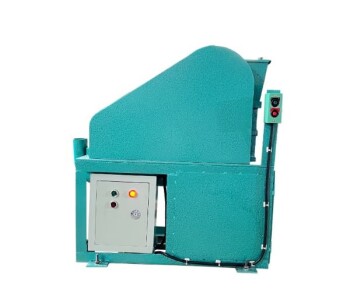
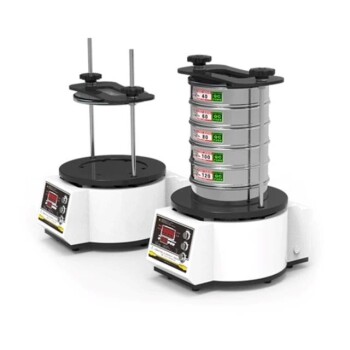
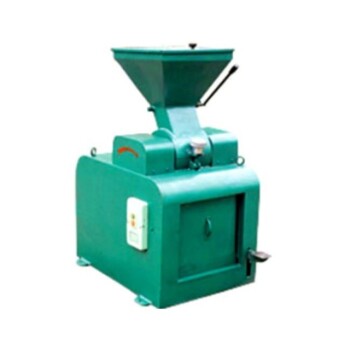
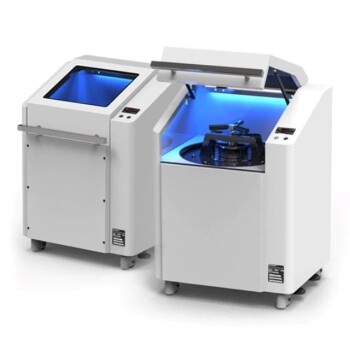
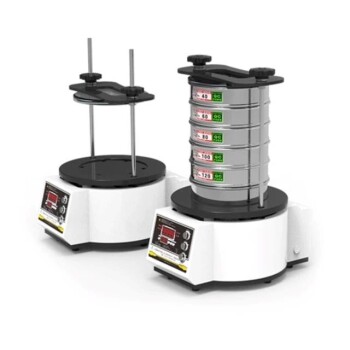
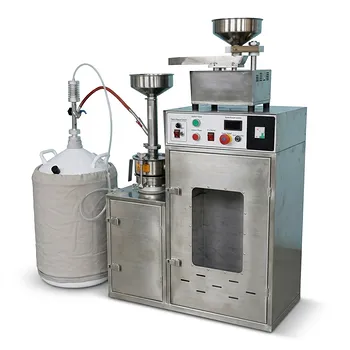
Mechanical crushing and sieving systems function as the essential physical preparation stage in the conversion of waste plastics to graphene. By utilizing intense physical shear forces, these systems pulverize macroscopic solids, such as PET bottles, into precise, micron-sized particles to prepare them for thermochemical processing.
The core objective is to maximize microscopic specific surface area. This physical transformation is not merely about size reduction; it is the prerequisite for enhancing chemical reactivity, ensuring thorough carbonization, and guaranteeing the structural uniformity of the final graphene product.
Transforming the Raw Material
Application of Physical Shear
The primary mechanism relies on physical shear forces. Unlike simple compaction, these systems actively cut and grind solid waste materials.
This mechanical stress breaks down the structural integrity of bulk plastics (like PET bottles), converting them from consumer-grade waste into industrial feedstocks.
Achieving Micron-Scale Granularity
The goal of this stage is to reduce materials to micron-sized particles.
While general waste processing might stop at larger sizes (e.g., 40mm for general separation), high-value graphene conversion requires a much finer powder to ensure the entire mass reacts simultaneously during the conversion phase.
The Criticality of Surface Area
Enhancing Chemical Reactivity
The reduction to micron-sized particles drastically increases the microscopic specific surface area of the raw material.
This increased surface area exposes more of the polymer chains to the thermal and chemical environment. This accessibility is critical for initiating the complex molecular rearrangements required to form graphene lattices.
Ensuring Thorough Carbonization
Uniform particle size facilitates uniform heat penetration.
In the subsequent thermochemical reactions, heat must penetrate the material rapidly. If particles are too large, the core may remain unreacted while the surface over-reacts. Micron-sized particles ensure the carbonization process is consistent throughout the entire batch.
Promoting Product Uniformity
The consistency of the input dictates the consistency of the output.
By standardizing the feedstock through sieving, you eliminate variables in the reaction chamber. This leads to a more uniform graphene product, reducing defects and ensuring consistent electronic or structural properties in the final material.
Understanding the Operational Trade-offs
Energy Intensity vs. Particle Size
Reducing plastic to a micron level is an energy-intensive process.
While finer particles yield better reaction kinetics, the mechanical energy required to crush plastic to this size generates significant heat and consumes substantial power. You must balance the cost of grinding against the improved yield of the graphene conversion.
The Impact of Inconsistent Sieving
If the sieving process fails to classify particles strictly, reaction heterogeneity will occur.
Even a small percentage of oversized particles can lead to incomplete carbonization. This results in impurities in the final graphene sheets, which can severely compromise the material's conductivity and strength.
Making the Right Choice for Your Process
Effective pretreatment is a balance between mechanical cost and chemical efficiency.
- If your primary focus is Product Quality: Prioritize systems that can achieve the smallest possible micron-range particle size to maximize surface area and reactivity.
- If your primary focus is Process Efficiency: Focus on strict sieving and classification to ensure 100% size uniformity, preventing unreacted material from contaminating the batch.
Ultimately, mechanical crushing is not just waste disposal; it is the step that defines the reactive potential of your feedstock.
Summary Table:
| Process Phase | Primary Mechanism | Technical Goal | Impact on Graphene Quality |
|---|---|---|---|
| Mechanical Crushing | Physical Shear Forces | Micron-sized particle reduction | Maximizes surface area for higher chemical reactivity |
| Sieving & Classification | Precision Filtering | Uniform particle size distribution | Ensures thorough carbonization and structural consistency |
| Feedstock Refinement | Material Processing | Industrial-grade feedstock | Reduces defects and impurities in the final graphene lattice |
Elevate Your Graphene Research with KINTEK Precision Solutions
The quality of your final graphene product is determined by the precision of your pretreatment. KINTEK specializes in advanced crushing and milling systems and sieving equipment designed to deliver the exact micron-scale granularity required for high-yield carbonization.
From preparing PET waste for thermochemical conversion to conducting advanced material synthesis, we provide a comprehensive range of laboratory equipment, including:
- High-Temperature Furnaces: Muffle, tube, and vacuum systems for carbonization.
- Crushing & Milling: Precision systems to maximize microscopic specific surface area.
- Material Synthesis Tools: CVD/PECVD reactors and high-pressure autoclaves.
- Lab Consumables: High-purity ceramics, crucibles, and PTFE products.
Ready to optimize your waste-to-wealth workflow? Contact KINTEK today to discuss how our specialized equipment can enhance your lab's efficiency and product uniformity.
References
- Gaurav Tatrari, Nanda Gopal Sahoo. Solid waste-derived carbon nanomaterials for supercapacitor applications: a recent overview. DOI: 10.1039/d0ma00871k
This article is also based on technical information from Kintek Solution Knowledge Base .
Related Products
- Laboratory Test Sieves and Sieving Machines
- Laboratory Vibratory Sieve Shaker Machine for Dry and Wet Three-Dimensional Sieving
- Laboratory Jaw Crusher
- Powerful Plastic Crusher Machine
- Three-dimensional electromagnetic sieving instrument
People Also Ask
- What are laboratory test sieves used for? A Guide to Particle Size Analysis
- How do you calculate the sieve test? Master Particle Size Distribution for Quality Control
- How does a lab test sieve contribute to biomass charcoal powder preparation? Achieve Uniform Particle Size
- What are the specifications for test sieves? A Guide to ASTM & ISO Standards for Accurate Particle Analysis
- What materials are required for sieving? Achieve Accurate Particle Size Analysis