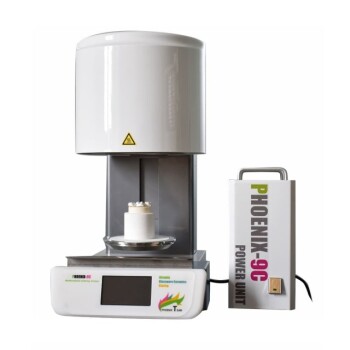
The primary role of tube furnaces with integrated combustion chambers in steel billet heating simulations is to serve as a high-precision proxy for industrial reheating environments. These specialized furnaces allow researchers to replicate the temperatures—reaching up to 1250°C—and the specific chemical compositions of industrial flue gases. By manipulating these variables, engineers can accurately observe how steel billets respond to different oxidative conditions and excess air coefficients.
Core Takeaway: Tube furnaces with integrated combustion chambers enable the precise simulation of industrial reheating cycles, allowing for the quantified study of steel oxidation, mass loss, and oxide scale growth under controlled atmospheric conditions.
Simulating Industrial Combustion Environments
Replicating Flue Gas Chemistry
The integrated combustion chamber is critical for generating a realistic industrial atmosphere. By adjusting the mixture of gases, researchers can simulate the exact composition of flue gases found in full-scale steel mills.
This capability allows for the study of how varying excess air coefficients impact the surface integrity of the steel. It bridges the gap between theoretical gas-phase chemistry and practical industrial application.
High-Temperature Thermal Precision
Simulating the heating of a steel billet requires stable temperatures that can reach the upper limits of industrial processing. These furnaces are designed to maintain constant temperatures up to 1250°C with minimal fluctuation.
Precise thermal control ensures that the observed changes in the steel are a result of the programmed environment rather than equipment instability. This level of control is essential for establishing repeatable experimental baselines.
Analyzing Material Degradation and Scale Growth
Quantifying Steel Mass Loss
One of the most significant challenges in steel production is the loss of material due to oxidation during heating. The tube furnace provides a controlled volume where steel mass loss can be measured with high accuracy.
By subjecting samples to specific oxidative conditions, researchers can determine the exact point where material degradation becomes commercially significant. This data is vital for optimizing furnace residence times in real-world production.
Studying Oxide Scale Kinetics
The growth of oxide scale on the surface of a billet affects both material yield and the quality of the final rolled product. Tube furnaces allow for the observation of oxide scale growth across varying temperatures and time durations.
Researchers use these simulations to understand the kinetics of how scales form and adhere to the substrate. Understanding these mechanisms helps in developing strategies to minimize scale formation or ensure it is easily removable.
Understanding the Trade-offs
Scaling and Boundary Limitations
While tube furnaces provide exceptional control, they operate on a much smaller scale than industrial walking-beam or pusher furnaces. The ratio of surface area to volume in a laboratory sample may not perfectly mirror a massive industrial billet.
Furthermore, the laminar flow often found in tube furnaces may not fully replicate the complex turbulence and gas-flow patterns of a large-scale combustion chamber. These differences must be accounted for when extrapolating laboratory data to industrial operations.
Temperature Gradients vs. Uniformity
Many tube furnaces are designed for thermal uniformity, yet industrial billets often experience significant internal temperature gradients. While multiple heating zones can be used to create controlled gradients, they still struggle to mimic the three-dimensional heat flux of a massive production furnace.
Applying Simulation Data to Your Project
Recommendations for Research and Development
- If your primary focus is reducing material waste: Use the furnace to identify the "sweet spot" for excess air coefficients that minimizes oxidation without sacrificing combustion efficiency.
- If your primary focus is surface quality and descaling: Prioritize simulations that vary water vapor and oxygen concentrations to study the morphology and adherence of the oxide scale.
- If your primary focus is process optimization: Utilize multiple heating zones to simulate the specific heating curves of your industrial line, including the preheating, heating, and soaking zones.
By leveraging the precision of integrated tube furnaces, manufacturers can significantly reduce the costs associated with trial-and-error adjustments on the production floor.
Summary Table:
| Feature | Role in Simulation | Industrial Impact |
|---|---|---|
| Combustion Chamber | Replicates flue gas chemistry & excess air | Predicts surface oxidation & integrity |
| Thermal Precision | Constant heat up to 1250°C | Ensures repeatable experimental baselines |
| Atmospheric Control | Varies O2, H2O, and CO2 levels | Minimizes material degradation & mass loss |
| Kinetics Analysis | Measures oxide scale growth rates | Improves descaling efficiency & product quality |
Elevate Your Materials Research with KINTEK Precision
Are you looking to minimize material waste and optimize your industrial heating processes? KINTEK specializes in high-performance laboratory equipment designed for the most demanding simulations.
Our extensive portfolio includes:
- Advanced Furnaces: Tube, muffle, atmosphere, and vacuum furnaces for precise thermal profiling.
- Material Processing: Hydraulic presses, crushing systems, and high-temperature high-pressure reactors.
- Specialized Tools: CVD/PECVD systems, electrolytic cells, and high-quality ceramic crucibles.
Whether you are analyzing oxide scale kinetics or refining combustion efficiency, our technical experts are ready to provide the reliable tools and consumables you need to bridge the gap between lab-scale testing and industrial excellence.
Contact KINTEK today to discuss your project requirements!
References
- T. Wyleciał, D. Urbaniak. Analysis of the Effect of the Excess Air Combustion Ratio on the Loss of Steel and Scale Adhesion in the Process of Heating the Steel Charge Including Changes in Technology. DOI: 10.24425/amm.2023.145470
This article is also based on technical information from Kintek Solution Knowledge Base .
Related Products
- Customer Made Versatile CVD Tube Furnace Chemical Vapor Deposition Chamber System Equipment
- Multi Heating Zones CVD Tube Furnace Machine Chemical Vapor Deposition Chamber System Equipment
- Rotary Tube Furnace Split Multi Heating Zone Rotating Tube Furnace
- Vertical Laboratory Tube Furnace
- 1200℃ Split Tube Furnace with Quartz Tube Laboratory Tubular Furnace
People Also Ask
- What is a CVD tube furnace? A Complete Guide to Thin-Film Deposition
- What is the function of a high-temperature CVD tube furnace in 3D graphene foam prep? Master 3D Nanomaterial Growth
- What are the technical advantages of using a CVD tube furnace? Optimize Silicon-Carbon Battery Anodes
- How does a CVD tube furnace inhibit the sintering of silver supports? Boost Membrane Durability and Performance
- What is the function of a tube furnace in CVD SiC synthesis? Achieving Ultra-Pure Silicon Carbide Powders