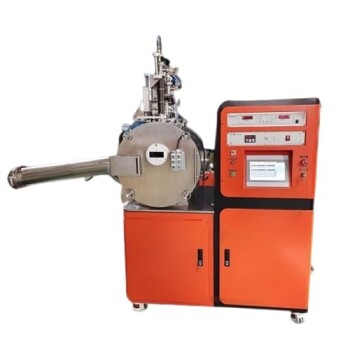
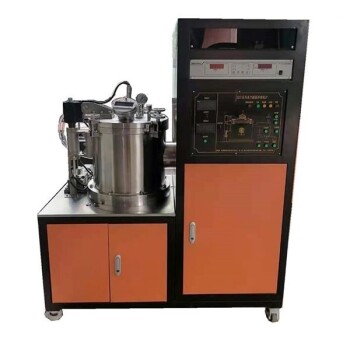
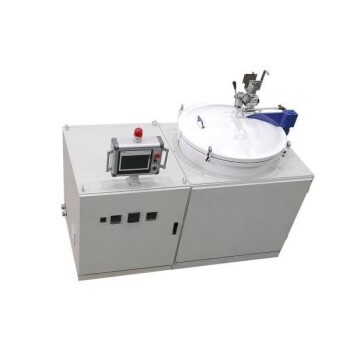
Vacuum Induction Melting (VIM) Furnaces serve as the foundational processing step for creating high-performance nickel-based alloys. Their primary role is to convert high-purity raw materials into initial experimental metal electrodes and blanks within a strictly controlled vacuum environment. By isolating the melt from the atmosphere, these furnaces prevent the oxidation of critical alloying elements, establishing the necessary chemical baseline for all subsequent manufacturing stages.
Core Takeaway The VIM furnace is not merely a melting tool; it is a chemical preservation system. Its function is to lock in the precise chemical composition of the alloy by eliminating atmospheric contamination, creating a "master alloy" that is chemically perfect before it undergoes structural refinement in later processes like Vacuum Arc Remelting.
The Critical Necessity of a Vacuum Environment
To understand the role of VIM, you must understand the vulnerability of the materials involved. High-temperature nickel-based alloys rely on specific reactive elements to achieve their performance properties.
Protecting Reactive Elements
Elements such as Aluminum (Al) and Chromium (Cr) are essential for the high-temperature strength and corrosion resistance of nickel alloys.
However, these "active metals" are highly prone to oxidation if exposed to air during the melting phase. The VIM furnace creates a vacuum that prevents this reaction, ensuring these critical elements remain part of the alloy rather than turning into oxide slag.
Minimizing Interstitial Impurities
Beyond protecting active metals, the vacuum environment actively minimizes the introduction of harmful interstitial impurities.
Specifically, the process significantly reduces the presence of oxygen and nitrogen. High levels of these impurities can compromise the structural integrity of the final alloy, making the VIM stage essential for producing high-quality experimental master alloys.
Precision in Alloy Composition
The VIM process is designed for granular control over exactly what enters the melt and how it interacts with the base material.
Controlled Material Addition
Precision is achieved through specific mechanical loading systems. After the initial charge melts, additional alloy materials are introduced via a charging hopper controlled by a handwheel.
Operators use a handle to release these materials into the crucible at a specific, regulated speed. This manual or automated control ensures that the mixture remains consistent throughout the batch.
Managing Reaction Volatility
Adding materials to a molten bath can be volatile. To maintain composition accuracy, operators must prevent "sputtering"—the splashing or ejection of molten material.
For materials prone to sputtering, addition speeds must be kept slow. In specific scenarios, a technique called "film charging" is employed. This involves reducing power to slightly "freeze" or solidify the liquid surface before adding new materials, creating a buffer that drastically reduces splashing.
The Role in the Manufacturing Workflow
It is critical to view the VIM furnace as the starting point, not the end point, of the high-performance alloy production line.
Establishing the Base Material
The output of a VIM furnace is typically cast into electrodes or blanks.
These forms are not usually the final component shape. Instead, they serve as the "charge" or raw material for the next generation of processing.
Preparing for Structural Optimization
While VIM ensures chemical perfection, it does not always provide the final structural integrity required for critical aerospace or industrial parts.
The electrodes produced in VIM are often used as the input for Vacuum Arc Remelting (VAR) processes. The VIM stage creates the right chemistry; the subsequent VAR stage refines the physical structure.
Operational Trade-offs
While VIM is essential for purity, the process involves operational constraints that must be managed to ensure quality.
Speed vs. Purity
The requirement for a vacuum and the careful addition of alloying elements makes VIM a slower process compared to open-air melting.
The "film charging" technique, while effective at preventing sputtering, requires thermal cycling (cooling the surface, then reheating), which extends cycle times.
Sensitivity to Loading Rates
The quality of the melt is heavily dependent on the rate of material addition.
If alloy materials are dropped too quickly into the crucible, sputtering occurs, which can lead to material loss and slight deviations in the final chemical composition. Precision requires patience.
Making the Right Choice for Your Goal
The VIM furnace is a specialized tool designed for specific metallurgical requirements.
- If your primary focus is Chemical Composition: Prioritize VIM to lock in exact ratios of reactive elements like Aluminum and Chromium while stripping out Oxygen and Nitrogen.
- If your primary focus is Workflow Efficiency: Recognize that VIM produces the input (electrodes) for remelting, meaning it is the first of a multi-step process for high-performance applications.
Ultimately, the VIM furnace is the gatekeeper of alloy purity, ensuring that the material's chemistry is flawless before structural refinement begins.
Summary Table:
| Feature | Role in VIM Process | Benefit for Nickel-Based Alloys |
|---|---|---|
| Vacuum Environment | Prevents oxidation of Al and Cr | Preserves high-temperature strength and corrosion resistance |
| Impurity Control | Minimizes Oxygen and Nitrogen levels | Enhances structural integrity and material purity |
| Precision Charging | Controlled material addition via hopper | Ensures exact chemical ratios and prevents sputtering |
| Primary Output | Produces electrodes and blanks | Creates the high-quality 'master alloy' for further refinement |
Elevate Your Material Research with KINTEK Precision
High-performance nickel-based alloys demand zero atmospheric contamination and flawless chemical accuracy. KINTEK specializes in advanced laboratory equipment, providing the Vacuum Induction Melting (VIM) systems and high-temperature furnaces essential for producing superior experimental electrodes and master alloys.
From aerospace-grade alloy preparation to specialized crushing, milling, and hydraulic pressing, our comprehensive portfolio—including vacuum, atmosphere, and dental furnaces—is designed to meet the rigorous standards of modern metallurgy and material science.
Ready to refine your melting process and secure chemical perfection?
Contact KINTEK experts today for a tailored solution!
References
- A. B. Korostelev, А. Н. Романов. Development of New Construction Materials for Innovative Reactor Installation Designs. DOI: 10.1007/s10512-021-00741-8
This article is also based on technical information from Kintek Solution Knowledge Base .
Related Products
- Lab-Scale Vacuum Induction Melting Furnace
- Vacuum Induction Melting Spinning System Arc Melting Furnace
- Vacuum Heat Treat Furnace and Levitation Induction Melting Furnace
- Vacuum Arc Induction Melting Furnace
- Non Consumable Vacuum Arc Induction Melting Furnace
People Also Ask
- How do vacuum induction or arc melting furnaces facilitate the synthesis of U-Al-C MAX phases? Precision Heat & Purity
- What is the primary function of a vacuum induction melting furnace in Ni-Mo-Cr-Fe master alloy prep? Ensure High Purity
- Why use VIM for rare earth steel? Essential Precision for Melting Reactive Lanthanum and Cerium
- What types of metals are typically processed in a vacuum induction melting furnace? High-Purity Alloys for Critical Applications
- What is the function of a vacuum induction melting furnace? Essential Guide for High-Purity FeCrAl Alloy Production