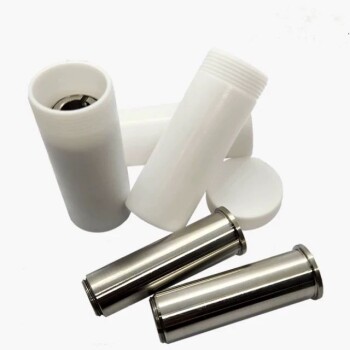
Corrosion-resistant alloy sampling lines are the critical interface between accurate data collection and high-pressure experimental safety. They enable the periodic extraction of fluid samples from a reactor for pH and conductivity measurements without requiring the system to be depressurized. This capability is essential for monitoring dynamic changes in real-time while maintaining the integrity of the experimental conditions.
The primary value of these components is their ability to withstand aggressive chemical environments to ensure sample authenticity. By resisting corrosion, they prevent system leaks and contamination, allowing researchers to capture instantaneous hydrochemical changes that would be lost if the system were disturbed.
Preserving the Experimental State
Avoiding System Depressurization
The most significant operational advantage of these sampling lines is the ability to extract fluids without depressurizing the system.
Depressurizing a high-pressure reactor disrupts the chemical equilibrium and physical state of the fluids. By maintaining constant pressure during extraction, the sampling lines ensure the experiment continues uninterrupted.
Capturing Instantaneous Changes
Dynamic fluid monitoring requires data that reflects the exact moment of extraction.
Because the system remains pressurized and stable, the samples collected provide an authentic snapshot of instantaneous changes in hydrochemical characteristics. This allows for precise tracking of reaction kinetics over time.
Withstanding Aggressive Environments
Resisting Dual Corrosive Effects
High-pressure reaction experiments often involve a hostile chemical environment that standard materials cannot survive.
These specific alloys are engineered to withstand the dual corrosive effects of high-pressure CO2 and high-salinity brine. This resistance is vital for preventing material degradation that would otherwise contaminate the sample or breach the containment.
Ensuring Seal Integrity
The physical integrity of the sampling mechanism is paramount in high-pressure settings.
Corrosion undermines the mechanical strength of sampling lines, leading to potential leaks. Using corrosion-resistant alloys ensures the seal integrity of the sampling process remains intact throughout the duration of the experiment.
Understanding the Risks of Material Failure
The Cost of Compromised Samples
If a sampling line reacts with the fluid due to poor corrosion resistance, the data becomes useless.
A corroded line alters the chemical composition of the sample before it can be analyzed. This leads to false readings regarding pH and conductivity, potentially invalidating the entire experimental dataset.
Safety and Containment
Beyond data loss, the failure to use appropriate alloys poses a physical risk.
In high-pressure scenarios involving CO2, a breach caused by corrosion constitutes a significant safety hazard. The alloy acts as a necessary barrier to prevent uncontrolled depressurization or fluid release.
Making the Right Choice for Your Goal
To ensure the success of your high-pressure reaction experiments, consider your specific monitoring objectives:
- If your primary focus is Data Accuracy: Prioritize these alloys to prevent chemical leaching that could skew sensitive pH and conductivity measurements.
- If your primary focus is Operational Safety: Use these alloys to guarantee seal integrity against the aggressive combination of brine and high-pressure CO2.
Ultimately, the use of corrosion-resistant sampling lines is not just an equipment choice, but a prerequisite for valid, reproducible high-pressure hydrochemical research.
Summary Table:
| Feature | Significance in High-Pressure Monitoring | Impact on Research |
|---|---|---|
| Non-Depressurized Sampling | Enables fluid extraction without interrupting system pressure. | Preserves chemical equilibrium and kinetic data. |
| Corrosion Resistance | Withstands aggressive CO2 and high-salinity brine. | Prevents sample contamination and material failure. |
| Real-Time Extraction | Captures instantaneous hydrochemical changes. | Provides accurate snapshots of pH and conductivity. |
| Seal Integrity | Maintains structural strength under extreme stress. | Guarantees laboratory safety and leak prevention. |
Elevate Your Research Precision with KINTEK
Don't let material failure compromise your experimental integrity. KINTEK specializes in high-performance laboratory solutions, providing the specialized high-temperature high-pressure reactors and autoclaves required for demanding research environments.
Whether you are monitoring dynamic fluid changes or conducting complex material synthesis, our comprehensive range—including corrosion-resistant sampling components, electrolytic cells, and precision hydraulic presses—is engineered to ensure your data remains accurate and your laboratory stays safe.
Ready to optimize your high-pressure setup? Contact our technical experts today to discover how KINTEK’s advanced equipment and consumables can bring unmatched reliability to your workflow.
References
- Kaisar Ahmat, Jie Li. CO2-Water-Rock Interactions in Carbonate Formations at the Tazhong Uplift, Tarim Basin, China. DOI: 10.3390/min12050635
This article is also based on technical information from Kintek Solution Knowledge Base .
Related Products
- Custom PTFE Teflon Parts Manufacturer for Sampling Solution Sample and Dry Powder Spoons
- Custom PTFE Teflon Parts Manufacturer for PTFE Bottle Oil Fume Sampling Tube
- Sub-Lance Probe for Molten Steel Temperature Carbon Content Oxygen Content Measurement and Steel Sample Collection
- Customizable XRD Sample Holders for Diverse Research Applications
People Also Ask
- Is PTFE corrosion resistant? Discover the Ultimate Chemical Resistance for Your Lab
- What are the specific applications of PTFE in micro-batch slug flow systems? Enhance Your Microfluidic Reaction Purity
- How is PTFE utilized for insulation in Alloy 22 corrosion setups? Ensure Signal Purity & Accuracy
- Why Use PTFE Sample Bottles for Coal Demineralization? Ensure Chemical Stability and Data Integrity
- What is the best solvent for FTIR? Master Solvent Selection for Clear, Accurate Spectra