Applying 10 MPa of pressure is the critical step that converts a loose mixture of active materials into a high-performance electrochemical electrode. This specific pressure ensures a seamless physical interface between the active material, conductive additives, and the current collector, which is essential for minimizing electrical resistance and enabling high-rate performance.
The technical significance of 10 MPa pressure lies in its ability to optimize the electrode’s internal architecture by maximizing contact points while maintaining structural integrity. By reducing interfacial resistance and shortening transport distances, this process ensures the electrode can efficiently handle high current densities during operation.
Optimizing Electrical and Ionic Transport
Minimizing Interfacial Resistance
The primary function of 10 MPa pressure is to establish excellent physical contact between the active material mixture and the current collector (such as nickel foam or foil). This compression forces the materials into the microscopic surface irregularities of the collector, drastically reducing the interfacial resistance that otherwise hinders electron flow.
Enhancing Particle-to-Particle Connectivity
High pressure causes the rearrangement and bonding of powder particles, including the active material and conductive carbon black. This creates a continuous, low-resistance network throughout the electrode sheet, ensuring that electrons can move rapidly from the active sites to the current collector.
Shortening Transport Distances
The application of pressure can significantly reduce the electrode film thickness, sometimes by as much as 50% (e.g., from 200 µm to 100 µm). A thinner, denser electrode reduces the distance both ions and electrons must travel, which directly translates to improved rate performance and faster charge-discharge cycles.
Enhancing Mechanical and Structural Stability
Improving Mechanical Robustness
The 10 MPa force activates the PTFE binder or other bonding agents, pressing the mixture into a cohesive, robust film. This mechanical strength is vital for the electrode to withstand the physical stresses of battery assembly and the subsequent electrolyte immersion without falling apart.
Preventing Material Delamination
Without sufficient pressure, active materials are prone to delaminating or stripping away from the current collector during repeated cycling or electrolyte flushing. Consistent compression ensures the material remains securely anchored, which is critical for maintaining long-term cycle stability and safety.
Achieving Uniform Mass Loading
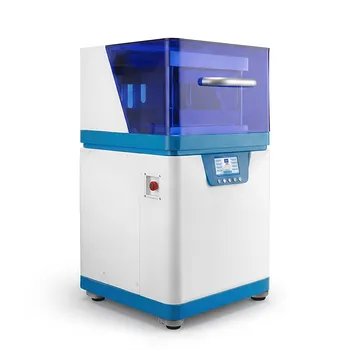
Using a laboratory hydraulic press ensures that the pressure is applied uniformly across the entire surface of the electrode. This creates a homogenous density across the sheet, preventing "hot spots" of high resistance that could lead to uneven reaction rates and premature electrode failure.
Understanding the Trade-offs
The Risk of Over-Compression
While high pressure reduces resistance, exceeding the optimal range (such as going far beyond 10–20 MPa depending on the material) can collapse the microporous structure of the active material. If the pores are completely crushed, the electrolyte cannot penetrate the electrode, which severely restricts ion transport and reduces the available surface area for electrochemical reactions.
Incomplete Compression Pitfalls
Applying significantly less than 10 MPa often results in a "fluffy" electrode with high bulk resistivity. Such electrodes exhibit poor mechanical stability and high internal heat generation during high-current operations, which can lead to rapid degradation of the supercapacitor or battery cell.
Making the Right Choice for Your Goal
When preparing electrode sheets, the application of pressure must be calibrated to your specific material properties and research objectives.
- If your primary focus is High-Rate Performance: Use a precise 10-20 MPa setting to minimize electron transport distances and interfacial resistance.
- If your primary focus is Volumetric Energy Density: Ensure consistent compression to maximize the amount of active material packed into a limited electrode volume.
- If your primary focus is Cycle Longevity: Prioritize the mechanical bonding of the binder to the current collector to prevent delamination during long-term testing.
Applying the correct mechanical pressure is the bridge between theoretical material capacity and practical, high-performance electrochemical device operation.
Summary Table:
| Feature | Technical Significance | Key Benefit for Electrodes |
|---|---|---|
| Interfacial Resistance | Forces material into current collector irregularities | Drastically reduces electron flow resistance |
| Particle Connectivity | Facilitates rearrangement and bonding of powders | Creates a continuous, low-resistance network |
| Electrode Thickness | Compresses film by up to 50% | Shortens transport distances for ions/electrons |
| Structural Integrity | Activates binders (e.g., PTFE) for cohesive films | Prevents delamination during cycling and assembly |
| Mass Loading | Ensures uniform pressure across the surface | Prevents "hot spots" and uneven reaction rates |
Elevate Your Battery Research with KINTEK Precision
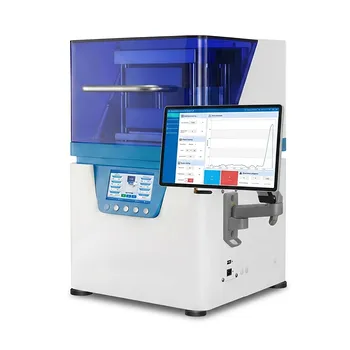
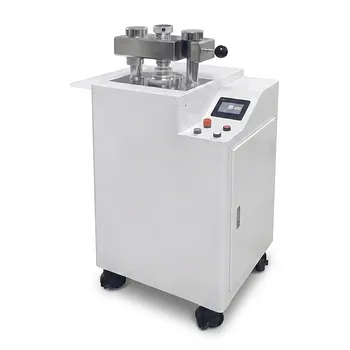
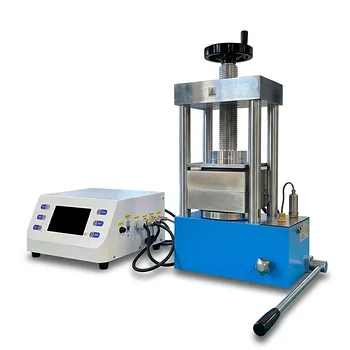
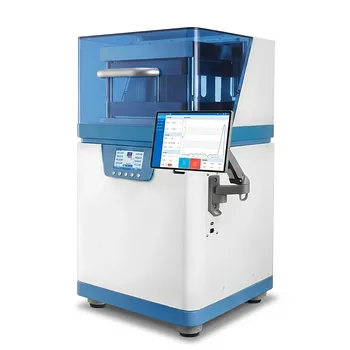
Achieving the perfect 10 MPa compression is vital for high-performance electrode development. KINTEK specializes in high-precision laboratory equipment designed to deliver the consistency your research demands. Our range of hydraulic presses (including pellet, hot, and isostatic models) provides the exact pressure control needed to minimize interfacial resistance and maximize cycle stability.
Beyond pressing, KINTEK offers a comprehensive portfolio for energy research, including:
- Battery research tools and consumables
- High-temperature furnaces (tube, vacuum, and atmosphere control)
- Crushing and milling systems for material homogenization
- PTFE products, ceramics, and crucibles
Ensure your materials reach their theoretical potential with reliable, industrial-grade laboratory solutions. Contact KINTEK today to discuss your specific application and find the ideal equipment for your lab.
References
- Ge Bai, Feng Yu. Industrial Waste-Derived Carbon Materials as Advanced Electrodes for Supercapacitors. DOI: 10.3390/nano13222924
This article is also based on technical information from Kintek Solution Knowledge Base .
Related Products
- Fully Automatic Heated Hydraulic Lab Press for Materials Sintering and Sample Preparation
- Laboratory Hydraulic Press Split Electric Lab Pellet Press
- Automatic Laboratory Hydraulic Press for XRF & KBR Pellet Press
- Automatic High Temperature Heated Hydraulic Press Machine with Heated Plates for Lab
- Manual High Temperature Heated Hydraulic Press Machine with Heated Plates for Lab
People Also Ask
- How is a laboratory hydraulic press used in the preparation of modified biochar samples for FTIR analysis? Expert Guide
- How does a laboratory heating hydraulic press contribute to the preparation of recycled graphite green bodies? - Optimize Density.
- How does the laboratory hydraulic press contribute to the preparation of solid targets for laser ablation?
- What role does a laboratory hydraulic press play in perovskite-MOF glass fabrication? Master Material Densification
- Why use a laboratory hydraulic press for Fe2O3-CoP conductivity? Achieve Precise Material Characterization