Knowledge cvd machine What is thermally activated CVD? The Essential Guide to High-Temperature Thin Film Deposition
Author avatar

Tech Team · Kintek Solution

Updated 3 months ago

What is thermally activated CVD? The Essential Guide to High-Temperature Thin Film Deposition


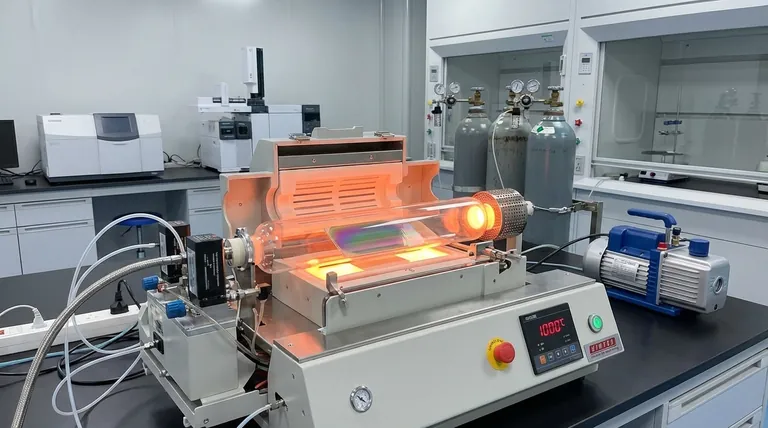
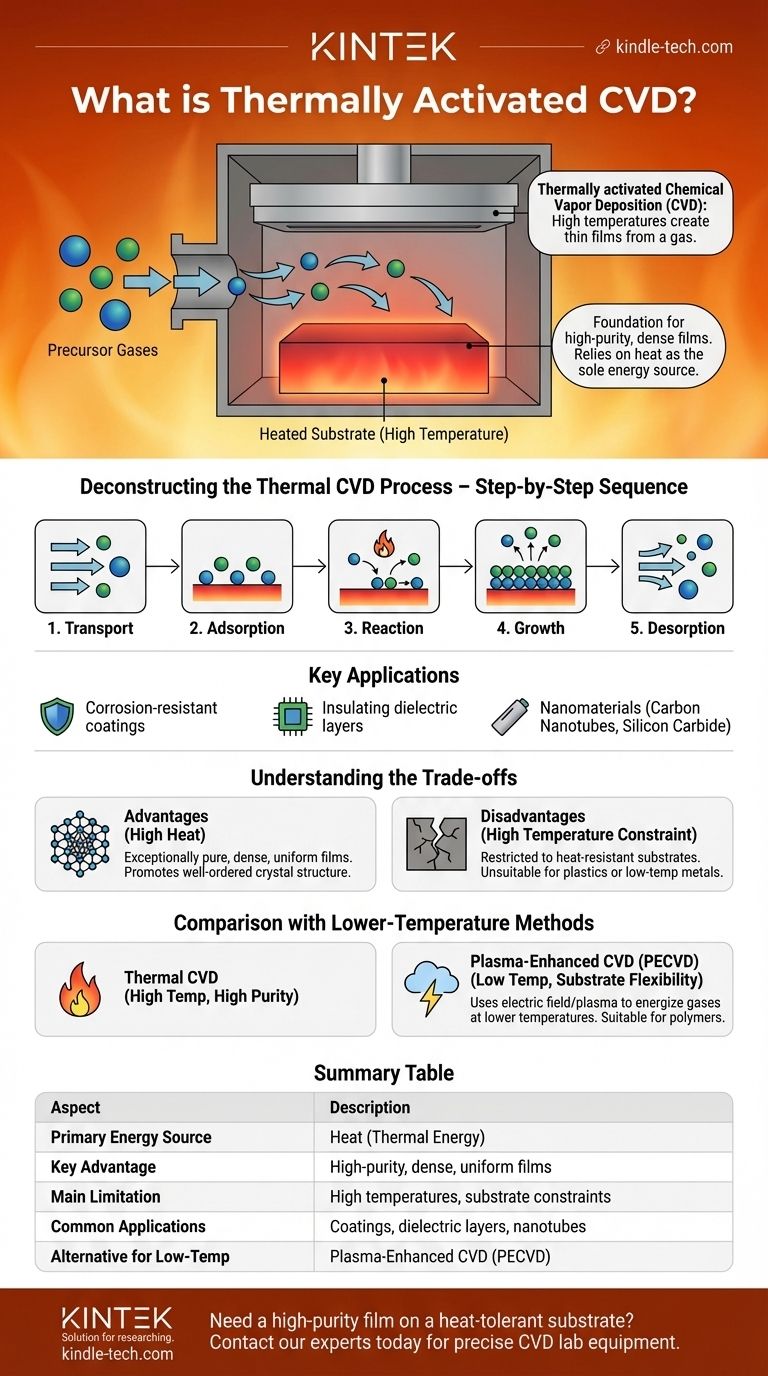
In essence, thermally activated Chemical Vapor Deposition (CVD) is a process that uses high temperatures to create thin films of solid material from a gas. A substrate is heated inside a chamber, and precursor gases are introduced, which then react or decompose on the hot surface to form the desired coating. It is the most fundamental and conventional form of CVD.

Thermal CVD is the foundational method for growing high-purity, dense films. Its defining characteristic is the reliance on heat as the sole energy source, which is both its strength in producing quality films and its primary limitation due to the high temperatures required.
What is thermally activated CVD? The Essential Guide to High-Temperature Thin Film Deposition

Deconstructing the Thermal CVD Process

To understand thermally activated CVD, it's best to break it down into its core components and sequence of events. The entire process is driven by thermal energy.

The Role of Heat as the Catalyst

The "thermally activated" part of the name is the key. In this process, the substrate is heated to a specific, often very high, temperature.

This thermal energy is transferred to the precursor gas molecules that come into contact with the surface, providing the activation energy needed to break their chemical bonds.

The Step-by-Step Deposition Sequence

The formation of a film via thermal CVD is a multi-stage process:

  1. Transport: Precursor gases are delivered into the reaction chamber.
  2. Adsorption: Gas molecules stick to the heated substrate surface.
  3. Reaction: The high surface temperature causes the adsorbed molecules to decompose or react, leaving behind the desired solid atoms.
  4. Growth: These atoms diffuse across the surface and arrange themselves into a growing film or nanostructure.
  5. Desorption: Gaseous byproducts from the chemical reaction are released from the surface and transported out of the chamber.

Key Applications and Materials

This method is highly versatile and is used to synthesize a wide range of materials and structures.

Common applications include creating corrosion-resistant coatings, insulating dielectric layers for electronics, and growing specialized nanomaterials like carbon nanotubes or silicon carbide nanorods.

Understanding the Trade-offs

While powerful, the reliance on high heat creates a distinct set of advantages and disadvantages that determine when thermal CVD is the appropriate choice.

The High-Temperature Constraint

The most significant limitation of thermal CVD is its requirement for high reaction temperatures.

This restricts its use to substrates that can withstand the heat without melting, deforming, or degrading. It is generally unsuitable for coating plastics, certain metals, or other temperature-sensitive materials.

Purity and Density vs. Temperature

The primary advantage of using high heat is the ability to produce exceptionally pure, dense, and uniform films. The high thermal energy facilitates efficient chemical reactions and promotes the formation of a well-ordered crystal structure.

Comparison with Lower-Temperature Methods

To overcome the temperature limitation, other CVD methods were developed. Plasma-Enhanced CVD (PECVD), for example, uses an electric field to create a plasma.

This plasma energizes the precursor gases, allowing the chemical reactions to occur at much lower temperatures. This makes PECVD suitable for temperature-sensitive substrates, though it can introduce complexities not present in the simpler thermal process.

Making the Right Choice for Your Goal

Selecting the correct deposition method depends entirely on the properties of your substrate and the desired quality of the final film.

  • If your primary focus is maximum film purity on a heat-tolerant substrate: Thermal CVD is often the ideal choice due to its simplicity and the high quality of the resulting film.
  • If your primary focus is depositing a film on a temperature-sensitive material like a polymer: You must use a lower-temperature method like Plasma-Enhanced CVD (PECVD).

Ultimately, your choice is a trade-off between the material constraints of your substrate and the specific film characteristics you need to achieve.

Summary Table:

Aspect Description
Primary Energy Source Heat (Thermal Energy)
Key Advantage Produces high-purity, dense, uniform films
Main Limitation Requires high temperatures, limiting substrate choice
Common Applications Corrosion-resistant coatings, dielectric layers, carbon nanotubes
Alternative for Low-Temp Plasma-Enhanced CVD (PECVD)

Need to deposit a high-purity film on a heat-tolerant substrate?

Thermally activated CVD is a foundational technique for achieving superior film quality. At KINTEK, we specialize in providing the precise lab equipment and consumables needed for reliable CVD processes. Our expertise ensures your laboratory can achieve consistent, high-performance results.

Let's discuss your specific application. Contact our experts today to find the ideal CVD solution for your research or production goals.

Visual Guide
What is thermally activated CVD? The Essential Guide to High-Temperature Thin Film Deposition Visual Guide

Related Products

People Also Ask

Related Products

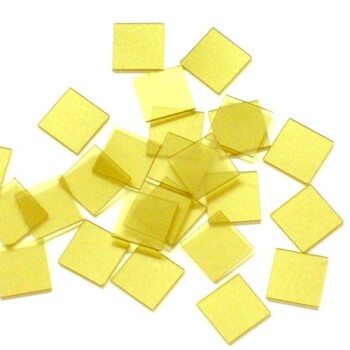
CVD Diamond for Thermal Management Applications

CVD Diamond for Thermal Management Applications

CVD diamond for thermal management: High-quality diamond with thermal conductivity up to 2000 W/mK, ideal for heat spreaders, laser diodes, and GaN on Diamond (GOD) applications.

HFCVD Machine System Equipment for Drawing Die Nano-Diamond Coating

HFCVD Machine System Equipment for Drawing Die Nano-Diamond Coating

The nano-diamond composite coating drawing die uses cemented carbide (WC-Co) as the substrate, and uses the chemical vapor phase method ( CVD method for short ) to coat the conventional diamond and nano-diamond composite coating on the surface of the inner hole of the mold.

Multi Heating Zones CVD Tube Furnace Machine Chemical Vapor Deposition Chamber System Equipment

Multi Heating Zones CVD Tube Furnace Machine Chemical Vapor Deposition Chamber System Equipment

KT-CTF14 Multi Heating Zones CVD Furnace - Precise Temperature Control and Gas Flow for Advanced Applications. Max temp up to 1200℃, 4 channels MFC mass flow meter, and 7" TFT touch screen controller.

Microwave Plasma Chemical Vapor Deposition MPCVD Machine System Reactor for Lab and Diamond Growth

Microwave Plasma Chemical Vapor Deposition MPCVD Machine System Reactor for Lab and Diamond Growth

Get high-quality diamond films with our Bell-jar Resonator MPCVD machine designed for lab and diamond growth. Discover how Microwave Plasma Chemical Vapor Deposition works for growing diamonds using carbon gas and plasma.

Chemical Vapor Deposition CVD Equipment System Chamber Slide PECVD Tube Furnace with Liquid Gasifier PECVD Machine

Chemical Vapor Deposition CVD Equipment System Chamber Slide PECVD Tube Furnace with Liquid Gasifier PECVD Machine

KT-PE12 Slide PECVD System: Wide power range, programmable temp control, fast heating/cooling with sliding system, MFC mass flow control & vacuum pump.

RF PECVD System Radio Frequency Plasma-Enhanced Chemical Vapor Deposition RF PECVD

RF PECVD System Radio Frequency Plasma-Enhanced Chemical Vapor Deposition RF PECVD

RF-PECVD is an acronym for "Radio Frequency Plasma-Enhanced Chemical Vapor Deposition." It deposits DLC (Diamond-like carbon film) on germanium and silicon substrates. It is utilized in the 3-12um infrared wavelength range.

Customer Made Versatile CVD Tube Furnace Chemical Vapor Deposition Chamber System Equipment

Customer Made Versatile CVD Tube Furnace Chemical Vapor Deposition Chamber System Equipment

Get your exclusive CVD furnace with KT-CTF16 Customer Made Versatile Furnace. Customizable sliding, rotating, and tilting functions for precise reactions. Order now!

Inclined Rotary Plasma Enhanced Chemical Vapor Deposition PECVD Equipment Tube Furnace Machine

Inclined Rotary Plasma Enhanced Chemical Vapor Deposition PECVD Equipment Tube Furnace Machine

Upgrade your coating process with PECVD coating equipment. Ideal for LED, power semiconductors, MEMS and more. Deposits high-quality solid films at low temps.

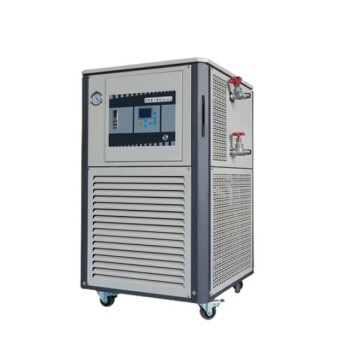
5L Heating Chilling Circulator Cooling Water Bath Circulator for High and Low Temperature Constant Temperature Reaction

5L Heating Chilling Circulator Cooling Water Bath Circulator for High and Low Temperature Constant Temperature Reaction

KinTek KCBH 5L Heating Chilling Circulator - Ideal for labs and industrial conditions with multi-functional design and reliable performance.

Laboratory CVD Boron Doped Diamond Materials

Laboratory CVD Boron Doped Diamond Materials

CVD boron-doped diamond: A versatile material enabling tailored electrical conductivity, optical transparency, and exceptional thermal properties for applications in electronics, optics, sensing, and quantum technologies.

Split Chamber CVD Tube Furnace with Vacuum Station Chemical Vapor Deposition System Equipment Machine

Split Chamber CVD Tube Furnace with Vacuum Station Chemical Vapor Deposition System Equipment Machine

Efficient split chamber CVD furnace with vacuum station for intuitive sample checking and quick cooling. Up to 1200℃ max temperature with accurate MFC mass flowmeter control.

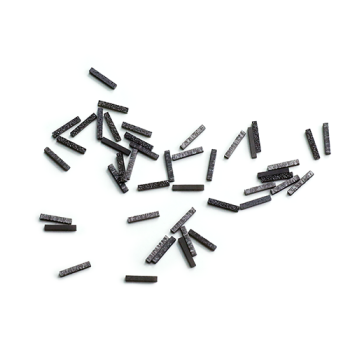
CVD Diamond Dressing Tools for Precision Applications

CVD Diamond Dressing Tools for Precision Applications

Experience the Unbeatable Performance of CVD Diamond Dresser Blanks: High Thermal Conductivity, Exceptional Wear Resistance, and Orientation Independence.

100L Heating Chilling Circulator Cooling Water Bath Circulator for High and Low Temperature Constant Temperature Reaction

100L Heating Chilling Circulator Cooling Water Bath Circulator for High and Low Temperature Constant Temperature Reaction

Get all-in-one heating, chilling, and circulating capabilities with our KinTek KCBH 80L Heating Chilling Circulator. High efficiency, reliable performance for labs and industrial applications.

50L Heating Chilling Circulator Cooling Water Bath Circulator for High and Low Temperature Constant Temperature Reaction

50L Heating Chilling Circulator Cooling Water Bath Circulator for High and Low Temperature Constant Temperature Reaction

Experience versatile heating, chilling, and circulating capabilities with our KinTek KCBH 50L Heating Chilling Circulator. Ideal for labs and industrial settings, with efficient and reliable performance.

Custom CVD Diamond Coating for Lab Applications

Custom CVD Diamond Coating for Lab Applications

CVD Diamond Coating: Superior Thermal Conductivity, Crystal Quality, and Adhesion for Cutting Tools, Friction, and Acoustic Applications

20L Heating Chilling Circulator Cooling Water Bath Circulator for High and Low Temperature Constant Temperature Reaction

20L Heating Chilling Circulator Cooling Water Bath Circulator for High and Low Temperature Constant Temperature Reaction

Maximize lab productivity with KinTek KCBH 20L Heating Chilling Circulator. Its all-in-one design offers reliable heating, chilling, and circulating functions for industrial and lab use.

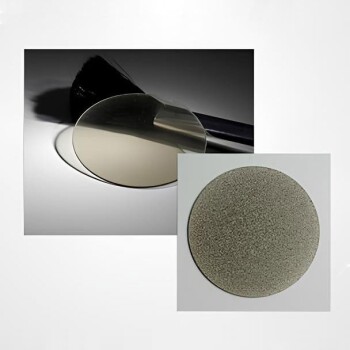
CVD Diamond Optical Windows for Lab Applications

CVD Diamond Optical Windows for Lab Applications

Diamond optical windows: exceptional broad band infrared transparency, excellent thermal conductivity & low scattering in infrared, for high-power IR laser & microwave windows applications.

Electric Rotary Kiln Small Rotary Furnace for Activated Carbon Regeneration

Electric Rotary Kiln Small Rotary Furnace for Activated Carbon Regeneration

Revitalize your activated carbon with KinTek's Electric Regeneration Furnace. Achieve efficient and cost-effective regeneration with our highly automated rotary kiln and intelligent thermal controller.

Inclined Rotary Plasma Enhanced Chemical Vapor Deposition PECVD Equipment Tube Furnace Machine

Inclined Rotary Plasma Enhanced Chemical Vapor Deposition PECVD Equipment Tube Furnace Machine

Introducing our inclined rotary PECVD furnace for precise thin film deposition. Enjoy automatic matching source, PID programmable temperature control, and high accuracy MFC mass flowmeter control. Built-in safety features for peace of mind.

Evaporation Boat for Organic Matter

Evaporation Boat for Organic Matter

The evaporation boat for organic matter is an important tool for precise and uniform heating during the deposition of organic materials.


Leave Your Message