Knowledge What lab equipment would be use to crush or grind a substance? A Guide to Choosing the Right Tool
Author avatar

Tech Team · Kintek Solution

Updated 6 days ago

What lab equipment would be use to crush or grind a substance? A Guide to Choosing the Right Tool


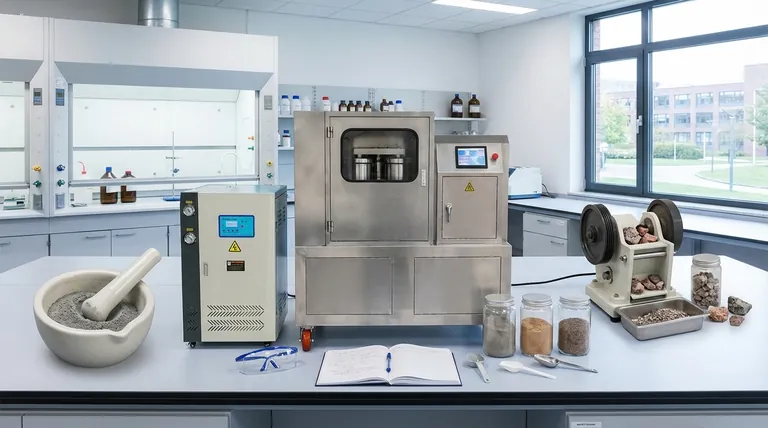
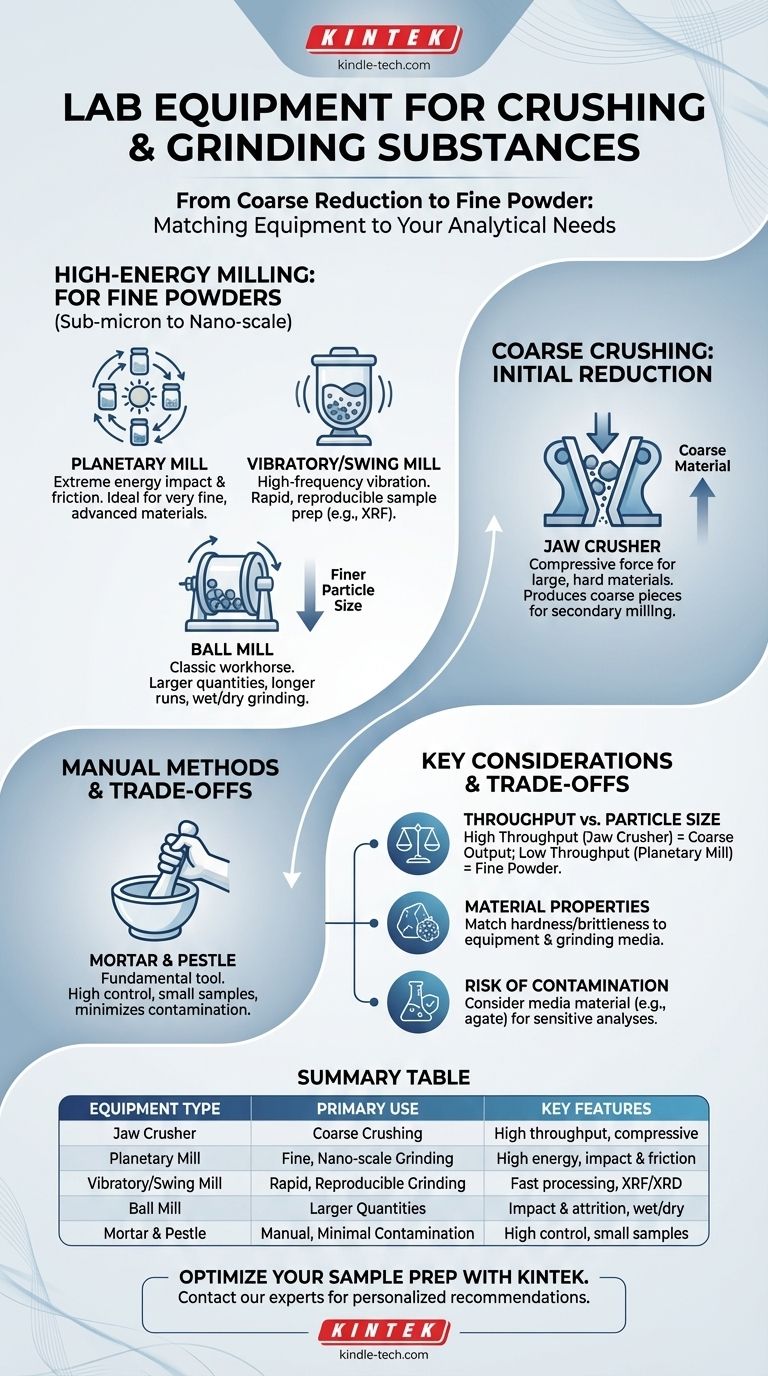
In a laboratory, the primary tools for crushing and grinding substances range from high-energy mechanical mills to simple manual devices. This equipment is essential for sample preparation, ensuring a homogenous and appropriately sized material for analysis or reaction. The most common automated options include jaw crushers for coarse material, and planetary, vibratory, or ball mills for producing fine powders.

The core decision in choosing grinding equipment is not about finding a single "best" tool, but about matching the grinding mechanism—crushing, impact, or friction—to your starting material's properties and the final particle size required for your specific application.
What lab equipment would be use to crush or grind a substance? A Guide to Choosing the Right Tool

High-Energy Milling for Fine Powders

For most analytical techniques, the goal is to reduce a sample to a fine, uniform powder. High-energy mills accomplish this through intense impact and frictional forces.

Planetary Mills

A planetary mill uses extreme energy for grinding. Grinding jars are arranged on a rotating sun wheel, and they rotate in the opposite direction, creating powerful impact and friction forces between the grinding balls and the sample inside.

This method is ideal for achieving very fine, often sub-micron or nano-scale particle sizes, which is critical for advanced materials research and analysis.

Vibratory and Swing Mills

These mills, often used for sample preparation for X-ray fluorescence (XRF), pulverize material through high-frequency vibration and impact. A grinding vessel (containing the sample and a puck or balls) is shaken aggressively.

They are valued for their speed and reproducibility, processing samples in minutes. As noted, they come in various sizes to handle sample weights from 10g up to 300g.

Ball Mills

A ball mill is a classic workhorse that consists of a rotating drum partially filled with the sample and grinding media (balls). As the drum turns, the media cascades and tumbles, grinding the material through impact and attrition.

While less intense than a planetary mill, a ball mill is excellent for grinding larger quantities of material over longer periods and can also be used for wet grinding.

Coarse Crushing for Initial Reduction

Before a sample can be milled into a fine powder, large pieces often need to be broken down into a manageable size.

Jaw Crushers

A jaw crusher is designed for the first step in sample reduction. It uses compressive force to break down large, hard, and brittle materials like rocks, minerals, or ceramics between a fixed and a moving jaw plate.

Its purpose is not to produce a powder but to generate coarse crushed pieces that are suitable for feeding into a secondary mill.

Manual Grinding Methods

For smaller scales or specific applications, manual methods remain indispensable.

Mortar and Pestle

This is the most fundamental tool for manual grinding. By applying pressure and a circular motion with the pestle inside the mortar bowl, a user can crush and grind small amounts of a substance.

Mortars and pestles are made from various materials (e.g., agate, ceramic, porcelain) to prevent sample contamination, a key consideration when preparing samples for trace element analysis.

Understanding the Trade-offs

Choosing the right equipment requires balancing several key factors.

Throughput vs. Final Particle Size

High-throughput equipment like a jaw crusher can process large volumes quickly but only produces coarse material. In contrast, a planetary mill produces exceptionally fine powder but works with much smaller sample volumes.

Material Properties

The hardness and brittleness of your sample are critical. A jaw crusher excels with hard, brittle rock, but it would be ineffective on a soft, ductile polymer. The grinding media (e.g., steel, tungsten carbide, zirconia) must also be harder than the sample itself.

Risk of Contamination

All mechanical grinding introduces some level of contamination from the grinding surfaces and media. This is a critical consideration for sensitive chemical analyses. Choosing agate or zirconia media can minimize metallic contamination, while a manual mortar and pestle offers the highest level of control.

Selecting the Right Equipment for Your Goal

Your choice should be dictated entirely by your material and your analytical objective.

  • If your primary focus is breaking down large, hard materials for initial processing: A jaw crusher is the necessary first step.
  • If your primary focus is rapid, reproducible grinding of samples for routine analysis (e.g., XRF, XRD): A vibratory or swing mill is the industry standard.
  • If your primary focus is achieving the finest possible particle size for advanced research: A planetary ball mill provides the highest energy input for nano-scale grinding.
  • If your primary focus is carefully grinding a small, soft sample with minimal contamination: A manual mortar and pestle offers the most control and purity.

Ultimately, selecting the correct grinding tool is the foundational step for ensuring accurate and reliable analytical results.

Summary Table:

Equipment Type Primary Use Key Features
Jaw Crusher Coarse crushing of large, hard materials High throughput, compressive force
Planetary Mill Fine, nano-scale grinding High energy, impact & friction
Vibratory/Swing Mill Rapid, reproducible grinding Fast processing, ideal for XRF/XRD
Ball Mill Grinding larger quantities Impact & attrition, wet/dry grinding
Mortar & Pestle Manual grinding, minimal contamination High control, small sample sizes

Ready to optimize your sample preparation process? KINTEK specializes in providing high-quality lab equipment and consumables tailored to your laboratory's specific needs. Whether you require a robust jaw crusher for initial reduction or a high-precision planetary mill for nano-scale grinding, our experts are here to help you select the perfect tool for accurate and reliable results. Contact us today to discuss your application and get a personalized recommendation!

Visual Guide
What lab equipment would be use to crush or grind a substance? A Guide to Choosing the Right Tool Visual Guide

Related Products

People Also Ask

Related Products

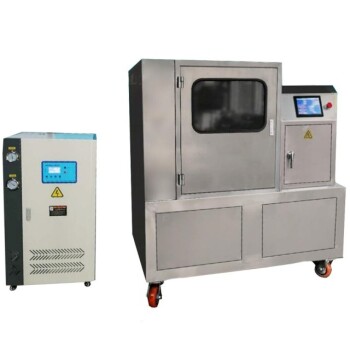
Low-Temperature Water-Cooled Touchscreen Vibratory Ultrafine Pulverizer

Low-Temperature Water-Cooled Touchscreen Vibratory Ultrafine Pulverizer

Low-temperature water-cooled vibratory pulverizer for ultrafine grinding. Preserves material integrity. Ideal for labs and production. Learn more.

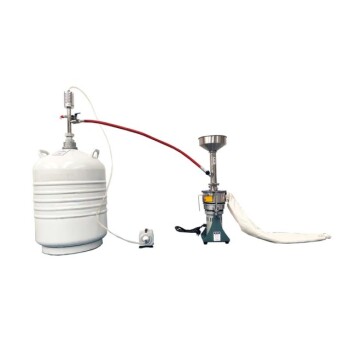
Liquid Nitrogen Cryogenic Grinder Mill Cryomill Airflow Ultrafine Pulverizer

Liquid Nitrogen Cryogenic Grinder Mill Cryomill Airflow Ultrafine Pulverizer

Discover the Liquid Nitrogen Cryogenic Grinding Machine, perfect for lab use, ultra-fine pulverization, and preserving material properties. Ideal for pharmaceuticals, cosmetics, and more.

Mini Planetary Ball Mill Machine for Laboratory Milling

Mini Planetary Ball Mill Machine for Laboratory Milling

Discover the KT-P400 desktop planetary ball mill, ideal for grinding and mixing small samples in the lab. Enjoy stable performance, long service life, and practicality. Functions include timing and overload protection.

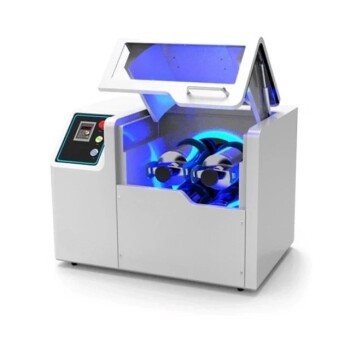
High Energy Planetary Ball Mill Machine for Laboratory Horizontal Tank Type

High Energy Planetary Ball Mill Machine for Laboratory Horizontal Tank Type

The KT-P2000H uses a unique Y-axis planetary trajectory, and utilizes the collision, friction and gravity between the sample and the grinding ball.

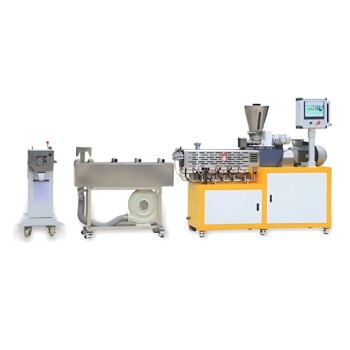
Twin Screw Extruder Plastic Granulation Machine

Twin Screw Extruder Plastic Granulation Machine

Twin screw extruder plastic granulation machine is designed for the mixing and processing experiments of engineering plastics, modified plastics, waste plastics and masterbatches.

Metallographic Specimen Mounting Machine for Laboratory Materials and Analysis

Metallographic Specimen Mounting Machine for Laboratory Materials and Analysis

Precision metallographic mounting machines for labs—automated, versatile, and efficient. Ideal for sample prep in research and quality control. Contact KINTEK today!

Portable Digital Display Automatic Laboratory Sterilizer Lab Autoclave for Sterilization Pressure

Portable Digital Display Automatic Laboratory Sterilizer Lab Autoclave for Sterilization Pressure

Portable autoclave sterilization pressure is a device that uses pressure saturated steam to quickly and effectively sterilize items.

Lab Sterile Slapping Type Homogenizer for Tissue Mashing and Dispersing

Lab Sterile Slapping Type Homogenizer for Tissue Mashing and Dispersing

The slapping sterile homogenizer can effectively separate the particles contained in and on the surface of solid samples, ensuring that the mixed samples in the sterile bag are fully representative.

Heated Hydraulic Press Machine with Integrated Manual Heated Plates for Lab Use

Heated Hydraulic Press Machine with Integrated Manual Heated Plates for Lab Use

Efficiently process heat-pressing samples with our Integrated Manual Heated Lab Press. With a heating range up to 500°C, it's perfect for various industries.

Double Plate Heating Press Mold for Lab

Double Plate Heating Press Mold for Lab

Discover precision in heating with our Double Plate Heating Mold, featuring high-quality steel and uniform temperature control for efficient lab processes. Ideal for various thermal applications.

Portable High Pressure Laboratory Autoclave Steam Sterilizer for Lab Use

Portable High Pressure Laboratory Autoclave Steam Sterilizer for Lab Use

Portable autoclave sterilization pressure is a device that uses pressure saturated steam to quickly and effectively sterilize items.

High Precision Diamond Wire Cutting Machine Laboratory Saw Precision Wire EDM Cutting Machine

High Precision Diamond Wire Cutting Machine Laboratory Saw Precision Wire EDM Cutting Machine

The high precision diamond wire cutting machine is a versatile and precise cutting tool designed specifically for material researchers. It utilizes a continuous diamond wire cutting mechanism, enabling precise cutting of brittle materials such as ceramics, crystals, glass, metals, rocks, and various other materials.

Automatic Heated Hydraulic Press Machine with Heated Plates for Laboratory Hot Press 25T 30T 50T

Automatic Heated Hydraulic Press Machine with Heated Plates for Laboratory Hot Press 25T 30T 50T

Efficiently prepare your samples with our Automatic Heated Lab Press. With a pressure range up to 50T and precise control, it's perfect for various industries.

Manual Heated Hydraulic Press Machine with Heated Plates for Laboratory Hot Press

Manual Heated Hydraulic Press Machine with Heated Plates for Laboratory Hot Press

The Manual Heat Press is a versatile piece of equipment suitable for a variety of applications, operated by a manual hydraulic system that applies controlled pressure and heat to the material placed on the piston.

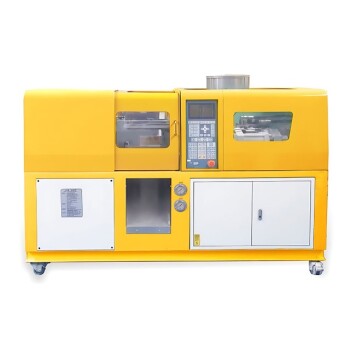
Small Injection Molding Machine for Lab Use

Small Injection Molding Machine for Lab Use

The small injection molding machinehas fast and stable movements; good controllability and repeatability, super energy saving; the product can be automatically dropped and formed; the machine body is low, convenient for feeding, easy to maintain, and no height restrictions on the installation site.

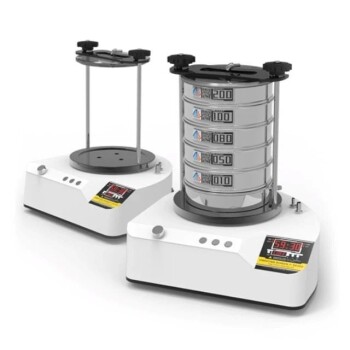
Laboratory Vibratory Sieve Shaker Machine for Dry and Wet Three-Dimensional Sieving

Laboratory Vibratory Sieve Shaker Machine for Dry and Wet Three-Dimensional Sieving

KT-VD200 can be used for sieving tasks of dry and wet samples in the laboratory. The screening quality is 20g-3kg. The product is designed with a unique mechanical structure and an electromagnetic vibrating body with a vibration frequency of 3000 times per minute.

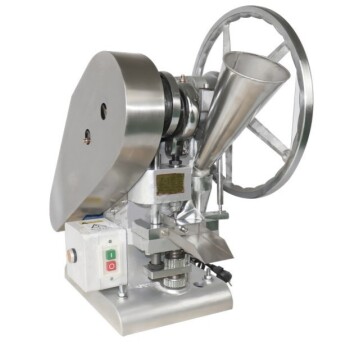
Single Punch Electric Tablet Press Machine TDP Tablet Punching Machine

Single Punch Electric Tablet Press Machine TDP Tablet Punching Machine

The electric tablet punching machine is a laboratory equipment designed for pressing various granular and powdery raw materials into discs and other geometric shapes. It is commonly used in pharmaceutical, healthcare products, food, and other industries for small batch production and processing. The machine is compact, lightweight, and easy to operate, making it suitable for use in clinics, schools, laboratories, and research units.

Laboratory High Pressure Steam Sterilizer Vertical Autoclave for Lab Department

Laboratory High Pressure Steam Sterilizer Vertical Autoclave for Lab Department

Vertical pressure steam sterilizer is a kind of sterilization equipment with automatic control, which is composed of heating system, microcomputer control system and overheating and overpressure protection system.

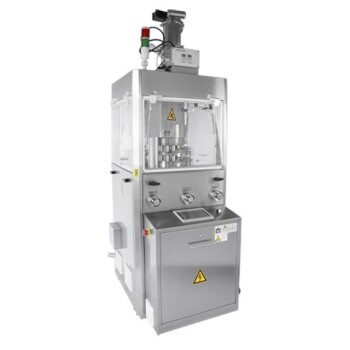
Single Punch Tablet Press Machine and Mass Production Rotary Tablet Punching Machine for TDP

Single Punch Tablet Press Machine and Mass Production Rotary Tablet Punching Machine for TDP

Rotary tablet punching machine is an automatic rotating and continuous tableting machine. It is mainly used for tablet manufacturing in the pharmaceutical industry, and is also suitable for industrial sectors such as food, chemicals, batteries, electronics, ceramics, etc. to compress granular raw materials into tablets.

Lab Plastic PVC Calender Stretch Film Casting Machine for Film Testing

Lab Plastic PVC Calender Stretch Film Casting Machine for Film Testing

The cast film machine is designed for the molding of polymer cast film products and has multiple processing functions such as casting, extrusion, stretching, and compounding.


Leave Your Message