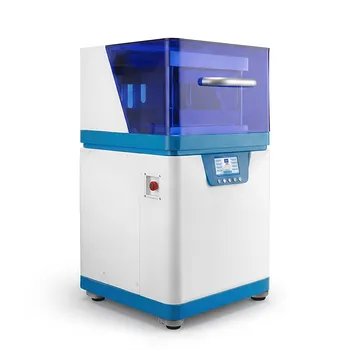
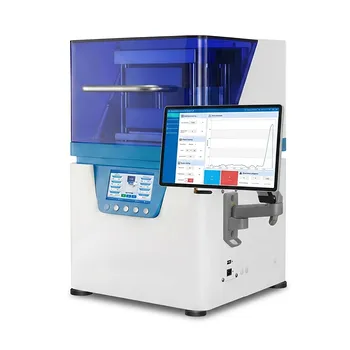
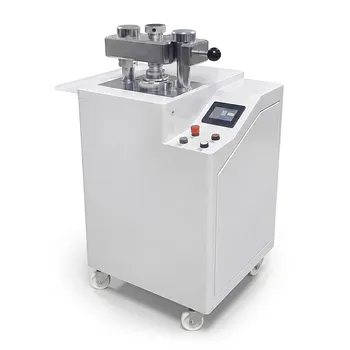
To prepare Ilmenite reduction samples, the combination of precision dies and hydraulic presses transforms loose powder mixtures into high-density cylindrical pellets. By applying controlled axial pressure—ranging from 15 MPa to 100 MPa—this process minimizes the physical distance between reactant particles. This structural optimization is essential for facilitating rapid solid-state diffusion and maintaining sample integrity during high-temperature carbothermal reduction.
Precision dies and hydraulic presses provide the mechanical consistency required to minimize diffusion paths and prevent sample stratification. This ensures efficient solid-solid reactions and structural stability throughout the high-temperature reduction process.
Enhancing Chemical Reaction Kinetics
Minimizing Diffusion Paths
The primary advantage of using a hydraulic press is the significant reduction in distance between reactant particles. By compressing the ilmenite and carbon reductant into a dense matrix, the press shortens the paths that atoms must travel during the reaction.
Optimizing Solid-Solid Interactions
Tight physical contact is critical during the early stages of carbothermal reduction, particularly before a liquid phase forms. The high contact density facilitates efficient mass transfer kinetics, allowing the solid-state reaction to proceed much faster than it would in a loose powder form.
Ensuring Physical and Structural Integrity
Preventing Material Stratification
In a high-temperature furnace, loose components can drift or separate based on density, leading to inconsistent results. Pressing the mixture into a solid pellet ensures that the ilmenite and reductant remain in fixed proximity, preventing stratification during the 1550°C reduction process.
Eliminating Density Gradients
Precision dies apply uniform axial pressure, which helps reduce density gradients within the "green body" or unsintered pellet. This uniformity is vital to prevent cracking, deformation, or excessive residual porosity when the sample is subjected to extreme heat.
Precision Control and Operational Efficiency
High-Precision Pressure Application
Laboratory hydraulic presses offer precise control over pressure and dwell times, which is necessary for repeatability. Consistent pressure ensures that every sample in a study has the same starting density, making the resulting data scientifically valid.
Geometric Consistency
Using specific die sets, such as 10 mm flat-faced punches, ensures that every sample has an identical geometry. Standardized dimensions are crucial for calculating reaction rates and ensuring the samples fit perfectly within the specialized crucibles used in high-temperature reactors.
Understanding the Trade-offs
Risk of Capping and Delamination
If the pressure is too high or the air is not properly evacuated during pressing, the pellet may suffer from capping or delamination. This occurs when internal stresses cause the pellet to crack into layers upon ejection from the die, compromising the sample's integrity.
Equipment Maintenance and Wear
Precision dies are subject to significant friction and stress, especially when handling abrasive materials like ilmenite. To maintain dimensional accuracy, dies must be regularly cleaned and inspected for scoring, as surface imperfections can lead to uneven pressure distribution.
Optimizing Your Sample Preparation
How to Apply This to Your Project
Achieving the best results with ilmenite samples requires balancing pressure with material characteristics to ensure a stable, reactive compact.
- If your primary focus is Maximum Reaction Speed: Use higher pressures (near 100 MPa) to minimize diffusion paths and maximize particle-to-particle contact area.
- If your primary focus is Structural Integrity during Sintering: Focus on uniform pressure application and slower decompression cycles to prevent internal cracking and density gradients.
- If your primary focus is High-Volume Testing: Utilize a hydraulic press with quick-change die sets and automated pressure control to increase the speed of sample switching and preparation.
By mastering the mechanical variables of the pressing process, you ensure that your chemical analysis is built on a foundation of physical consistency and optimized reaction kinetics.
Summary Table:
| Process Advantage | Impact on Sample Preparation | Key Technical Benefit |
|---|---|---|
| High-Density Pelletizing | Minimizes physical distance between reactant particles | Accelerates solid-state diffusion and reaction kinetics |
| Uniform Axial Pressure | Eliminates density gradients and internal stresses | Prevents cracking, capping, and deformation at 1550°C |
| Mechanical Consistency | Prevents material stratification and component drift | Maintains fixed proximity between ilmenite and reductants |
| Geometric Precision | Standardized sample dimensions (e.g., 10mm pellets) | Ensures repeatable data and perfect fit for high-temp crucibles |
| Controlled Dwell Times | Ensures maximum compaction and air evacuation | Reduces residual porosity and improves structural integrity |
Elevate Your Sample Preparation with KINTEK Precision
Achieve the physical consistency and chemical reactivity your research demands. KINTEK specializes in high-performance laboratory equipment, providing the precision hydraulic presses (pellet, hot, isostatic) and precision die sets necessary to optimize ilmenite reduction and advanced material synthesis.
Beyond sample preparation, our comprehensive portfolio supports your entire workflow with:
- High-Temperature Solutions: Muffle, tube, vacuum, and atmosphere furnaces for carbothermal reduction.
- Material Processing: Crushing and milling systems, sieving equipment, and specialized ceramics/cruibles.
- Advanced Reactors: CVD, PECVD, and high-pressure autoclaves for complex chemical analysis.
Don't let inconsistent sample density compromise your data. Partner with KINTEK for reliable equipment, OEM/ODM support, and technical expertise.
Contact us today to find the perfect pressing solution for your lab!
References
- A. A. Adel, L. I. G. Togang. Investigation on Phase Evaluation of Ilmenite Ore by Carbothermal Reduction and Carboiodination Reaction. DOI: 10.58915/ijneam.v16idecember.415
This article is also based on technical information from Kintek Solution Knowledge Base .
Related Products
- Automatic Hydraulic Hot Press with 500x500mm Heating Plates and Multi Stage PLC Control for Material Sintering
- Automatic High Temperature Heated Hydraulic Press Machine with Heated Plates for Lab
- Heated Hydraulic Press Machine with Heated Plates for Vacuum Box Laboratory Hot Press
- Manual High Temperature Heated Hydraulic Press Machine with Heated Plates for Lab
- 24T 30T 60T Heated Hydraulic Press Machine with Heated Plates for Laboratory Hot Press
People Also Ask
- How do hydraulic presses facilitate material solidification in Low-Temperature LPS? Optimize Your Material Densification
- Why is 800 MPa required for TiNiPdCu alloy green bodies? Master High-Density Compaction for Superior Material Strength
- How does KBr pellet preparation facilitate FTIR of high-ash mud? Precision Sample Prep for Structural Analysis
- Why is an industrial hydraulic press with precision stainless steel molds used? For Uniform Mo-Fe Precursor Compacts.
- Purpose of Coaxial Ring Molds & Presses in EM Testing? Achieve Precise VNA Data & Fit