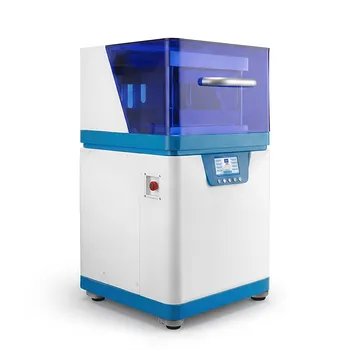
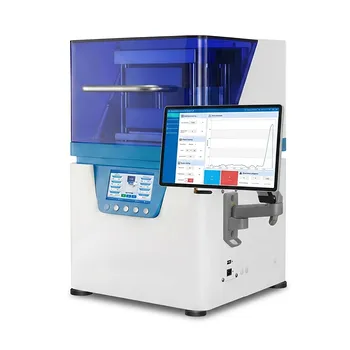
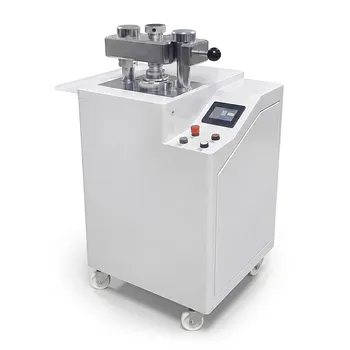
Standardization of the precursor compact is the primary driver for using specialized equipment. An industrial hydraulic press and precision stainless steel molds are used to compress synthesized nano-precursor powders into uniform, high-strength cylindrical compacts. This process eliminates variations in diffusion paths during isothermal reduction kinetic experiments, ensuring that all subsequent data is repeatable and technically accurate.
By applying precisely controlled pressure within a fixed geometric mold, researchers can eliminate internal density gradients and structural inconsistencies. This creates a "green body" with the exact dimensions and mechanical integrity required for successful high-temperature processing.
Achieving Geometric and Kinetic Consistency
Eliminating Diffusion Variables
In kinetic experiments, the path that gases or heat must take through a material determines the reaction rate. By using a hydraulic press to create identical compacts, you ensure that diffusion paths remain constant across all samples. This removal of variables is essential for isolating the chemical behavior of the molybdenum-iron precursor.
Standardizing Sample Dimensions
Precision stainless steel molds allow for the creation of compacts with exact dimensions, typically around 4mm in diameter. This geometric regularity ensures that the surface-area-to-volume ratio is identical for every test. Without this level of precision, variations in sample size would lead to inconsistent reduction rates and skewed data.
Enhancing Structural Integrity and Density
Particle Rearrangement and Pore Elimination
The high axial pressure provided by an industrial press—often exceeding 550 MPa or 1 ton/cm²—forces powder particles to rearrange and fill internal voids. This mechanical force overcomes the elastic resistance between particles, inducing plastic flow that significantly increases the initial density of the compact.
Developing Green Strength
The compression process creates mechanical interlocking between the precursor particles. This results in "green strength," which is the mechanical integrity required for the compact to maintain its shape during handling. Without sufficient green strength, the molybdenum-iron precursor would crumble before it could reach the sintering or reduction stage.
Mitigating Thermal Processing Risks
Preventing Sintering Defects
Uniform initial density is critical for preventing non-uniform shrinkage during high-temperature sintering. If the powder is packed inconsistently, the material may warp or develop micro-cracks as it densifies. Precision molds ensure the density is homogenous, securing the mechanical strength of the final material.
Controlling Initial Porosity
The hydraulic press allows for the fine-tuning of initial porosity, which determines how molten materials or gases move through the structure. In molybdenum-iron precursors, precise pressure control prevents pores from being too large (which reduces final density) or too narrow (which can obstruct gas flow during reduction).
Understanding the Trade-offs
The Risk of Excessive Pressure
While high pressure increases density, exceeding the material's limits can lead to lamination or "capping" defects. This occurs when internal stresses cause the compact to crack into horizontal layers upon release from the mold. Finding the specific pressure balance for molybdenum-iron is vital to avoid structural failure.
Mold Wear and Contamination
Precision stainless steel molds offer excellent accuracy, but they are subject to mechanical wear over hundreds of cycles. As the mold wears down, tolerances can shift, leading to subtle changes in sample diameter. Additionally, high-pressure friction can occasionally introduce trace metallic contaminants into the precursor surface.
Applying This to Your Process
Recommendations for Success
- If your primary focus is experimental accuracy: Utilize a standardized 4mm stainless steel mold to ensure that diffusion paths are identical across all test batches.
- If your primary focus is structural integrity: Prioritize a hydraulic press with precise pressure gauges to achieve the 550 MPa threshold required for mechanical interlocking.
- If your primary focus is high-temperature sintering: Ensure the press provides stable, unidirectional pressure to eliminate density gradients that cause cracking during heating.
The use of precision pressing equipment transforms loose nano-powders into a standardized technical medium, enabling the reliable study and production of molybdenum-iron alloys.
Summary Table:
| Feature | Function in Preparation | Key Metric/Parameter | Benefit to Researchers |
|---|---|---|---|
| Hydraulic Press | Applies high axial pressure | ≥ 550 MPa (1 ton/cm²) | Eliminates internal density gradients |
| Precision Mold | Defines geometric shape | 4mm Diameter (standard) | Ensures constant diffusion paths |
| Plastic Flow | Rearranges nano-particles | High-pressure induction | Maximizes initial green density |
| Mechanical Interlocking | Creates structural integrity | Particle friction & binding | Prevents crumbling during handling |
Elevate Your Material Synthesis with KINTEK Precision
Achieving repeatable kinetic data starts with the perfect green compact. KINTEK specializes in high-performance laboratory equipment designed for the most demanding material science applications. Our comprehensive range of industrial hydraulic presses (including pellet, hot, and isostatic models) and precision-engineered molds provides the stability and pressure control (up to 550 MPa and beyond) required to eliminate diffusion variables and structural defects.
From crushing and milling systems for precursor preparation to high-temperature furnaces for final sintering, KINTEK offers a complete ecosystem for your molybdenum-iron research and production.
Ready to ensure the integrity of your samples? Contact our technical experts today to find the ideal pressing solution for your lab and experience the KINTEK advantage in precision and reliability.
References
- A. A. El-Geassy, Abdulaziz S. Alghamdi. A Novel Hydro-Thermal Synthesis of Nano-Structured Molybdenum-Iron Intermetallic Alloys at Relatively Low Temperatures. DOI: 10.3390/ma16072736
This article is also based on technical information from Kintek Solution Knowledge Base .
Related Products
- Automatic Hydraulic Hot Press with 500x500mm Heating Plates and Multi Stage PLC Control for Material Sintering
- Automatic High Temperature Heated Hydraulic Press Machine with Heated Plates for Lab
- Heated Hydraulic Press Machine with Heated Plates for Vacuum Box Laboratory Hot Press
- Manual High Temperature Heated Hydraulic Press Machine with Heated Plates for Lab
- 24T 30T 60T Heated Hydraulic Press Machine with Heated Plates for Laboratory Hot Press
People Also Ask
- How do hydraulic presses facilitate material solidification in Low-Temperature LPS? Optimize Your Material Densification
- Why is 800 MPa required for TiNiPdCu alloy green bodies? Master High-Density Compaction for Superior Material Strength
- How does KBr pellet preparation facilitate FTIR of high-ash mud? Precision Sample Prep for Structural Analysis
- Purpose of Coaxial Ring Molds & Presses in EM Testing? Achieve Precise VNA Data & Fit
- What process advantages do precision dies and hydraulic presses provide when preparing Ilmenite reduction samples?