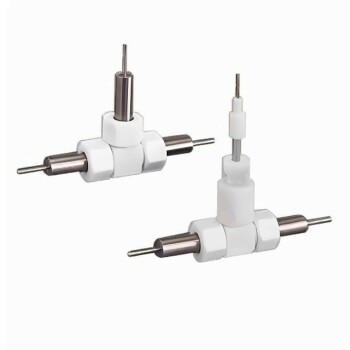
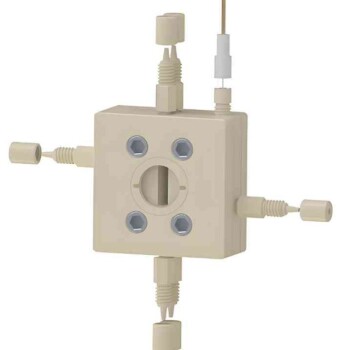
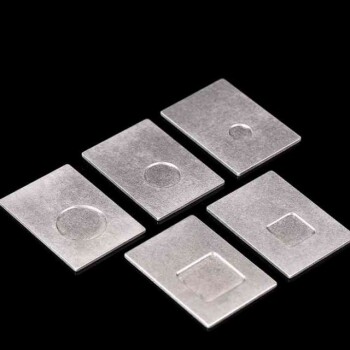
Customized Stainless Steel Blocking Cells, frequently referred to as Mold Batteries, act as the structural and electrical backbone for evaluating solid electrolytes. They provide a dual-purpose solution: offering a rigid, sealed environment for compressing powders into pellets while simultaneously serving as the current collectors for testing. This integration is essential for maintaining continuous pressure on the electrode-electrolyte interface, a variable that directly dictates the reliability of your data.
Reliable solid-state battery testing requires isolating chemical behavior from mechanical failure. These cells ensure that the interface remains intact under pressure, allowing you to attribute performance limits to the chemistry of the electrolyte rather than poor physical contact.
The Engineering Mechanics of the Cell
Rigid Mechanical Support
Solid electrolytes often begin as powders that must be densified. Customized stainless steel cells provide the rigid mechanical support necessary for this powder pelletizing process.
By acting as a mold, the cell allows you to press the electrolyte directly into the testing hardware. This eliminates the risk of fracturing fragile pellets during transfer between a press and a separate test cell.
Maintaining Continuous Pressure
Once the electrode is assembled, the cell maintains continuous pressure on the interface.
In solid-state systems, loss of physical contact leads to high impedance and false failure signals. The design of these mold batteries ensures that the electrolyte and electrode remain in tight contact throughout the duration of the experiment.
Environmental Isolation
These cells offer a sealed environment critical for sensitive chemistries.
Many solid electrolytes and alkali metal anodes (like sodium) are highly reactive to air and moisture. The sealing mechanism preserves the chemical integrity of the materials inside, ensuring the observed results reflect intrinsic material properties rather than contamination.
Critical Testing Applications
Enabling Cyclic Voltammetry (CV)
To determine the high-voltage tolerance of an electrolyte, researchers rely on Cyclic Voltammetry (CV).
The stainless steel cell acts as a blocking electrode (conducting electrons but blocking ions). This setup allows you to sweep voltages to identify the exact window where the electrolyte remains stable before decomposing.
Measuring Critical Current Density (CCD)
These cells are pivotal for performing Critical Current Density (CCD) tests.
CCD evaluates the stability of the electrolyte against metallic sodium or lithium. By maintaining uniform pressure, the cell helps prevent the formation of voids where dendrites often nucleate, providing a more accurate measurement of the material's resistance to short-circuiting.
Understanding the Trade-offs
The Electrochemical Window of Steel
While stainless steel is an excellent current collector, it is not electrochemically inert at all potential ranges.
When testing for extremely high oxidation voltages, the stainless steel itself may contribute to background currents or side reactions. It is vital to know the stability limits of the steel hardware to ensure it does not interfere with the signal from the electrolyte.
Mechanical Limitations
While these cells provide "continuous pressure," they are generally static systems.
They may not accommodate significant volume expansion or contraction of electrodes as effectively as spring-loaded or pneumatic cells designed for full-cell cycling. They are optimized for material evaluation (blocking conditions) rather than long-term full-cell cycling.
Making the Right Choice for Your Goal
To maximize the value of your testing setup, align the cell's capabilities with your specific analytical objectives.
- If your primary focus is High-Voltage Tolerance: Ensure the stainless steel hardware is clean and polished to minimize background noise during Cyclic Voltammetry (CV) sweeps.
- If your primary focus is Interface Stability (CCD): Prioritize the cell’s ability to maintain uniform, high pressure to prevent physical delamination when testing against metallic sodium.
Ultimately, the customized blocking cell transforms a loose powder into a testable component, bridging the gap between material synthesis and electrochemical verification.
Summary Table:
| Feature | Function in Solid Electrolyte Testing |
|---|---|
| Rigid Mechanical Support | Facilitates powder pelletizing and prevents pellet fracture during transfer. |
| Continuous Pressure | Maintains tight electrode-electrolyte contact to prevent high impedance. |
| Environmental Isolation | Provides a sealed environment to protect reactive chemistries from air and moisture. |
| Blocking Electrode Capability | Enables precise Cyclic Voltammetry (CV) to determine high-voltage tolerance. |
| Interface Stabilization | Supports CCD tests by preventing voids and accurately measuring dendrite resistance. |
Elevate Your Solid-State Battery Research with KINTEK Precision
Bridge the gap between material synthesis and electrochemical verification with KINTEK’s specialized laboratory solutions. KINTEK offers high-performance stainless steel blocking cells and mold batteries, specifically engineered to provide the rigid support and continuous pressure required for evaluating solid electrolytes.
Beyond specialized cells, our comprehensive portfolio includes high-temperature furnaces, hydraulic pellet presses, and advanced battery research tools designed to streamline your workflow from powder processing to final testing. Whether you are measuring critical current density or exploring high-voltage stability, our equipment ensures reliable, repeatable data for the most demanding research environments.
Ready to optimize your testing accuracy? Contact our experts today to find the perfect hardware for your laboratory's needs.
Related Products
- PTFE Electrolytic Cell Electrochemical Cell Corrosion-Resistant Sealed and Non-Sealed
- Customizable Swagelok Type Test Cells for Advanced Battery Research Electrochemical Analysis
- Customizable CO2 Reduction Flow Cell for NRR ORR and CO2RR Research
- Customizable XRD Sample Holders for Diverse Research Applications
People Also Ask
- What is the necessity of selecting a PTFE electrolytic cell? Ensure Precise Graphene Corrosion Testing Accuracy
- What is the proper method for cleaning the surface of an all-PTFE electrolytic cell? Ensure Accurate Results with a Pristine Surface
- How should an all-PTFE electrolytic cell be stored after use? Expert Maintenance Tips for Long-Lasting Performance
- What is the proper cleaning method for an all-PTFE electrolytic cell? Essential Tips for Surface Integrity
- What are the standard opening specifications for all-PTFE electrolytic cells? A Guide to Sealed vs. Non-Sealed Ports