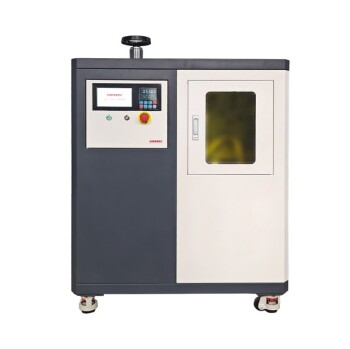
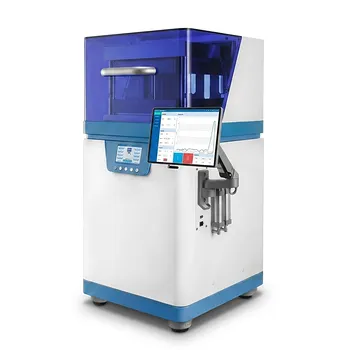
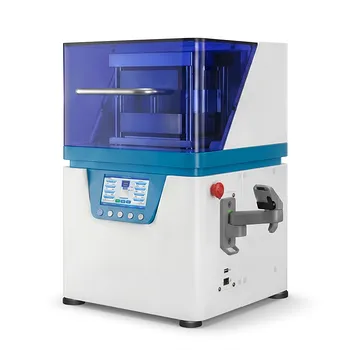
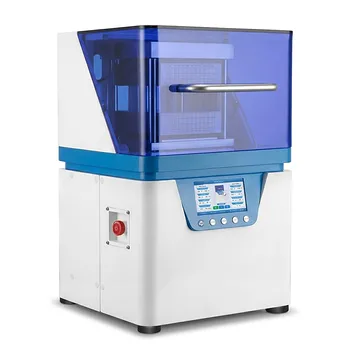
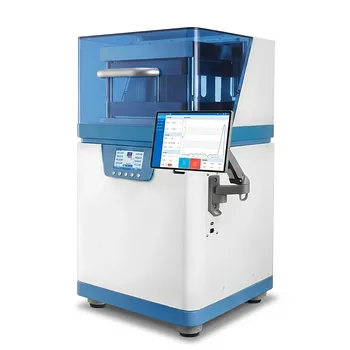
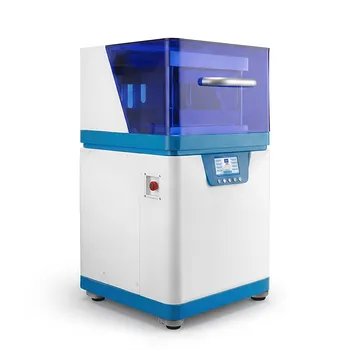
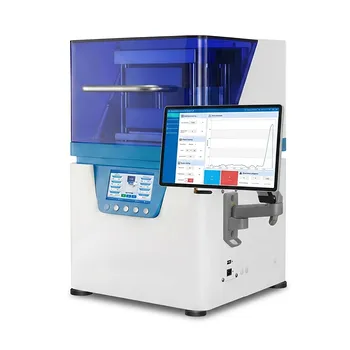
Industrial hot presses are the primary technology used to overcome the extreme sintering resistance of Zirconium Boride (ZrB2). They achieve this by simultaneously applying uniaxial mechanical pressure and temperatures reaching up to 2100°C, enabling the ceramic matrix to reach a relative density exceeding 95%. This synchronized approach ensures a uniform microstructure and superior mechanical properties that are often unattainable through conventional pressureless sintering methods.
Industrial hot presses provide the necessary driving force to densify covalently bonded ceramics like ZrB2 by combining ultra-high temperatures with mechanical force. This synergy facilitates particle rearrangement and plastic flow, resulting in near-theoretical density and optimized microstructures essential for extreme environments.
Overcoming Covalent Bond Resistance
The Challenge of Low Self-Diffusion
Zirconium Boride is characterized by strong covalent bonds, which result in a very low self-diffusion coefficient. These bonds make it incredibly difficult for atoms to move and fill voids between particles using heat alone.
Enhancing the Sintering Driving Force
The industrial hot press introduces mechanical pressure as an additional driving force for densification. By applying force during the heating cycle, the equipment compensates for the material's inherent resistance to atomic diffusion.
The Mechanics of Consolidation
Particle Rearrangement and Plastic Flow
During the hot pressing process, densification occurs primarily through particle rearrangement and plastic flow at the contact points between particles. The simultaneous application of heat and pressure allows the hard ZrB2 grains to slide and deform, filling internal pores more effectively.
Grain Boundary Diffusion
The uniaxial pressure applied by the hot press promotes grain boundary diffusion, which is the movement of atoms along the interfaces of the crystals. This mechanism is critical for closing the final stages of porosity and achieving a solid, high-strength bulk material.
The Role of Vacuum Environments
Many industrial hot presses, such as graphite resistance vacuum furnaces, operate in a vacuum or inert atmosphere. This environment is essential to prevent powder oxidation, which can otherwise contaminate the ceramic and degrade its final mechanical integrity.
Impacts on Microstructure and Performance
Achieving High Relative Density
The primary goal of using a hot press is to achieve a relative density of over 95%. This high density is the foundation for the material's "Ultra-High Temperature Ceramic" (UHTC) capabilities, including its ability to withstand extreme thermal shocks.
Controlling Grain Growth
By increasing the driving force for sintering, hot pressing can often be performed at lower temperatures or shorter durations than pressureless methods. This efficiency helps prevent excessive grain growth, resulting in a finer microstructure that improves both hardness and fracture toughness.
Understanding the Trade-offs
Geometry and Complexity Constraints
One significant limitation of industrial hot pressing is the restriction on geometric complexity. Because the process relies on uniaxial pressure within a die, it is generally limited to producing simple shapes like disks, plates, or cylinders.
Equipment and Operating Costs
The requirement for specialized graphite tooling and high-energy consumption makes hot pressing more expensive than traditional sintering. The dies are subject to wear at 2100°C, and the batch-style processing can limit high-volume production throughput.
How to Apply This to Your Project
When integrating ZrB2 into your manufacturing or research workflow, consider the specific requirements of your end-use application to determine if hot pressing is necessary.
- If your primary focus is Maximum Mechanical Strength: Utilize hot pressing to achieve near-theoretical density and a fine-grained microstructure.
- If your primary focus is Complex Part Geometry: Explore alternative forming methods, though you may need to accept lower density or use specialized additives to assist sintering.
- If your primary focus is Oxidation Resistance: Ensure your hot press utilizes a high-vacuum or high-purity inert gas system to maintain the chemical purity of the ZrB2.
By leveraging the synchronized heat and pressure of an industrial hot press, engineers can transform stubborn ZrB2 powders into high-performance components capable of enduring the world's most demanding thermal environments.
Summary Table:
| Feature | Mechanism/Action | Impact on ZrB2 Ceramics |
|---|---|---|
| Temperature (up to 2100°C) | Overcomes low self-diffusion | Enables atomic movement in covalent bonds |
| Uniaxial Pressure | Mechanical force application | Facilitates particle rearrangement & plastic flow |
| Controlled Atmosphere | High vacuum or inert gas | Prevents powder oxidation and contamination |
| Sintering Efficiency | Synchronized heat & pressure | Achieving >95% density with finer microstructures |
Unlock High-Performance Ceramic Sintering with KINTEK
Achieving near-theoretical density in Zirconium Boride requires more than just heat; it requires the precision and power of KINTEK’s advanced industrial hot presses and vacuum furnaces. Specifically designed for Ultra-High Temperature Ceramics (UHTC), our equipment provides the synchronized mechanical force and extreme temperatures (up to 2100°C) needed to overcome covalent bond resistance.
From hydraulic pellet and isostatic presses for initial shaping to high-temperature vacuum and atmosphere furnaces for final densification, KINTEK offers a comprehensive suite of laboratory equipment and consumables to streamline your research and production.
Ready to enhance your material properties? Contact our technical experts today to find the perfect hot pressing solution for your lab.
References
- J. Forster, Ravisankar Naraparaju. Oxidation behavior of Nb-coated zirconium diboride. DOI: 10.1016/j.jeurceramsoc.2023.04.029
This article is also based on technical information from Kintek Solution Knowledge Base .
Related Products
- Warm Isostatic Press for Solid State Battery Research
- Large Format Automatic Laboratory Hot Press 400x400 Plate for Industrial Material Sintering and Polymer Lamination
- Automatic Laboratory Hot Press Machine with Heated Platens 200x200mm Program Control Dual Heating Plates
- Automatic Laboratory Hot Press Dual Plate Heating Sintering Compaction System 120x120mm
- Automatic High Temperature Heated Hydraulic Press Machine with Heated Plates for Lab
People Also Ask
- What is the temperature of a warm isostatic press? Achieve Optimal Densification for Your Materials
- What is the function of a Warm Isostatic Press (WIP) in all-solid-state pouch cells? Optimize Battery Density
- Why are Warm Isostatic Presses (WIP) necessary for solid-state batteries? Achieve Atomic-Level Contact
- What advantages does a warm isostatic press offer over a traditional uniaxial press for Li6PS5Cl electrolyte sheets?
- How do warm isostatic presses improve dry electrode performance? Enhance ASSB Conductivity with Heat & Pressure