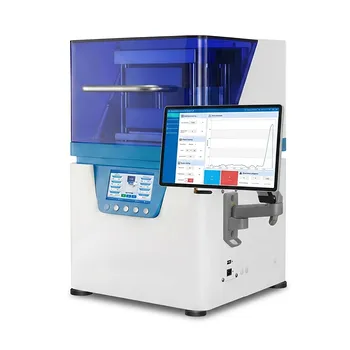
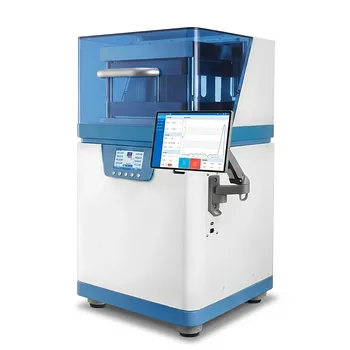
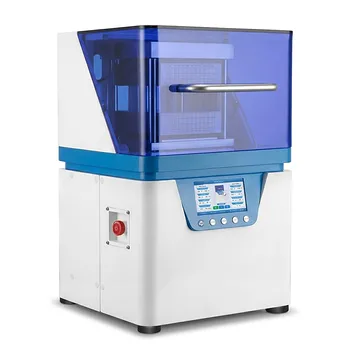
Hydraulic presses and sealers are the gatekeepers of battery performance and integrity. In the laboratory, these tools transform loose active materials into high-density electrodes and ensure that the final coin cell remains a hermetically sealed, chemically stable environment.
Laboratory hydraulic presses and sealers are critical for optimizing electrode architecture and ensuring airtight cell containment. By precisely controlling compaction and sealing pressure, researchers reduce internal resistance and prevent environmental contamination, which is essential for achieving high energy density and reproducible experimental data.
Enhancing Electrode Performance Through Compaction
Optimizing Compaction Density
Laboratory hydraulic presses are primarily used to compact electrode sheets after active materials have been coated onto foils. This process increases the compaction density, which is vital for improving the overall volumetric energy density of the battery.
Minimizing Internal Contact Resistance
High-pressure compaction forces active particles into closer proximity with each other and the current collector. This reduces contact resistance, facilitating smoother electron flow and improving the electrochemical performance of materials like Fe3O4@N-C.
Establishing Ion Transport Interfaces
In the development of solid-state batteries, hydraulic presses apply extreme axial pressure, often reaching several hundred megapascals. This high-pressure "cold-press molding" is necessary to create continuous and tight ion transport interfaces between powder particles and electrolyte layers.
Ensuring Structural Integrity and Airtight Sealing
Creating a Hermetic Mechanical Seal
During final assembly, precision hydraulic sealers (or crimpers) apply powerful, constant pressure—often around 500 psi. This force causes the sealing gasket to undergo plastic deformation, creating a perfect mechanical seal between the battery case and the cap.
Protecting Against Environmental Contamination
The primary role of the sealer is to ensure airtightness, which prevents electrolyte leakage and evaporation. It also acts as a critical barrier against moisture and air ingress, which would otherwise degrade the sensitive internal chemistry of the cell.
Maintaining Internal Physical Contact
Beyond isolation, the hydraulic sealer ensures that the internal components—including the anode, cathode, separator, and springs—remain in tight physical contact. This uniform pressure is fundamental for consistent electrolyte wetting and stable Electrochemical Impedance Spectroscopy (EIS) data.
Understanding the Trade-offs and Pitfalls
The Risk of Over-Compaction
While high pressure increases density, excessive force can lead to pore occlusion within the electrode. If the pores are crushed, the electrolyte cannot effectively penetrate the material, leading to poor ion transport and reduced capacity.
Structural Damage to Components
Applying unregulated or uneven pressure during sealing can deform the battery casing or damage the delicate separator. If the separator is compromised, it may lead to internal short circuits, rendering the experimental data useless and creating a potential safety hazard.
Variability in Manual Operation
Manual hydraulic systems can introduce human error and variability between batches. For researchers requiring high reproducibility, automated or digital hydraulic systems are often necessary to ensure every cell experiences the exact same pressure profile.
How to Apply This to Your Battery Assembly
When selecting and operating hydraulic equipment for battery research, your choice should align with your specific testing requirements and material properties.
- If your primary focus is high-energy density: Use a hydraulic press to achieve maximum electrode compaction while monitoring porosity to ensure the electrolyte can still wet the material.
- If your primary focus is data reproducibility: Invest in an automated hydraulic sealer with a digital pressure gauge to ensure every coin cell is sealed with identical force.
- If your primary focus is solid-state battery research: Ensure your hydraulic press is rated for high axial pressure (300+ MPa) to facilitate the necessary interface formation between solid layers.
- If your primary focus is long-term cycle life: Prioritize the quality of the hydraulic sealer to prevent even microscopic electrolyte leakage or air ingress over hundreds of cycles.
Properly calibrated hydraulic pressure is the foundation of reliable battery research, turning raw materials into functional, high-performance energy storage devices.
Summary Table:
| Process Step | Equipment Required | Key Impact on Battery Performance |
|---|---|---|
| Electrode Compaction | Hydraulic Press | Increases volumetric energy density and reduces contact resistance. |
| Cell Encapsulation | Hydraulic Sealer (Crimper) | Creates a hermetic seal to prevent electrolyte leakage and contamination. |
| Interface Formation | High-Pressure Press | Establishes critical ion transport pathways in solid-state batteries. |
| Quality Assurance | Digital Pressure Gauges | Ensures experimental reproducibility and prevents internal short circuits. |
Elevate Your Battery Research with KINTEK Precision
Achieve unmatched consistency and performance in your energy storage research with KINTEK’s specialized laboratory equipment. We provide a comprehensive range of tools designed for the rigorous demands of battery assembly, including:
- Precision Hydraulic Presses: Available in manual, automated, and isostatic configurations for optimal electrode compaction.
- Reliable Coin Cell Sealers: Engineered to provide consistent sealing pressure for leak-proof, airtight cell containment.
- Advanced Thermal Systems: A full suite of high-temperature furnaces (muffle, vacuum, CVD, and PECVD) for material synthesis.
- Sample Preparation: High-efficiency crushing, milling, and sieving systems to ensure material purity.
From high-pressure reactors to electrolytic cells and high-purity ceramic consumables, KINTEK is your partner in advancing battery technology.
Ready to optimize your lab's workflow and data reproducibility? Contact our technical experts today to find the perfect solution for your research needs.
References
- W. Blake Hawley, Jianlin Li. Room-Temperature Eutectic Synthesis for Upcycling of Cathode Materials. DOI: 10.3390/batteries9100498
This article is also based on technical information from Kintek Solution Knowledge Base .
Related Products
- Laboratory Hydraulic Press Split Electric Lab Pellet Press
- Laboratory Hydraulic Press Lab Pellet Press Machine for Glove Box
- Fully Automatic Heated Hydraulic Lab Press for Materials Sintering and Sample Preparation
- Automatic Laboratory Hydraulic Press for XRF & KBR Pellet Press
- Automatic Laboratory Hydraulic Pellet Press Machine for Lab Use
People Also Ask
- What are the roles of a laboratory hydraulic press and stainless steel molds in the preparation of graphite samples?
- What is the role of a laboratory hydraulic press in electrode prep? Maximize Energy Density & Sealing Precision
- How does a laboratory hydraulic press ensure the quality of alumina-forming alloy green bodies? Optimize CSP Research
- How is a laboratory hydraulic press used to evaluate the mechanical performance of nano-modified concrete? Expert Guide
- Why is a laboratory hydraulic press used for ASSB assembly? Achieving 392 MPa for Optimal Solid-State Battery Density