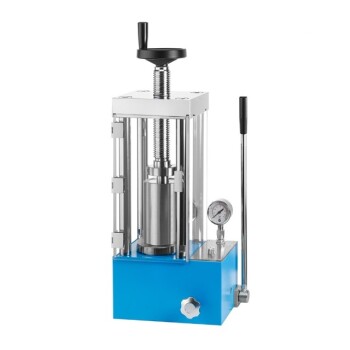
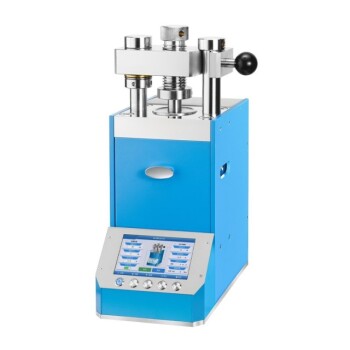
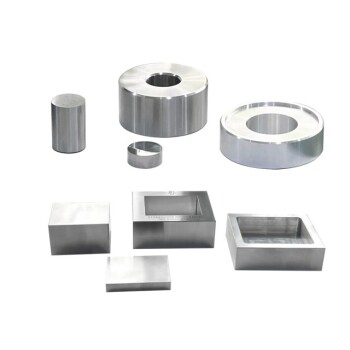
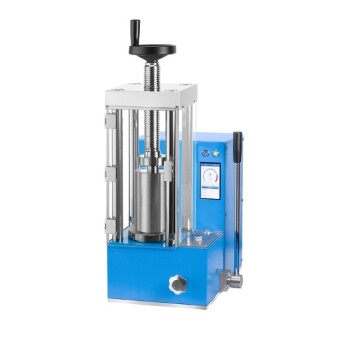
During the fabrication of VC/Cu composites, metal molds function as the essential containment vessel. They define the geometric boundaries of the specimen, holding the mixed copper and vanadium carbide powders in place. Under the high force of a hydraulic press, the metal mold translates vertical pressure into the compressive force needed to transform loose powder into a solid, cohesive "green compact" ready for further processing.
The metal mold provides the rigid confinement necessary to compress loose powder into a dense, shaped solid, effectively eliminating air pockets and establishing the structural integrity required for handling.
The Mechanics of Containment and Densification
Defining Component Geometry
The most immediate role of the metal mold is to establish the shape of the final composite.
It serves as a precise negative of the desired component. By confining the loose powder mixture within specific dimensions, the mold ensures uniformity in the initial shape of the specimen.
Facilitating Particle Rearrangement
When the hydraulic press applies load—often reaching pressures around 200 MPa (or 200 kN of force)—the metal mold resists expansion.
This resistance forces the powder particles inward rather than outward. This constraint compels the particles to rearrange and undergo plastic deformation, interlocking to create a solid structure.
Air Expulsion and Compaction
The rigidity of the metal mold is critical for achieving high relative density.
As the press operates for a specific duration (e.g., 1 minute), the mold allows for the significant reduction of pore volume. This process expels air entrapped between particles, typically achieving a relative density of around 75% in the green compact.
The Result: Creating the "Green Compact"
Establishing Green Strength
The primary output of the metal mold stage is the "green compact."
The mold ensures the powder is compressed tightly enough to hold its shape without a binder curing step. This imparts sufficient mechanical strength to the part, allowing it to be ejected, handled, and moved without crumbling.
Enabling the Sintering Phase
Proper molding during cold pressing simplifies the subsequent manufacturing steps.
By creating a pre-densified solid, the metal mold facilitates easier loading into graphite molds for the final high-temperature sintering. This pre-step enhances the dimensional accuracy of the final sintered product.
Understanding the Trade-offs
Mechanical Limitations of the Tooling
While metal molds are designed for high stress, they are not indestructible.
Applying pressure beyond the mold's yield strength can deform the mold itself. This results in composites with poor dimensional tolerances or potential damage to the pressing equipment.
Wall Friction and Density Gradients
The interaction between the powder and the metal mold walls introduces friction.
If not managed, this friction can prevent pressure from being distributed evenly throughout the powder. This may lead to a "density gradient," where the outer edges of the compact are denser than the center, potentially causing warping during sintering.
Making the Right Choice for Your Goal
To maximize the effectiveness of your cold pressing stage, align your tooling approach with your specific objectives:
- If your primary focus is Dimensional Accuracy: Ensure your metal mold is machined to tight tolerances to minimize post-sintering machining needs.
- If your primary focus is Green Strength: utilize a mold capable of withstanding higher pressures (>200 MPa) to maximize particle interlocking and density.
By selecting the correct metal mold configuration, you lay the structural groundwork necessary for a high-performance VC/Cu composite.
Summary Table:
| Stage of Role | Function within Metal Mold | Outcome for VC/Cu Composite |
|---|---|---|
| Containment | Defines geometric boundaries and limits expansion | Ensures precise component shape and dimensions |
| Densification | Facilitates particle rearrangement under high force | Reduces pore volume; achieves ~75% relative density |
| Green Strength | Enables mechanical interlocking of powder particles | Creates a cohesive compact ready for handling/sintering |
| Pre-Sintering | Establishes a pre-densified solid form | Improves dimensional accuracy during final heat treatment |
Enhance Your Composite Fabrication with KINTEK Precision
Maximize the quality and structural integrity of your VC/Cu composites with KINTEK’s high-performance laboratory equipment. Whether you are looking for high-pressure hydraulic presses (pellet, hot, or isostatic) to create flawless green compacts or require durable crushing and milling systems for powder preparation, we provide the tools necessary for scientific excellence.
From high-temperature furnaces for final sintering to precision-machined consumables like ceramics and crucibles, KINTEK specializes in supporting advanced material research and industrial manufacturing. Let our experts help you select the ideal tooling to eliminate density gradients and achieve superior material properties.
Ready to optimize your lab's efficiency? Contact us today to explore our full range of solutions!
Related Products
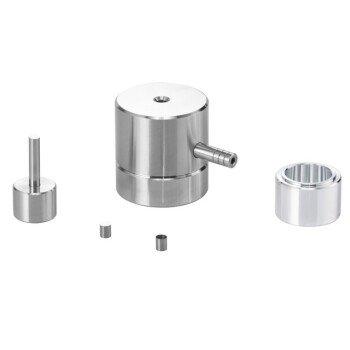
- Cylindrical Press Mold for Lab Applications
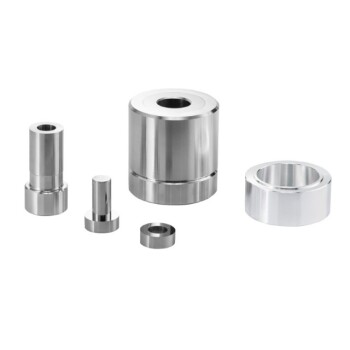
- Ring Press Mold for Lab Applications
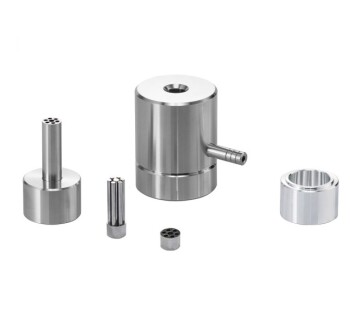
- Special Shape Press Mold for Lab
- Cylindrical Press Mold with Scale for Lab
- Professional Cutting Tools for Carbon Paper Cloth Diaphragm Copper Aluminum Foil and More
People Also Ask
- How to use a press mold? Master the Art of Creating Consistent Ceramic Forms
- What is the press mould method? A Guide to Consistent, Detailed Ceramic Forms
- Why are pressure molds with non-conductive resin inner walls required for battery testing? Ensure Data Accuracy
- What is the purpose of specialized pressure devices in sulfide solid-state batteries? Ensure Chemo-Mechanical Stability
- What is the function of press molds during the preparation of SiCf/Ti-43Al-9V composites? Achieve Structural Precision