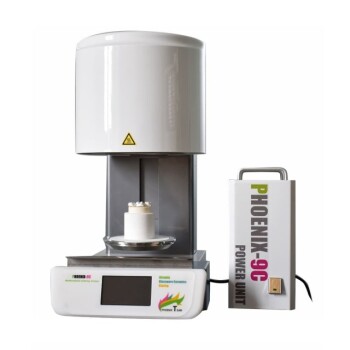
A box muffle furnace functions as a precision thermal reactor essential for converting zinc sulfide concentrate into usable oxides. Its primary role is to provide a stable, high-temperature environment that facilitates gas-solid oxidation reactions, ensuring the material is chemically prepared for subsequent processing.
Core Takeaway: By maintaining a uniform heat field between 600°C and 1,100°C, the box muffle furnace drives the complete transformation of sphalerite into zinc oxide and zinc ferrite, simultaneously eliminating sulfur to prevent downstream processing issues.
The Mechanics of Thermal Oxidation
Precise Temperature Regulation
The oxidative roasting process requires a rigorous temperature window to be effective. The box muffle furnace creates a controlled environment capable of sustaining temperatures between 600°C and 1,100°C.
Uniform Heat Field Distribution
Achieving consistent chemical conversion requires an even application of heat. The muffle furnace ensures a uniform heat field, which prevents localized hotspots or cold spots that could lead to incomplete reactions.
Facilitating Gas-Solid Reactions
The furnace is designed to support gas-solid oxidation reactions. This allows the oxygen in the atmosphere to interact effectively with the solid sulfide concentrate at high temperatures, driving the chemical changes necessary for the process.
Mineralogical Transformations
Conversion of Sphalerite
The primary goal of roasting is the phase transformation of sulfide minerals. The furnace heat converts sphalerite (zinc sulfide) into zincite (zinc oxide).
Formation of Zinc Ferrite
At these elevated temperatures, iron present in the concentrate reacts with zinc. This results in the formation of zinc ferrite, a zinc-iron spinel compound, alongside the zinc oxide.
Preparing for Hydrometallurgy
Elimination of Sulfur
A critical function of the furnace is the removal of sulfur from the concentrate. As the sulfides oxidize, sulfur is released as sulfur dioxide gas, effectively lowering the sulfur content of the solid material.
Preventing Passivation
Removing sulfur and converting the mineral phases serves a protective role for downstream processes. This thermal treatment eliminates passivation effects, ensuring that the material will not resist dissolution during subsequent hydrometallurgical leaching.
Critical Considerations in the Process
Understanding Zinc Ferrite Formation
While the formation of zinc ferrite is a standard outcome of this high-temperature process, it is important to note its characteristics. Zinc ferrite is a distinct mineral phase that behaves differently than simple zinc oxide, potentially requiring specific leaching conditions later.
The Importance of Atmosphere Control
Because this is an oxidative process, the "muffle" aspect of the furnace—isolating the material from fuel combustion byproducts while allowing air interaction—is vital. Restricted airflow or improper venting of the sulfur dioxide gas can impede the oxidation efficiency.
Making the Right Choice for Your Goal
To maximize the effectiveness of oxidative roasting using a box muffle furnace, align your operational parameters with your specific metallurgical targets:
- If your primary focus is maximizing Zinc Oxide yield: Ensure the temperature remains strictly within the 600°C–1,100°C range to drive the full conversion of sphalerite.
- If your primary focus is leaching efficiency: Prioritize the complete elimination of sulfur to prevent passivation during the hydrometallurgical stage.
Ultimately, the box muffle furnace acts as the bridge between raw sulfide ore and soluble zinc compounds, dictating the efficiency of the entire extraction process.
Summary Table:
| Feature | Function in Oxidative Roasting | Impact on Process Output |
|---|---|---|
| Temperature Range | Sustains 600°C to 1,100°C | Ensures complete transformation of sphalerite to zinc oxide |
| Uniform Heat Field | Prevents localized hotspots | Guarantees consistent chemical conversion across all material |
| Atmosphere Control | Isolates sample from fuel byproducts | Facilitates clean gas-solid oxidation and sulfur removal |
| Thermal Precision | Regulates mineral phase changes | Optimizes the formation of zincite and manageable zinc ferrite |
Optimize Your Metallurgical Research with KINTEK
Precision is the key to successful oxidative roasting and hydrometallurgical leaching. KINTEK specializes in advanced laboratory equipment, providing industry-leading high-temperature box muffle furnaces designed to deliver the uniform heat fields and precise atmosphere control required for complex mineral transformations.
Whether you are processing zinc sulfide concentrates or exploring battery research, our comprehensive portfolio—including muffle, tube, and vacuum furnaces, hydraulic presses, and specialized ceramics—is engineered to meet the rigorous demands of modern laboratories and pilot plants.
Ready to elevate your material processing? Contact us today to discover how KINTEK’s high-performance thermal solutions can drive your extraction efficiency and eliminate processing bottlenecks.
References
- Dessy Amalia, Yuhelda Dahlan. The natures of zinc sulfide concentrates and its behavior after roasting process. DOI: 10.30556/imj.vol21.no2.2018.698
This article is also based on technical information from Kintek Solution Knowledge Base .
Related Products
- 1400℃ Muffle Oven Furnace for Laboratory
- 1700℃ Muffle Oven Furnace for Laboratory
- High Temperature Muffle Oven Furnace for Laboratory Debinding and Pre Sintering
- 1800℃ Muffle Oven Furnace for Laboratory
- Laboratory Muffle Oven Furnace Bottom Lifting Muffle Furnace
People Also Ask
- How does a muffle furnace ensure reliability in calcification roasting? Achieve Precision in Pellets Conversion
- Why is a laboratory high-temperature muffle furnace required for the post-annealing treatment of copper oxide?
- What role does a laboratory high-temperature muffle furnace play in iron-based composite phase structure development?
- How is a laboratory high-temperature muffle furnace utilized in sol-gel synthesis for perovskite catalysts?
- How does a muffle furnace influence 8YSZ ceramic densification? Master Precision Sintering at 1500°C