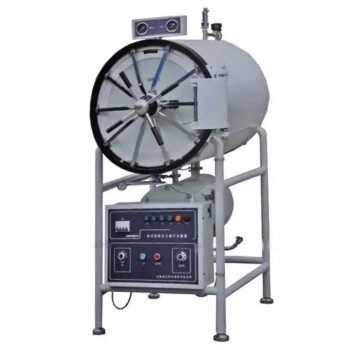
A high-pressure laboratory reactor acts as the essential containment vessel that enables the thermodynamic conditions necessary for zeolite crystallization. By creating a sealed, alkaline environment, the reactor allows the synthesis to proceed continuously at temperatures between 90°C and 150°C and pressures ranging from 1 bar to 15 bar.
The reactor facilitates the transformation of amorphous aluminosilicate hydrogels into highly ordered crystalline structures by maintaining a pressurized state that prevents solvent evaporation and sustains reaction kinetics over extended periods.
Creating the Necessary Thermodynamic Environment
To synthesize zeolites, you must surpass the limitations of standard atmospheric heating. The high-pressure reactor is the tool that makes this possible by manipulating temperature and pressure simultaneously.
Sustaining Elevated Temperatures
The synthesis of zeolites requires a thermal range specifically between 90°C and 150°C.
Standard open vessels cannot sustain liquid solvents at the upper end of this range without evaporation. The reactor secures the environment, allowing the system to reach these temperatures while maintaining the liquid medium required for ion transport.
The Function of Pressure
Within the reactor, pressures are maintained between 1 bar and 15 bar.
This pressure is often autogenous, generated by the heating of the solvent within the sealed volume. This elevated pressure keeps the chemical precursors in contact and increases the boiling point of the solution, preventing the liquid water from vaporizing effectively.
Facilitating the Crystallization Process
The physical environment created by the reactor directly influences the chemical behavior of the reactants. It turns a mixture of raw materials into a structured lattice.
Interaction of Reactants
The reactor houses a mixture typically consisting of aluminosilicate hydrogels, organic molecules, and metal cations.
The sealed, high-pressure environment promotes the dissolution of these hydrogels. It forces the interaction between the organic templates and the inorganic framework, driving the self-assembly process.
The Factor of Time
Zeolite synthesis is not instantaneous; it requires a sustained crystallization period ranging from 24 to 96 hours.
The reactor’s ability to maintain a stable, leak-free environment over several days is critical. Any fluctuation in pressure or temperature during this long duration can lead to impurities or incomplete crystallization.
Understanding the Trade-offs
While high-pressure reactors are indispensable for hydrothermal synthesis, they introduce specific challenges that must be managed.
The "Black Box" Limitation
Because these reactors are sealed metal vessels (often stainless steel with Teflon liners), real-time observation is difficult.
You cannot visually monitor the crystal growth or phase changes as they happen. You must rely entirely on precise initial parameter settings and post-synthesis characterization.
Safety and Operational Risks
Operating at pressures up to 15 bar requires rigorous safety protocols.
If the reactor is overfilled, the thermal expansion of the liquid can lead to dangerous pressure spikes that exceed the vessel's rating. Proper loading factors (filling limits) are essential to maintain safety.
Making the Right Choice for Your Goal
The specific configuration of your high-pressure reactor should be dictated by your specific research objectives.
- If your primary focus is phase purity: Prioritize a reactor with high-precision temperature control to ensure you stay strictly within the 90°C–150°C window, avoiding competitive phases.
- If your primary focus is crystal morphology: Ensure the reactor seal integrity is rated for long-duration holds (96+ hours) to allow for slow, undisturbed crystal growth.
Ultimately, the quality of your zeolite is determined by the reactor's ability to maintain a stable, unvarying environment throughout the entire crystallization timeline.
Summary Table:
| Parameter | Typical Range | Role in Zeolite Synthesis |
|---|---|---|
| Temperature | 90°C – 150°C | Facilitates ion transport and sustains reaction kinetics. |
| Pressure | 1 bar – 15 bar | Prevents solvent evaporation; maintains precursors in liquid phase. |
| Time Duration | 24 – 96 hours | Ensures stable environment for complete crystal self-assembly. |
| Medium | Alkaline Hydrogels | Provides the chemical framework for aluminosilicate structures. |
Elevate Your Material Synthesis with KINTEK Precision
Achieving high phase purity and perfect crystal morphology in zeolite synthesis requires uncompromising environmental stability. KINTEK specializes in high-performance laboratory equipment designed for the most demanding hydrothermal applications. Our robust high-pressure high-pressure reactors and autoclaves are engineered to maintain precise thermodynamic conditions over extended crystallization periods, ensuring repeatable and reliable results for researchers and industrial labs.
From high-temperature furnaces and crushing systems to specialized PTFE-lined reactors and hydrostatic presses, KINTEK provides the comprehensive toolset needed for advanced material science.
Ready to optimize your synthesis workflow? Contact our technical experts today to find the ideal high-pressure solution for your laboratory's needs.
References
- Natalia Kordala, Mirosław Wyszkowski. Zeolite Properties, Methods of Synthesis, and Selected Applications. DOI: 10.3390/molecules29051069
This article is also based on technical information from Kintek Solution Knowledge Base .
Related Products
- Customizable Laboratory High Temperature High Pressure Reactors for Diverse Scientific Applications
- Stainless High Pressure Autoclave Reactor Laboratory Pressure Reactor
- High Pressure Laboratory Autoclave Reactor for Hydrothermal Synthesis
- Mini SS High Pressure Autoclave Reactor for Laboratory Use
- Customizable High Pressure Reactors for Advanced Scientific and Industrial Applications
People Also Ask
- How do high-pressure and high-temperature reactors ensure the effective treatment of lignocellulosic wastewater in WAO?
- What equipment is required for high-pressure high-temperature reactions? Master Extreme Chemistry Safely
- How do you control high pressure in a reactor? A Guide to Safe & Stable Operation
- How does initial oxygen pressure affect the wet oxidation of pharmaceutical sludge? Master Your Oxidation Depth
- Why is argon better than nitrogen for inert atmosphere? Ensure Absolute Reactivity & Stability