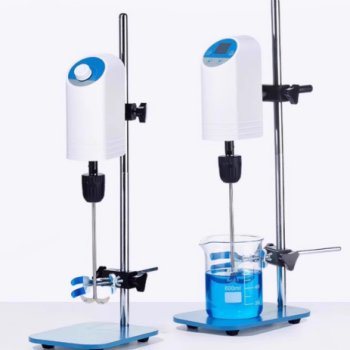
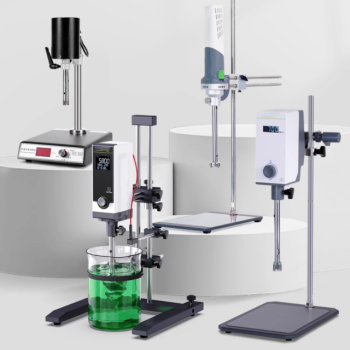
A high-pressure micro-stirred reactor serves as the central processing unit for the subcritical carbon dioxide-water hydrolysis of polyethylene terephthalate (PET), enabling a reaction that is otherwise difficult to achieve. It functions by mechanically forcing the dissolution of carbon dioxide into the aqueous phase via turbine impellers while simultaneously maintaining a safe, pressurized environment. This precise combination of mixing and containment allows for the generation of an in-situ acid catalyst without the need for adding corrosive external acids.
Core Takeaway The reactor’s primary function is to overcome the mass transfer limitations between CO2 and water. By sustaining high pressure and aggressive mixing, it creates a transient carbonic acid catalyst that breaks down PET efficiently, all while strictly maintaining the temperature safety limits required for subcritical operations.
Facilitating the Reaction Mechanism
Creating the In-Situ Catalyst
The hydrolysis of PET in this specific system relies on carbonic acid to act as a catalyst. The reactor's turbine impellers play a decisive role here by ensuring thorough mixing of the reaction system. This mechanical agitation facilitates the dissolution of carbon dioxide into the water, generating the carbonic acid required to depolymerize the PET.
Enhancing Contact Surface Area
PET is a solid polymer, while the reactant is a fluid mixture. The reactor ensures constant physical interaction between the solid PET fragments and the liquid phase. This prevents the solid material from settling and ensures uniform exposure to the acidic environment.
Ensuring Safety and Stability
Containing Subcritical Pressures
Subcritical hydrolysis often occurs at temperatures around 200°C, which generates significant internal pressure. The reactor is equipped with a pressure-resistant shell designed to withstand these conditions without failure. This containment is vital for keeping water in a liquid (subcritical) state at temperatures well above its boiling point.
Precise Temperature Regulation
While the pressure shell handles containment, the system relies on a high-precision PID controller. Working with thermocouples and heating jackets, this setup achieves real-time monitoring to prevent temperature overshoot. Strict adherence to the set temperature is critical, as fluctuations can drastically alter the yield of the target product, terephthalic acid (TPA).
Understanding the Operational Constraints
Mechanical Complexity
Unlike static pressure vessels, a stirred reactor introduces moving parts into a high-pressure zone. The seals around the stirrer shaft must be robust enough to prevent leaks while allowing for high-speed rotation. This increases the maintenance requirements compared to simpler, non-stirred reactors.
Energy Implications
The system requires energy not just for heating, but also for continuous mechanical agitation. Operators must balance the stirring speed to maximize catalyst formation against the energy costs of running the motor. Excessive stirring speed may also lead to unnecessary wear on the internal components.
Making the Right Choice for Your Goal
To maximize the effectiveness of your hydrolysis process, consider these specific priorities:
- If your primary focus is increasing reaction rate: Prioritize the efficiency of the turbine impellers, as faster dissolution of CO2 directly correlates to higher catalyst concentration.
- If your primary focus is yield consistency: Focus on the calibration of the PID controller, ensuring that thermal fluctuations do not degrade the final TPA product.
The success of subcritical PET hydrolysis depends entirely on the reactor's ability to marry high mechanical stress with precise thermal control.
Summary Table:
| Feature | Function in PET Hydrolysis | Impact on Process |
|---|---|---|
| Turbine Impellers | Mechanical dissolution of CO2 into water | Generates in-situ carbonic acid catalyst |
| Pressure Shell | Contains subcritical pressures at ~200°C | Keeps water in liquid state above boiling point |
| PID Controller | Precise thermal monitoring and regulation | Prevents TPA product degradation |
| Mechanical Stirring | Enhances contact between solid PET and liquid | Overcomes mass transfer limitations |
| Shaft Sealing | Maintains system integrity under rotation | Ensures safety and leak-free operation |
Revolutionize Your Chemical Research with KINTEK
Maximize your reaction efficiency and achieve superior PET depolymerization results with KINTEK’s advanced laboratory solutions. As specialists in laboratory equipment, we provide high-performance high-temperature high-pressure reactors and autoclaves specifically designed to handle the rigorous demands of subcritical operations.
Whether you require precise crushing and milling systems for sample preparation or robust high-pressure micro-stirred reactors for catalyst research, KINTEK offers a comprehensive range of tools, including PTFE products, ceramics, and high-precision heating systems, to ensure your lab's success.
Ready to upgrade your laboratory capabilities? Contact us today to discover how our expertise and cutting-edge equipment can enhance your research yields and safety standards.
References
- Dacosta Osei, Ana Rita C. Morais. Subcritical CO<sub>2</sub>–H<sub>2</sub>O hydrolysis of polyethylene terephthalate as a sustainable chemical recycling platform. DOI: 10.1039/d3gc04576e
This article is also based on technical information from Kintek Solution Knowledge Base .
Related Products
- Mini SS High Pressure Autoclave Reactor for Laboratory Use
- Customizable High Pressure Reactors for Advanced Scientific and Industrial Applications
- Customizable Laboratory High Temperature High Pressure Reactors for Diverse Scientific Applications
- Stainless High Pressure Autoclave Reactor Laboratory Pressure Reactor
- High Pressure Laboratory Autoclave Reactor for Hydrothermal Synthesis
People Also Ask
- Why use high-pressure reactors for molecular sieve synthesis? Unlock Superior Crystallinity and Framework Control
- What are the advantages of using a high-pressure reactor like an autoclave? Maximize Liquefaction Speed & Yield
- What is the function of a high-pressure reactor autoclave? Enhancing Cu/N Co-Doped Carbon Catalyst Synthesis
- Why are high-pressure reactors or autoclaves necessary for the synthesis of new functional materials? Unlock Precision.
- How are high-pressure reactors used to prepare metaphosphate electrocatalysts? Master In-Situ Precursor Growth