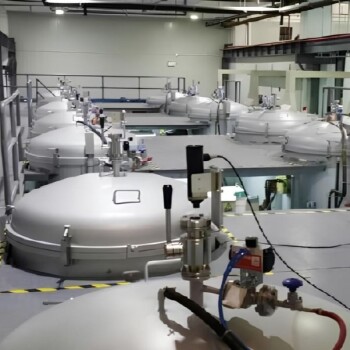
A laboratory muffle furnace serves as a precision thermal stabilization tool in the secondary calcination of chromium-based pigments, specifically driving the synthesis of stable gamma-CrOOH (chromium oxyhydroxide). By maintaining a strictly controlled environment between 873 K and 923 K, the furnace facilitates the critical phase changes necessary to transform unstable intermediates into durable, high-quality pigments.
The muffle furnace is not merely a heating element; it is an environment of controlled chemical evolution. Its primary role is to ensure the formation of a specific crystal structure (gamma-CrOOH) that directly dictates the longevity, color intensity, and chemical resilience of the final product.
The Mechanism of Phase Transformation
Critical Temperature Windows
The secondary calcination process relies on a narrow thermal window ranging from 873 K to 923 K.
The muffle furnace must maintain this temperature with high precision. Deviating from this range prevents the correct phase changes from occurring, leaving the pigment in an unstable intermediate state.
Synthesizing Gamma-CrOOH
The core objective of this thermal treatment is the formation of gamma-CrOOH.
This specific structural phase is the result of the controlled heating of pigment intermediates. Without the uniform heat provided by the furnace, this crystalline structure cannot form correctly, compromising the material's integrity.
Impact on Final Pigment Properties
Enhancing Chemical Stability
The phase change facilitated by the furnace locks the pigment's chemical structure.
This effectively boosts the pigment's weather resistance, allowing it to endure environmental exposure without degrading.
Maximizing Color Depth
There is a direct correlation between the success of the calcination process and the visual quality of the pigment.
By ensuring a complete and uniform phase transformation, the furnace enables the pigment to achieve its maximum color depth and vibrancy.
Understanding the Trade-offs: Isolation and Uniformity
The Necessity of Sample Isolation
A defining feature of the muffle furnace is that it isolates the sample from the heat source's fuel and exhaust gases.
This prevents chemical contamination. Direct contact with combustion byproducts during calcination could introduce impurities that alter the pigment's hue or stability.
Risks of Thermal inconsistency
While the target is high heat, the uniformity of that heat is equally critical.
If a furnace lacks a precise temperature control system, the sample faces two risks: local overheating (over-burning) or insufficient temperature (low conversion rates). Both scenarios result in a defective batch with inconsistent coloration or poor durability.
Making the Right Choice for Your Goal
To maximize the quality of chromium-based pigments, you must leverage the specific capabilities of the muffle furnace to suit your production priorities.
- If your primary focus is Durability: Ensure your furnace strictly maintains the 873–923 K range to guarantee the full formation of the weather-resistant gamma-CrOOH structure.
- If your primary focus is Purity: Rely on the muffle design to isolate the sample from heating elements and gases, preventing chemical cross-contamination during synthesis.
Precision in the secondary calcination stage is the defining factor that separates a raw chemical intermediate from a high-performance commercial pigment.
Summary Table:
| Feature | Role in Secondary Calcination | Impact on Chromium Pigment |
|---|---|---|
| Temperature Range | Strict control between 873 K and 923 K | Ensures synthesis of stable gamma-CrOOH phase |
| Thermal Uniformity | Prevents local overheating or under-heating | Guarantees consistent color depth and vibrancy |
| Sample Isolation | Protects from fuel and exhaust gases | Maintains chemical purity and prevents discoloration |
| Phase Control | Facilitates specific crystal transformations | Enhances weather resistance and chemical stability |
Elevate Your Pigment Synthesis with KINTEK Precision
Achieving the perfect gamma-CrOOH phase requires more than just heat; it requires absolute thermal stability and purity. KINTEK specializes in advanced laboratory equipment designed for rigorous material research. Our high-performance muffle furnaces and vacuum furnaces provide the precise temperature control and isolation necessary for the secondary calcination of chromium-based pigments.
From high-temperature furnaces and crushing systems to ceramic crucibles and PTFE consumables, KINTEK offers a comprehensive portfolio to support every stage of your pigment production and testing. Our solutions ensure your materials achieve maximum color intensity and environmental durability.
Ready to optimize your calcination process? Contact our laboratory specialists today to find the ideal furnace and consumables for your specific research needs!
References
- Bakhriddin Turakulov, Yury Liseitsev. Research on the Production of Pigments Based on Composite Pellets in the Recycling of Industrial Waste. DOI: 10.3390/jcs7070289
This article is also based on technical information from Kintek Solution Knowledge Base .
Related Products
- 1200℃ Muffle Furnace Oven for Laboratory
- 1800℃ Muffle Oven Furnace for Laboratory
- 1400℃ Muffle Oven Furnace for Laboratory
- 1700℃ Muffle Oven Furnace for Laboratory
- High Temperature Muffle Oven Furnace for Laboratory Debinding and Pre Sintering
People Also Ask
- How does a muffle furnace ensure reliability in calcification roasting? Achieve Precision in Pellets Conversion
- Why is a laboratory high-temperature muffle furnace required for the post-annealing treatment of copper oxide?
- What role does a laboratory high-temperature muffle furnace play in iron-based composite phase structure development?
- How does a muffle furnace influence 8YSZ ceramic densification? Master Precision Sintering at 1500°C
- How is a laboratory high-temperature muffle furnace utilized in sol-gel synthesis for perovskite catalysts?