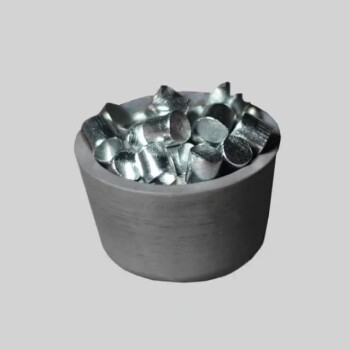
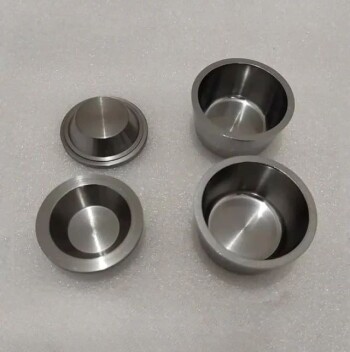
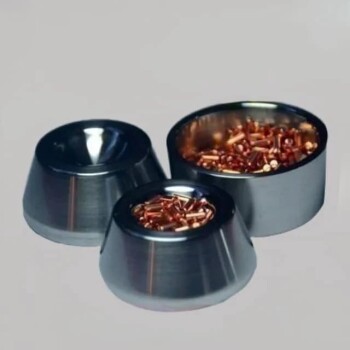
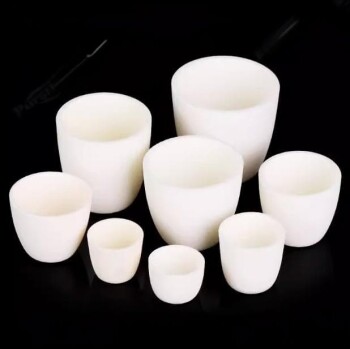
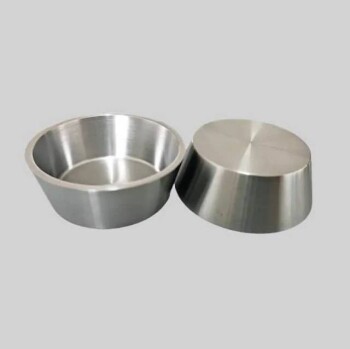
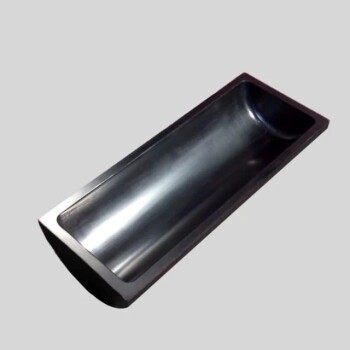
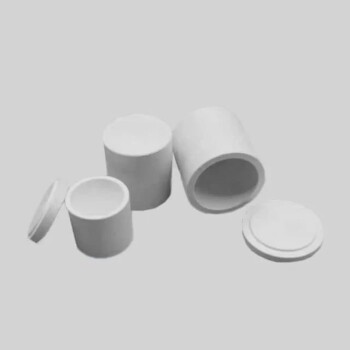
The nickel crucible functions as the essential, corrosion-resistant reaction vessel required for the alkali fusion pretreatment of coal fly ash. It allows the mixture of fly ash and sodium hydroxide to be heated to 550°C, a critical temperature where the vessel must withstand both high heat and the extremely aggressive nature of molten alkali.
Core Takeaway: The nickel crucible is not merely a container; it is an enabler of chemical transformation. Its ability to resist alkali corrosion at high temperatures allows the process to successfully break down inert fly ash structures into the reactive intermediates necessary for efficient zeolite synthesis.
The Mechanism of Transformation
Overcoming Inert Crystal Structures
Coal fly ash is composed of highly stable crystalline structures, primarily quartz and aluminosilicates. In their raw state, these materials are chemically inert and difficult to convert into new compounds.
The nickel crucible facilitates the high-temperature fusion environment needed to attack these stable bonds. By sustaining 550°C, the system provides enough energy for the alkali to degrade the crystalline lattice of the ash.
Creating Soluble Intermediates
The ultimate goal of this pretreatment is to alter the solubility of the raw material. The fusion process within the crucible converts the insoluble ash into soluble species.
Specifically, the process generates sodium silicate and sodium aluminate. These intermediates are highly reactive and dissolve easily, significantly enhancing the conversion efficiency during the subsequent hydrothermal synthesis stage.
Why Nickel is the Material of Choice
Resistance to Molten Alkali
Sodium hydroxide (NaOH) becomes extremely corrosive when melted. Standard laboratory vessels made of glass, silica, or porcelain would be dissolved or severely damaged by the molten alkali.
Nickel is selected specifically for its chemical resistance to this aggressive environment. It ensures the integrity of the container is maintained throughout the fusion process, preventing leaks or contamination.
Thermal Stability
The synthesis requires a sustained temperature of 550°C. The crucible maintains its structural integrity at this specific thermal operating point.
This stability ensures that the fusion reaction can proceed to completion without mechanical failure of the vessel.
Understanding the Trade-offs
Process Complexity vs. Efficiency
Using a nickel crucible for fusion introduces a distinct, energy-intensive pretreatment step. This adds complexity compared to direct synthesis methods that might attempt to skip high-temperature fusion.
However, omitting this step often results in poor reactivity. The trade-off is investing energy and equipment (the nickel crucible) upfront to guarantee high-quality precursors (sodium silicate and aluminate) for the final zeolite.
Material Specificity
Nickel is excellent for alkali fusion but has limitations in other chemical environments (such as acidic conditions). Its use is strictly specialized for this high-pH, high-temperature phase of the synthesis.
Making the Right Choice for Your Goal
To maximize the quality of your Na-X zeolite synthesis, apply the fusion step strategically:
- If your primary focus is conversion efficiency: Ensure the fusion temperature reaches a full 550°C within the nickel crucible to completely break down quartz and aluminosilicates into soluble intermediates.
- If your primary focus is equipment longevity: Utilize nickel exclusively for the alkali fusion step, as it is uniquely suited to resist the corrosive nature of molten sodium hydroxide.
Proper use of the nickel crucible is the key to unlocking the reactive potential of inert coal fly ash.
Summary Table:
| Feature | Role in Alkali Fusion Pretreatment |
|---|---|
| Material | High-purity Nickel (Ni) |
| Operating Temp | Up to 550°C (Critical for lattice degradation) |
| Corrosion Resistance | Exceptional resistance to molten Sodium Hydroxide (NaOH) |
| Key Outcome | Converts quartz/aluminosilicates into soluble sodium silicate/aluminate |
| Equipment Value | Prevents vessel contamination and mechanical failure during fusion |
Elevate Your Material Synthesis with KINTEK Precision
Achieving high-quality Na-X zeolite requires equipment that can withstand the harshest chemical environments. At KINTEK, we specialize in providing premium laboratory solutions, including nickel crucibles, high-temperature furnaces, and ceramic labware designed specifically for alkali fusion and hydrothermal synthesis.
Whether you are processing coal fly ash or developing advanced catalysts, our team offers the technical expertise and high-performance consumables—from PTFE products to high-pressure reactors—to ensure your research is efficient and repeatable.
Ready to optimize your lab’s pretreatment process? Contact KINTEK today for a consultation and custom quote!
References
- Silviya Boycheva, Margarita Popova. Progress in the Utilization of Coal Fly Ash by Conversion to Zeolites with Green Energy Applications. DOI: 10.3390/ma13092014
This article is also based on technical information from Kintek Solution Knowledge Base .
Related Products
- Electron Beam Evaporation Coating Conductive Boron Nitride Crucible BN Crucible
- Electron Beam Evaporation Coating Tungsten Crucible and Molybdenum Crucible for High Temperature Applications
- Electron Beam Evaporation Coating Gold Plating Tungsten Molybdenum Crucible for Evaporation
- Boron Nitride (BN) Crucible for Phosphorous Powder Sintered
- High Purity Pure Graphite Crucible for Electron Beam Evaporation
People Also Ask
- Why use Boron Nitride (BN) crucibles in metal infiltration? Ensure sample purity and non-wetting performance.
- Why are Boron Nitride (BN) or Alumina crucibles preferred for Na-flux GaN growth? Optimize Your Crystal Yield
- What is the container that holds the metal source material called in e-beam evaporation? Ensure Purity and Quality in Your Thin-Film Deposition
- What is the process of e-beam coating? Achieve High-Purity, Precise Thin Films for Your Lab
- What materials are used in electron beam evaporation? Master High-Purity Thin Film Deposition