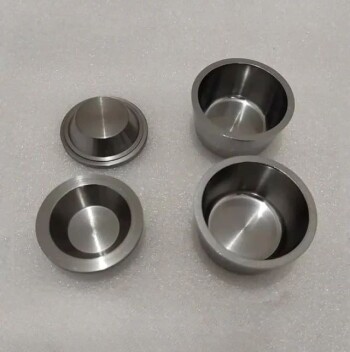
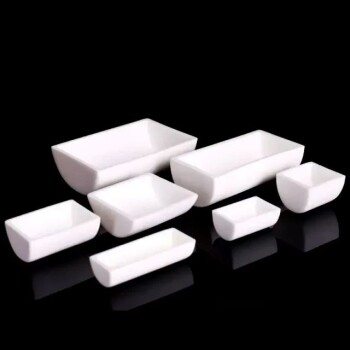
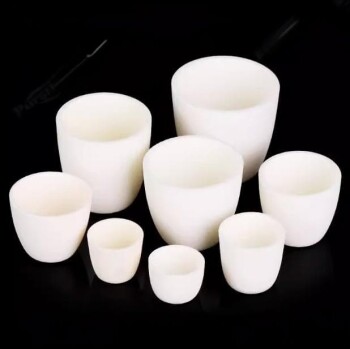
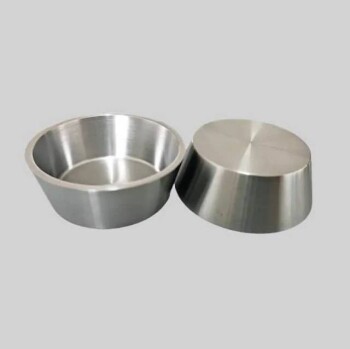
A quartz crucible serves as the foundational containment vessel required to convert precursor powder into Yttrium Oxide ultrafine powder. It acts as a high-temperature resistant barrier, allowing the material to be safely loaded into a furnace and subjected to temperatures up to 1100°C without physical failure or chemical contamination.
Core Insight: The selection of quartz is not merely about holding the powder; it is about preservation. The crucible's lack of reactivity ensures that the Yttrium Oxide’s chemical stoichiometry remains unaltered, guaranteeing the purity required for high-performance applications.
The Critical Functions of Quartz in Calcination
To understand why quartz is the standard, we must look at the specific physical and chemical demands of the calcination process.
Thermal Stability at Extreme Temperatures
Calcination of Yttrium Oxide requires an environment capable of reaching 1100°C.
At these temperatures, lesser materials would soften, warp, or melt. A quartz crucible maintains its structural integrity, ensuring the vessel does not deform under the thermal stress of the furnace.
Preserving Chemical Purity
The defining characteristic of ultrafine powder production is the need for exacting purity.
Quartz offers superior chemical inertness. It does not react with the Yttrium Oxide powder, even under high-temperature oxidative conditions.
This prevents the leaching of impurities from the container into the powder, ensuring the final product is not contaminated by the vessel itself.
Maintaining Stoichiometry
Stoichiometry refers to the precise ratio of elements within the chemical compound.
Because the quartz crucible does not chemically interact with the payload, the chemical stoichiometry of the Yttrium Oxide is preserved. You get out exactly what you intended to create, chemically speaking.
Operational Considerations and Trade-offs
While the material of the crucible is critical, how you utilize the crucible also impacts the outcome.
Managing Sample Volatility
A common operational decision is whether to cover the crucible during the heating process.
If your specific sample or precursor is known to evaporate or volatilize upon heating, a crucible lid is essential.
Using a lid creates a physical barrier that prevents the loss of sample material into the furnace atmosphere, maintaining your yield.
When to Leave the Crucible Open
Not all calcination processes require a sealed environment.
If your sample is stable and does not volatilize at calcination temperatures, using a lid is optional.
Leaving the lid off can be beneficial if the process requires the off-gassing of binders or moisture without trapping them inside the vessel.
Making the Right Choice for Your Goal
Select your equipment and configuration based on the specific behaviors of your precursor material.
- If your primary focus is material purity: Rely on the quartz crucible's chemical inertness to prevent reaction and contamination at temperatures up to 1100°C.
- If your primary focus is preventing yield loss: Utilize a crucible lid to trap samples that are prone to evaporation or volatilization.
- If your primary focus is simple processing of non-volatiles: You may omit the lid, relying solely on the open quartz vessel for thermal stability.
By leveraging the inert properties of quartz, you ensure the integrity of your Yttrium Oxide powder from the furnace to the final application.
Summary Table:
| Function | Key Benefit | Process Impact |
|---|---|---|
| Thermal Stability | Resists temperatures up to 1100°C | Prevents vessel deformation or melting during heating |
| Chemical Inertness | No reaction with Yttrium Oxide | Ensures zero contamination and high material purity |
| Stoichiometry Control | Preserves element ratios | Guarantees the chemical integrity of the ultrafine powder |
| Volatility Management | Lidded vs. Open configuration | Controls sample yield and allows for efficient off-gassing |
Elevate Your Material Synthesis with KINTEK Precision
Achieving the perfect calcination environment requires more than just heat; it requires the highest quality labware. KINTEK specializes in high-performance laboratory equipment, providing the thermal precision and chemical reliability your research demands.
Whether you are processing Yttrium Oxide or developing next-generation materials, our comprehensive range of quartz crucibles, high-temperature muffle and tube furnaces, and crushing and milling systems ensure consistent results. From essential PTFE and ceramic consumables to advanced high-pressure reactors and vacuum furnaces, KINTEK is your partner in laboratory excellence.
Ready to optimize your powder production? Contact KINTEK today to discuss your specific application needs!
Related Products
- Engineering Advanced Fine Ceramics Alumina Crucibles (Al2O3) for Thermal Analysis TGA DTA
- Electron Beam Evaporation Coating Tungsten Crucible and Molybdenum Crucible for High Temperature Applications
- Engineering Advanced Fine Ceramics Alumina Al2O3 Crucible With Lid Cylindrical Laboratory Crucible
- High Purity Pure Graphite Crucible for Electron Beam Evaporation
- Precision Machined Yttria Stabilized Zirconia Ceramic Plate for Engineering Advanced Fine Ceramics
People Also Ask
- Why Use Alumina Crucibles for TGA of Bicyclic Carbonates? Ensure Data Purity & Chemical Inertness
- Why are alumina crucibles and mother powder essential for LATP sintering? Optimize Your Solid Electrolyte Performance
- Why are high-purity alumina crucibles used for liquid lead corrosion experiments? Ensure Data Accuracy at 550°C
- What is the primary purpose of using alumina crucibles for LLTO ceramics? Optimize Your High-Temperature Sintering
- Why Use Alumina Crucibles & Powder Burial for NaSICON? Ensure Phase Purity and Prevent Elemental Volatilization