Knowledge What role does a vacuum CVD system play in Parylene C neural implant encapsulation? Achieve High-Purity Bio-Shielding
Author avatar

Tech Team · Kintek Solution

Updated 3 days ago

What role does a vacuum CVD system play in Parylene C neural implant encapsulation? Achieve High-Purity Bio-Shielding


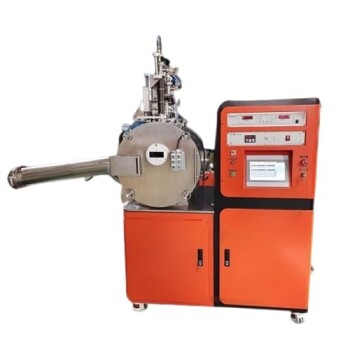
A vacuum Chemical Vapor Deposition (CVD) system serves as the critical manufacturing platform for creating the protective, insulating shell on chronic neural implants. By utilizing a vacuum environment, the system vaporizes a raw precursor, modifies it via pyrolysis, and deposits it as a solid polymer film—specifically Parylene C—onto the implant at room temperature. This process guarantees that complex, micron-scale tungsten wires receive a pinhole-free, uniform coating essential for long-term electrical insulation in the body.

The defining value of this system is its ability to produce a "bottom-up," high-purity barrier on irregular geometries without subjecting the delicate neural interface to damaging heat.

The Mechanism of Encapsulation

Vaporization and Pyrolysis

The process begins by introducing a source material (the precursor) into the vacuum chamber. Through vaporization and subsequent pyrolysis (thermal decomposition), the solid precursor is converted into a reactive gas. This gas phase allows the material to penetrate deep into complex structures that liquid coatings cannot reach.

Surface-Mediated Deposition

Unlike spray or dip coatings, CVD is a "bottom-up" technology. The film grows directly on the substrate surface through a heterogeneous chemical reaction of the adsorbed gas precursors. This results in a highly conformal polymer film that follows the exact contours of the implant.

Critical Advantages for Neural Interfaces

Solving the Geometry Problem

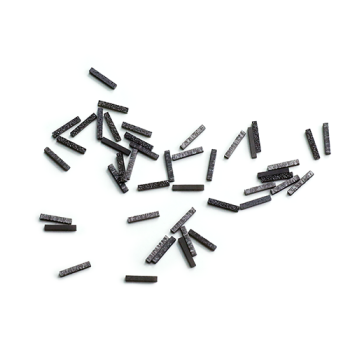
Neural implants often utilize extremely fine features, such as micron-scale tungsten wires. Standard coating methods often bridge gaps or leave exposed pinholes on these irregular surfaces. The vacuum CVD process ensures uniform thickness across the entire device, regardless of its shape or surface irregularity.

Room Temperature Processing

A unique feature of the Parylene C CVD process described is that deposition occurs at room temperature. While general CVD processes often require heated substrates to induce reaction, this specific application avoids thermal stress. This preserves the integrity of heat-sensitive components within the neural probe while establishing the barrier.

Electrical Insulation and Biostability

The primary goal of this coating is to create a robust electrical insulation barrier. The high purity and density of the film prevent fluid ingress and electrical leakage. This protection is vital for the "chronic" aspect of the implant, ensuring functionality over long-term implantation periods.

Understanding the Process Constraints

Strict Environmental Control

The "vacuum" component is not optional; it is essential for managing the mean free path of the gas molecules. Operators must precisely manage pressure, time, and power to control the resulting film thickness. Deviations in these variables can lead to coatings that are either too thick (affecting impedance) or too thin (risking pinholes).

Material Limitations

While CVD provides excellent coverage, it is a complex batch process compared to simple dipping. The system requires specialized precursors and equipment maintenance to handle the vaporization and pyrolysis stages effectively. It is a slower, more deliberate process designed for high-value, high-reliability applications rather than mass commodity coating.

Making the Right Choice for Your Goal

To determine if this encapsulation method aligns with your project requirements, consider the following:

  • If your primary focus is longevity and safety: Rely on vacuum CVD for its ability to create pinhole-free, hermetic seals that withstand the body's saline environment.
  • If your primary focus is device complexity: Choose this process for implants with deep crevices or micron-scale features, as the gas-phase deposition creates perfectly conformal layers.
  • If your primary focus is substrate sensitivity: Leverage the room-temperature capability of Parylene C deposition to coat delicate electronics without thermal damage.

Vacuum CVD transforms a chemical precursor into a precise, bio-stable shield, ensuring your neural interface survives the harsh environment of the human body.

Summary Table:

Feature Vacuum CVD (Parylene C) Standard Liquid Coatings
Deposition Method Gas-phase "bottom-up" Spray or dip-coating
Conformality Excellent (uniform on micron-scale) Poor (bridging and uneven thickness)
Thermal Stress None (Room temperature process) Variable (Often requires curing heat)
Purity/Density High-purity, pinhole-free barrier Lower density, prone to fluid ingress
Application High-value medical/neural devices Mass commodity coating

Secure Your Neural Interface with KINTEK Precision

Protect your delicate medical devices with industry-leading encapsulation technology. KINTEK specializes in advanced laboratory solutions, offering a comprehensive range of vacuum CVD systems and high-temperature furnaces designed for high-purity material deposition. Whether you are developing chronic neural implants or sensitive electronics, our equipment ensures uniform, pinhole-free coatings that withstand the harshest biological environments.

Why choose KINTEK?

  • Precision Control: Master vaporization and pyrolysis for perfect film thickness.
  • Versatile Solutions: From CVD and PECVD systems to high-pressure reactors and PTFE consumables, we provide the tools for complex research.
  • Expert Support: We help you navigate the constraints of material science to ensure device longevity and safety.

Ready to enhance your lab's capabilities? Contact us today to find the perfect vacuum system for your project!

References

  1. Yan Gong, Wen Li. Stability Performance Analysis of Various Packaging Materials and Coating Strategies for Chronic Neural Implants under Accelerated, Reactive Aging Tests. DOI: 10.3390/mi11090810

This article is also based on technical information from Kintek Solution Knowledge Base .

Related Products

People Also Ask

Related Products

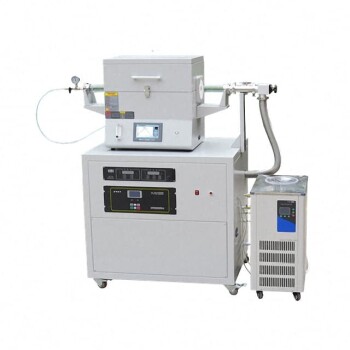
Customer Made Versatile CVD Tube Furnace Chemical Vapor Deposition Chamber System Equipment

Customer Made Versatile CVD Tube Furnace Chemical Vapor Deposition Chamber System Equipment

Get your exclusive CVD furnace with KT-CTF16 Customer Made Versatile Furnace. Customizable sliding, rotating, and tilting functions for precise reactions. Order now!

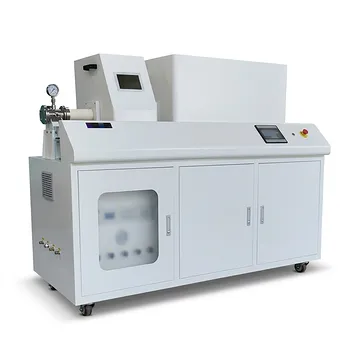
Multi Heating Zones CVD Tube Furnace Machine Chemical Vapor Deposition Chamber System Equipment

Multi Heating Zones CVD Tube Furnace Machine Chemical Vapor Deposition Chamber System Equipment

KT-CTF14 Multi Heating Zones CVD Furnace - Precise Temperature Control and Gas Flow for Advanced Applications. Max temp up to 1200℃, 4 channels MFC mass flow meter, and 7" TFT touch screen controller.

Inclined Rotary Plasma Enhanced Chemical Vapor Deposition PECVD Equipment Tube Furnace Machine

Inclined Rotary Plasma Enhanced Chemical Vapor Deposition PECVD Equipment Tube Furnace Machine

Upgrade your coating process with PECVD coating equipment. Ideal for LED, power semiconductors, MEMS and more. Deposits high-quality solid films at low temps.

HFCVD Machine System Equipment for Drawing Die Nano-Diamond Coating

HFCVD Machine System Equipment for Drawing Die Nano-Diamond Coating

The nano-diamond composite coating drawing die uses cemented carbide (WC-Co) as the substrate, and uses the chemical vapor phase method ( CVD method for short ) to coat the conventional diamond and nano-diamond composite coating on the surface of the inner hole of the mold.

Cylindrical Resonator MPCVD Machine System Reactor for Microwave Plasma Chemical Vapor Deposition and Lab Diamond Growth

Cylindrical Resonator MPCVD Machine System Reactor for Microwave Plasma Chemical Vapor Deposition and Lab Diamond Growth

Learn about Cylindrical Resonator MPCVD Machine, the microwave plasma chemical vapor deposition method used for growing diamond gemstones and films in the jewelry and semi-conductor industries. Discover its cost-effective advantages over traditional HPHT methods.

Vacuum Induction Melting Spinning System Arc Melting Furnace

Vacuum Induction Melting Spinning System Arc Melting Furnace

Develop metastable materials with ease using our Vacuum Melt Spinning System. Ideal for research and experimental work with amorphous and microcrystalline materials. Order now for effective results.

Graphite Vacuum Furnace High Thermal Conductivity Film Graphitization Furnace

Graphite Vacuum Furnace High Thermal Conductivity Film Graphitization Furnace

The high thermal conductivity film graphitization furnace has uniform temperature, low energy consumption and can operate continuously.

Laboratory Benchtop Water Circulating Vacuum Pump for Lab Use

Laboratory Benchtop Water Circulating Vacuum Pump for Lab Use

Need a water circulating vacuum pump for your lab or small-scale industry? Our Benchtop Water Circulating Vacuum Pump is perfect for evaporation, distillation, crystallization, and more.

Vacuum Arc Induction Melting Furnace

Vacuum Arc Induction Melting Furnace

Discover the power of Vacuum Arc Furnace for melting active & refractory metals. High-speed, remarkable degassing effect, and free of contamination. Learn more now!

Graphite Vacuum Continuous Graphitization Furnace

Graphite Vacuum Continuous Graphitization Furnace

High-temperature graphitization furnace is a professional equipment for graphitization treatment of carbon materials. It is a key equipment for the production of high-quality graphite products. It has high temperature, high efficiency and uniform heating. It is suitable for various high-temperature treatments and graphitization treatments. It is widely used in metallurgy, electronics, aerospace, etc. industry.

Vacuum Heat Treat Furnace with Ceramic Fiber Liner

Vacuum Heat Treat Furnace with Ceramic Fiber Liner

Vacuum furnace with polycrystalline ceramic fiber insulation liner for excellent heat insulation and uniform temperature field. Choose from 1200℃ or 1700℃ max. working temperature with high vacuum performance and precise temperature control.

Graphite Vacuum Furnace Bottom Discharge Graphitization Furnace for Carbon Materials

Graphite Vacuum Furnace Bottom Discharge Graphitization Furnace for Carbon Materials

Bottom-out graphitization furnace for carbon materials, ultra-high temperature furnace up to 3100°C, suitable for graphitization and sintering of carbon rods and carbon blocks. Vertical design, bottom discharging, convenient feeding and discharging, high temperature uniformity, low energy consumption, good stability, hydraulic lifting system, convenient loading and unloading.

Small Vacuum Heat Treat and Tungsten Wire Sintering Furnace

Small Vacuum Heat Treat and Tungsten Wire Sintering Furnace

The small vacuum tungsten wire sintering furnace is a compact experimental vacuum furnace specially designed for universities and scientific research institutes. The furnace features a CNC welded shell and vacuum piping to ensure leak-free operation. Quick-connect electrical connections facilitate relocation and debugging, and the standard electrical control cabinet is safe and convenient to operate.

Vacuum Heat Treat Sintering Brazing Furnace

Vacuum Heat Treat Sintering Brazing Furnace

A vacuum brazing furnace is a type of industrial furnace used for brazing, a metalworking process that joins two pieces of metal using a filler metal that melts at a lower temperature than the base metals. Vacuum brazing furnaces are typically used for high-quality applications where a strong, clean joint is required.

Laboratory Vacuum Tilt Rotary Tube Furnace Rotating Tube Furnace

Laboratory Vacuum Tilt Rotary Tube Furnace Rotating Tube Furnace

Discover the versatility of Laboratory Rotary Furnace: Ideal for calcination, drying, sintering, and high-temperature reactions. Adjustable rotating and tilting functions for optimal heating. Suitable for vacuum and controlled atmosphere environments. Learn more now!

Ultra-High Temperature Graphite Vacuum Graphitization Furnace

Ultra-High Temperature Graphite Vacuum Graphitization Furnace

The ultra-high temperature graphitization furnace utilizes medium frequency induction heating in a vacuum or inert gas environment. The induction coil generates an alternating magnetic field, inducing eddy currents in the graphite crucible, which heats up and radiates heat to the workpiece, bringing it to the desired temperature. This furnace is primarily used for graphitization and sintering of carbon materials, carbon fiber materials, and other composite materials.

Graphite Vacuum Furnace IGBT Experimental Graphitization Furnace

Graphite Vacuum Furnace IGBT Experimental Graphitization Furnace

IGBT experimental graphitization furnace, a tailored solution for universities and research institutions, with high heating efficiency, user-friendliness, and precise temperature control.

Circulating Water Vacuum Pump for Laboratory and Industrial Use

Circulating Water Vacuum Pump for Laboratory and Industrial Use

Efficient circulating water vacuum pump for labs - oil-free, corrosion-resistant, quiet operation. Multiple models available. Get yours now!

Stainless Steel Quick Release Vacuum Chain Three-Section Clamp

Stainless Steel Quick Release Vacuum Chain Three-Section Clamp

Discover our stainless steel quick release clamp vacuum clamp, Ideal for high vacuum applications, Strong connections, reliable sealing, Easy installation, and durable design.

304 316 Stainless Steel Vacuum Ball Valve Stop Valve for High Vacuum Systems

304 316 Stainless Steel Vacuum Ball Valve Stop Valve for High Vacuum Systems

Discover 304/316 stainless steel vacuum ball valves, Ideal for high vacuum systems, Ensure precise control and durability. Explore now!


Leave Your Message