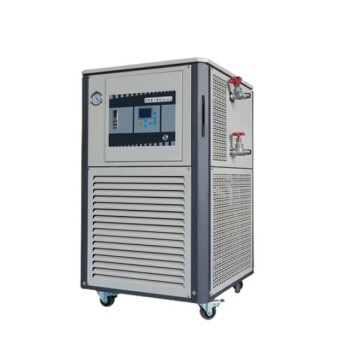
In the soft template synthesis of NSHPCs, drying or curing equipment serves as the critical thermal regulator that transforms a liquid precursor mixture into a solid, structured framework. By providing constant thermal energy, this equipment drives the essential self-assembly of molecules, ensuring the precursors and templates lock into a stable arrangement before high-temperature carbonization begins.
Core Takeaway While the equipment functions to remove solvent, its deeper purpose is to orchestrate the self-assembly of surfactant micelles. This phase establishes the physical architecture necessary for generating ordered interstitial pores in the final material.
The Mechanics of Structure Formation
Driving Molecular Self-Assembly
The primary role of the drying or curing equipment is to supply constant thermal energy to the mixture. This energy is not merely for evaporation; it acts as the catalyst for organizing the internal components.
The mixture typically contains precursors, such as chitosan salts, alongside soft templates like F127. The thermal environment allows these distinct molecules to interact and arrange themselves systematically.
Establishing Micelle Structures
At specific temperatures maintained by the equipment, surfactants and carbon source molecules self-assemble into stable micelle structures.
This organization is driven by specific chemical interactions, primarily hydrogen bonding and electrostatic attraction. The equipment ensures the temperature remains in the optimal range to facilitate these weak but critical forces.
Solidification as a Foundation
As the mixture solidifies within the equipment, the self-assembled micelle structures are locked into a fixed position.
This creates a robust physical foundation. Without this controlled solidification, the components would remain disordered, preventing the development of specific material traits later in the process.
The Impact on Final Material Properties
Creating Ordered Interstitial Pores
The ultimate goal of using soft templates is to create porosity. The drying phase is where the "blueprint" for this porosity is drawn.
The stable structures formed during curing directly lead to the formation of ordered interstitial pores. These pores are revealed and permanently set during the subsequent carbonization stage, but their existence is predetermined by the curing process.
Understanding the Trade-offs
The Necessity of Thermal Consistency
The equipment must be capable of delivering unwavering thermal stability. If the energy supply fluctuates, the self-assembly process can be disrupted.
Vulnerability of Weak Forces
Because the structure relies on hydrogen bonding and electrostatic attraction, it is sensitive to environmental conditions.
Inconsistent drying or curing can break these bonds before solidification is complete. This results in a collapse of the micelle structure, leading to disordered carbon rather than the desired hierarchical porous architecture.
Optimizing the Synthesis Process
To ensure the successful synthesis of Nitrogen and Sulfur co-doped Hierarchical Porous Carbons (NSHPCs), consider the following regarding your equipment settings:
- If your primary focus is structural regularity: Ensure your equipment maintains precise temperature stability to maximize ordered micelle formation without thermal fluctuations.
- If your primary focus is chemical interaction: Prioritize the curing duration to allow sufficient time for hydrogen bonding and electrostatic forces to fully stabilize the precursor-template network.
Ultimately, the drying oven is not just a dehydration tool, but the reactor where the material's porous destiny is defined.
Summary Table:
| Stage of Synthesis | Role of Curing/Drying Equipment | Outcome for NSHPC |
|---|---|---|
| Pre-Solidification | Provides constant thermal energy | Drives molecular self-assembly via hydrogen bonding |
| Micelle Formation | Maintains optimal temp for surfactants | Establishes ordered templates for interstitial pores |
| Solidification | Facilitates transition from liquid to solid | Locks internal architecture before carbonization |
| Process Stability | Ensures unwavering thermal consistency | Prevents collapse of sensitive electrostatic structures |
Elevate Your Material Research with KINTEK Precision
Achieving the perfect hierarchical porous architecture in NSHPCs requires more than just heat—it requires absolute thermal stability. KINTEK specializes in advanced laboratory equipment designed to give researchers total control over molecular self-assembly and solidification processes.
Whether you are synthesizing nitrogen-doped carbons or exploring complex battery materials, our high-performance drying ovens, muffle furnaces, and high-temperature vacuum systems provide the precision needed to ensure your templates never collapse.
Our comprehensive portfolio includes:
- Thermal Solutions: Muffle, tube, and atmosphere furnaces for precise carbonization.
- Processing Tools: Crushing, milling systems, and hydraulic pellet presses for sample preparation.
- Specialized Reactors: High-temperature high-pressure reactors and electrolytic cells for advanced chemical synthesis.
- Consumables: High-purity ceramics, crucibles, and PTFE products for contamination-free results.
Don't let inconsistent thermal cycles compromise your research. Contact KINTEK today to discover how our tailored laboratory solutions can enhance your lab's efficiency and material performance!
References
- Yinyu Xiang, Yutao Pei. Status and perspectives of hierarchical porous carbon materials in terms of high‐performance lithium–sulfur batteries. DOI: 10.1002/cey2.185
This article is also based on technical information from Kintek Solution Knowledge Base .
Related Products
- Laboratory Scientific Electric Heating Blast Drying Oven
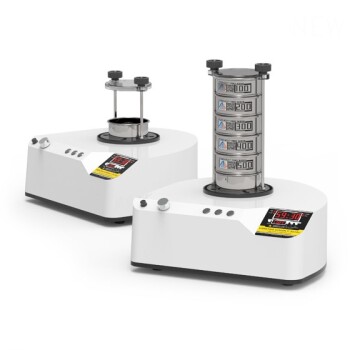
- Three-dimensional electromagnetic sieving instrument
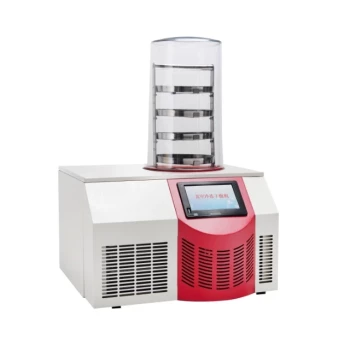
- Benchtop Laboratory Vacuum Freeze Dryer
- 23L Laboratory Vacuum Drying Oven
- 56L Vertical Laboratory Vacuum Drying Oven
People Also Ask
- How does a laboratory electric drying oven contribute to the formation of the initial coating? Expert Insights
- What role does a precision laboratory drying oven play in the synthesis of GO-PANI nanocomposites? Protect Material Integrity
- What role does a laboratory drying oven play in the preparation of zinc oxide nanoparticle precursors?
- What is the necessity of using a laboratory drying oven when processing MoO3/GO composite nanopowders? Find out here.
- What is the role of a laboratory drying oven in cellulose citrate production? Ensure Material Stability & Purity