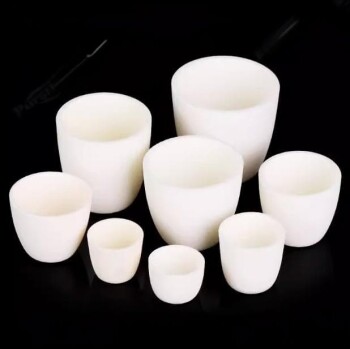
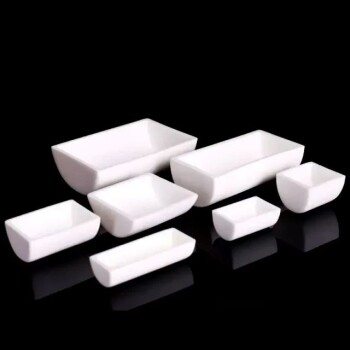
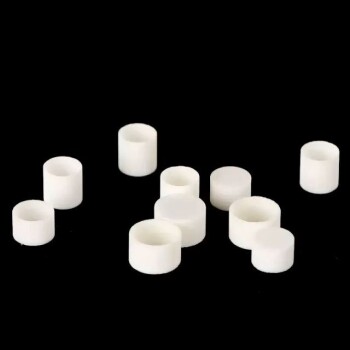
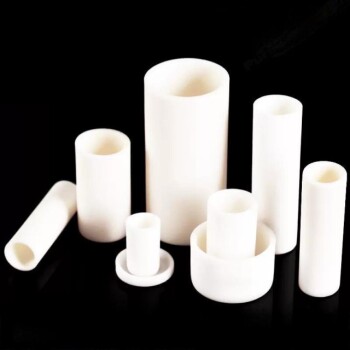
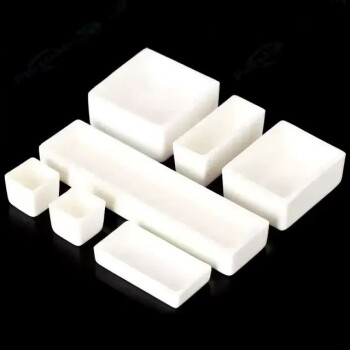
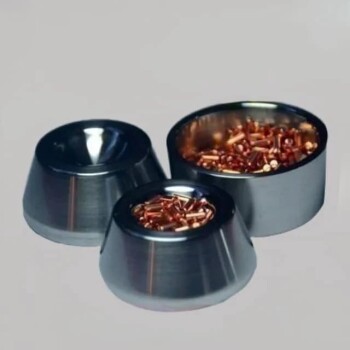
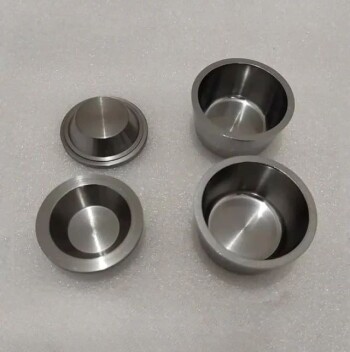
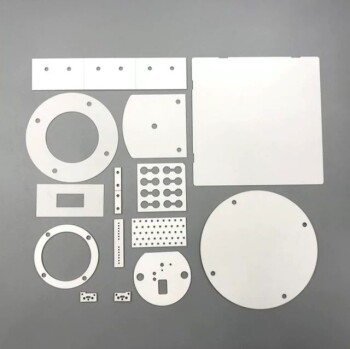
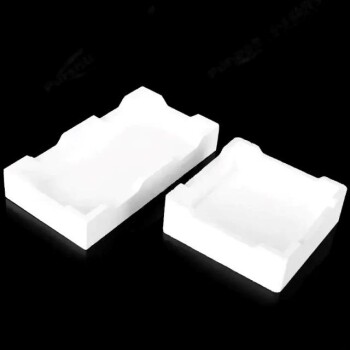
Alumina crucibles and baskets are considered essential consumables in Boudouard reaction studies due to their exceptional combination of high thermal stability and chemical resistance. Specifically, they prevent unwanted reactions with iron oxide catalysts, generated carbon, and sulfur additives, even when subjected to aggressive reducing atmospheres of CO/H2 at temperatures around 600 °C.
In experimental catalysis, the container must never become a participant. Alumina ensures that all measured data points—specifically mass changes and phase evolutions—result solely from the sample's chemistry, eliminating experimental interference.
The Critical Role of Chemical Inertness
To understand why alumina is non-negotiable, you must look at the aggressive nature of the environment inside a Boudouard reactor.
Resisting Catalyst Interaction
The Boudouard reaction frequently utilizes iron oxide catalysts to drive the process.
Many standard crucible materials might chemically interact with iron oxides at high heat, altering the catalyst's effectiveness. Alumina remains inert, ensuring the iron oxide behaves exactly as intended without contamination from the vessel walls.
Stability in Reducing Atmospheres
These studies are often conducted in a CO/H2 reducing atmosphere.
This environment is chemically aggressive and can strip oxygen from weaker materials or degrade them. Alumina maintains its structural and chemical integrity even when exposed to these gases at sustained temperatures of 600 °C.
Handling Carbon and Sulfur
The reaction generates significant amounts of carbon, and studies often involve sulfur additives.
Alumina does not react with solid carbon deposits or sulfur compounds. This isolation is vital for ensuring that the reaction products are not contaminated by the crucible material itself.
Ensuring Data Accuracy
The primary goal of using alumina is to protect the integrity of your quantitative data.
Isolating Mass Changes
Many Boudouard studies rely on gravimetric analysis to measure carbon deposition or reduction rates.
Because alumina is inert, any measured mass change can be attributed strictly to the chemical reactions within the sample. There is no risk of the crucible gaining or losing weight due to corrosion or reaction, which would skew the results.
Validating Phase Evolutions
Researchers often track how the phase of a material changes over time (phase evolution).
If the container reacts with the sample, it introduces foreign elements that can create false phases. Alumina's stability guarantees that observed phase changes are genuine properties of the sample, not artifacts of experimental interference.
Common Pitfalls in Material Selection
While alumina is the standard, understanding why other materials fail highlights its importance.
The Risk of Reactive Vessels
The most common error in high-temperature reduction studies is selecting a vessel that acts as a "reactant."
If a crucible reacts with the reducing gas or the catalyst, it becomes a variable in the experiment. This renders the data noisy or invalid, as you cannot distinguish between the sample's behavior and the container's degradation.
Thermal limits
Not all ceramics are created equal regarding thermal stability.
Attempting to use materials with lower thermal thresholds at 600 °C can lead to physical failure or subtle chemical leaching. Alumina provides a necessary safety margin for these specific operating temperatures.
Making the Right Choice for Your Experiment
Selecting the correct consumables is not just about logistics; it is a critical component of experimental design.
- If your primary focus is Gravimetric Analysis: Alumina is required to ensure that weight fluctuations are exclusively caused by carbon deposition or reduction, not vessel corrosion.
- If your primary focus is Phase Characterization: Alumina is necessary to prevent chemical leaching that could alter the crystalline structure or composition of your catalyst.
By standardizing on alumina, you eliminate the reaction vessel as a variable, securing the reproducibility and accuracy of your data.
Summary Table:
| Feature | Benefit in Boudouard Reaction Studies |
|---|---|
| Chemical Inertness | Prevents interaction with iron oxide catalysts and sulfur additives. |
| Atmospheric Stability | Resists degradation in CO/H2 reducing atmospheres at 600 °C+. |
| Non-Reactive Surface | Ensures no contamination from solid carbon deposits. |
| Gravimetric Accuracy | Guarantees mass changes reflect only the sample's chemistry. |
| High Thermal Threshold | Prevents physical failure or chemical leaching during heating. |
Secure Your Experimental Integrity with KINTEK Consumables
Don't let your reaction vessel become a variable in your research. KINTEK specializes in high-performance laboratory equipment and consumables, providing the precision alumina crucibles and ceramic tools required for sensitive studies like the Boudouard reaction.
Whether you are conducting gravimetric analysis or phase characterization, our comprehensive portfolio—including high-temperature furnaces, vacuum systems, and specialized ceramics—is designed to meet the rigorous demands of material science and battery research.
Ready to upgrade your lab's precision? Contact us today to find the perfect fit for your application!
References
- Joris Kadok, Jacques Poirier. Inhibiting the sp2 carbon deposition by adjunction of sulphurous species in refractory ceramics subjected to CO and H2 reducing atmosphere. DOI: 10.1016/j.jeurceramsoc.2019.03.008
This article is also based on technical information from Kintek Solution Knowledge Base .
Related Products
- Arc-Shaped Alumina Ceramic Crucible High Temperature Resistant for Engineering Advanced Fine Ceramics
- Alumina Al2O3 Ceramic Crucible Semicircle Boat with Lid for Engineering Advanced Fine Ceramics
- Engineering Advanced Fine Ceramics Alumina Crucibles (Al2O3) for Thermal Analysis TGA DTA
- Engineering Advanced Fine Ceramics Alumina Al2O3 Crucible With Lid Cylindrical Laboratory Crucible
- Engineering Advanced Fine Alumina Al2O3 Ceramic Crucible for Laboratory Muffle Furnace
People Also Ask
- Why Use Alumina Crucibles & Powder Burial for NaSICON? Ensure Phase Purity and Prevent Elemental Volatilization
- What is the primary purpose of using alumina crucibles for LLTO ceramics? Optimize Your High-Temperature Sintering
- Why are alumina crucibles and mother powder essential for LATP sintering? Optimize Your Solid Electrolyte Performance
- Why are high-purity alumina crucibles used for liquid lead corrosion experiments? Ensure Data Accuracy at 550°C
- Primary considerations for choosing alumina crucibles and quartz tubes in indium intercalation: Ensure Material Purity