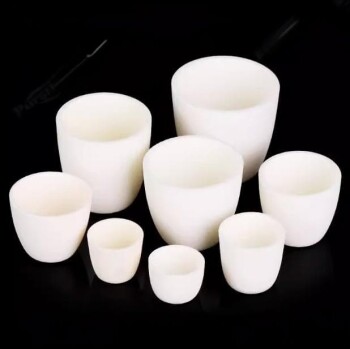
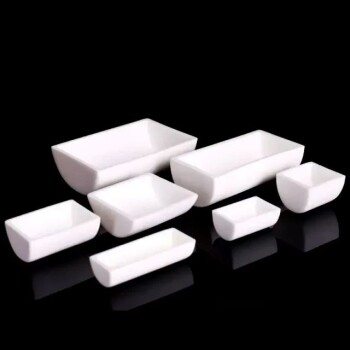
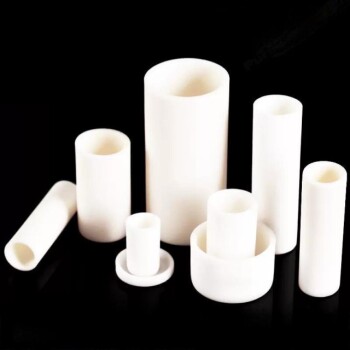
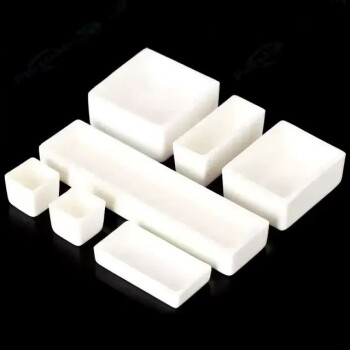
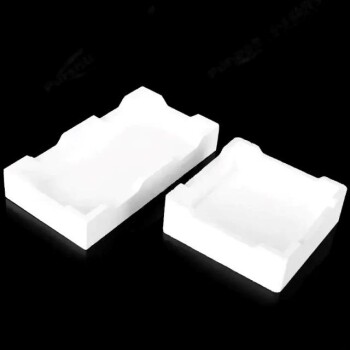
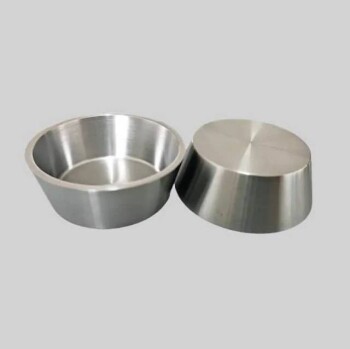
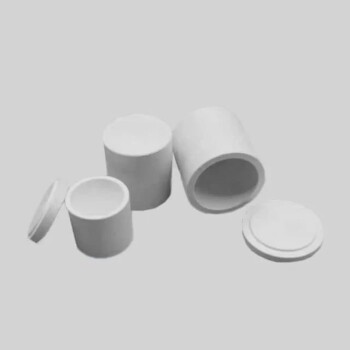
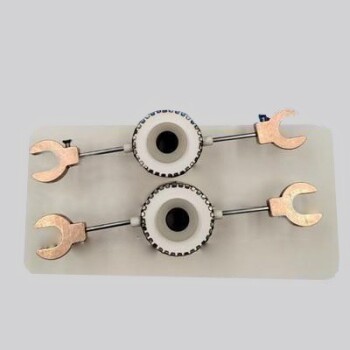
Alumina crucibles and boats are the preferred choice for Molybdenum Dioxide ($MoO_2$) reactions primarily due to their exceptional chemical inertness and high-temperature refractoriness. These containers remain structurally and chemically stable at temperatures exceeding 850°C, ensuring they do not react with precursors or sulfur vapors. This passivity is essential for maintaining the precise concentration gradients and material purity required for high-quality crystal growth or synthesis.
The use of high-purity alumina ensures that the crucible acts as a strictly passive vessel, preventing elemental leaching and unintended chemical reactions that would otherwise compromise the purity of the synthesized material or the accuracy of kinetic data.
Chemical Inertness and Purity Preservation
Resistance to Precursor and Vapor Attack
At high temperatures, many materials become reactive, but alumina ($Al_2O_3$) maintains its integrity even when exposed to Molybdenum Dioxide and corrosive sulfur vapors. This chemical passivity ensures that the container does not participate in the reaction, which is critical for achieving reproducible results in vapor phase transitions.
Preventing Elemental Leaching
High-purity alumina prevents impurity elements from leaching into the reactant powders or gas-phase products. By acting as a total barrier, it ensures that the final synthesized products—such as 2D crystals or sintered powders—remain free from furnace-borne contaminants.
Ensuring Data Accuracy
In experimental settings, alumina crucibles guarantee that any measured mass loss or gain is strictly the result of the intended reaction. Because the crucible itself does not react with oxygen or the sample, researchers can be confident that their oxidation kinetic data is accurate and reliable.
Thermal Stability and Process Control
Maintaining Refractoriness Under Stress
Alumina is selected for its ability to withstand extreme temperatures, often ranging from 1073 K to over 1500°C, without structural collapse. This thermal resistance allows for consistent batch processing in tube furnaces where structural failure of the boat could ruin an entire sample set.
Stability of Vaporization Rates
The specific geometry of alumina boats allows for the stable containment of a fixed mass of precursor powder. This stability helps maintain a constant vaporization rate during heating, which is necessary to preserve the concentration gradients required in the growth region of the furnace.
Thermal Resistance to Flux and Catalysts
Alumina remains stable even in the presence of aggressive substances like KCl flux or alkali metal catalysts. Its ability to resist these materials at temperatures exceeding 1000°C makes it a versatile choice for complex synthesis environments that would degrade quartz or lower-grade ceramics.
Understanding the Trade-offs and Pitfalls
Risk of Sample Adhesion
At extreme temperatures (around 1500°C), some liquid oxidation products can cause the sample to adhere to the crucible walls. This can lead to the fracturing of the specimen upon cooling, potentially damaging the oxide scale or the crucible itself.
Sensitivity to Thermal Shock
While alumina is refractory, it can be sensitive to rapid temperature changes. Frequent, sudden heating and cooling cycles may lead to micro-cracking, eventually compromising the structural integrity of the boat over multiple uses.
Mitigation via Powder Buffers
To prevent adhesion and protect the crucible, a thin layer of alumina powder can be placed at the bottom of the container. This sacrificial layer prevents direct contact between the sample and the vessel, allowing for easy removal of the specimen after cooling.
How to Apply This to Your Project
Recommendations for Material Selection
- If your primary focus is Maximum Sample Purity: Use high-purity alumina crucibles (99.9%+) to eliminate the risk of impurity leaching during high-temperature sintering.
- If your primary focus is Kinetic Accuracy: Select alumina vessels to ensure that mass changes are solely attributable to the sample's reaction with the atmosphere.
- If your primary focus is High-Volume Production: Utilize alumina boats in conjunction with quartz loading systems to facilitate batch processing while protecting samples from furnace impurities.
- If your primary focus is Preventing Specimen Damage: Apply a layer of alumina powder at the crucible base to act as a non-reactive buffer against adhesion.
By prioritizing the chemical passivity of alumina, you ensure that your high-temperature reactions remain controlled, pure, and scientifically valid.
Summary Table:
| Feature | Key Benefit | Laboratory Application |
|---|---|---|
| Chemical Inertness | Prevents elemental leaching & reaction with precursors | High-purity 2D crystal growth |
| High Refractoriness | Stable up to 1500°C+ without structural failure | Sintering & high-temp powder processing |
| Vapor Passivity | Resists corrosion from sulfur & oxygen vapors | Vapor phase transitions & kinetic studies |
| Flux Resistance | Maintains integrity against KCl flux & alkali catalysts | Complex material synthesis & doping |
| Geometric Stability | Ensures constant vaporization rates of powders | Controlled growth in tube furnaces |
Elevate Your Material Synthesis with KINTEK
Ensure the integrity of your high-temperature research with KINTEK’s premium laboratory solutions. We specialize in providing high-purity alumina crucibles, boats, and ceramic consumables designed to prevent contamination and withstand extreme thermal stress.
Beyond consumables, KINTEK offers a comprehensive range of high-temperature furnaces (muffle, tube, vacuum, CVD, and PECVD) and high-pressure reactors to facilitate precise process control. Whether you are performing 2D crystal growth or advanced sintering, our equipment—including hydraulic presses, crushing systems, and cooling solutions—is engineered to meet the highest scientific standards.
Achieve superior purity and reproducible results in your next project.
Contact Our Experts Today to Request a Quote
References
- Ratchanok Somphonsane, Harihara Ramamoorthy. CVD Synthesis of MoS2 Using a Direct MoO2 Precursor: A Study on the Effects of Growth Temperature on Precursor Diffusion and Morphology Evolutions. DOI: 10.3390/ma16134817
This article is also based on technical information from Kintek Solution Knowledge Base .
Related Products
- Arc-Shaped Alumina Ceramic Crucible High Temperature Resistant for Engineering Advanced Fine Ceramics
- Alumina Al2O3 Ceramic Crucible Semicircle Boat with Lid for Engineering Advanced Fine Ceramics
- Engineering Advanced Fine Ceramics Alumina Al2O3 Crucible With Lid Cylindrical Laboratory Crucible
- Engineering Advanced Fine Ceramics Alumina Crucibles (Al2O3) for Thermal Analysis TGA DTA
- Engineering Advanced Fine Alumina Al2O3 Ceramic Crucible for Laboratory Muffle Furnace
People Also Ask
- Why Use Alumina Crucibles & Powder Burial for NaSICON? Ensure Phase Purity and Prevent Elemental Volatilization
- What is the primary purpose of using alumina crucibles for LLTO ceramics? Optimize Your High-Temperature Sintering
- Why are alumina crucibles and mother powder essential for LATP sintering? Optimize Your Solid Electrolyte Performance
- Why are high-purity alumina crucibles used for liquid lead corrosion experiments? Ensure Data Accuracy at 550°C
- Primary considerations for choosing alumina crucibles and quartz tubes in indium intercalation: Ensure Material Purity