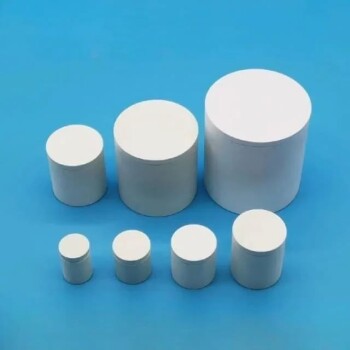
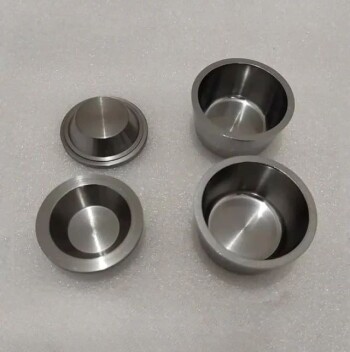
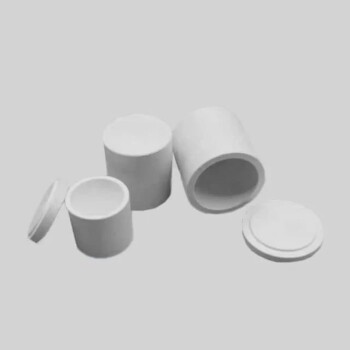
Alumina crucibles are primarily selected to serve as the containment vessels for sintering LLZT ceramic electrolyte pellets due to their exceptional thermal resilience and mechanical integrity. They act as a robust physical barrier that withstands the rigorous environment required to densify ceramic electrolytes, specifically operating effectively at temperatures up to 1125°C.
Core Takeaway Alumina is chosen for its ability to maintain structural rigidity and provide a consistent thermal field at high sintering temperatures. However, users must balance this mechanical superiority with the risk of surface chemical reactivity, which can introduce aluminum impurities into the electrolyte.
The Structural Role of Alumina
Withstanding Extreme Heat
The primary driver for selecting alumina is its high-temperature resistance. Sintering LLZT pellets requires temperatures reaching 1125°C, a threshold where many other containment materials might soften or deform.
Maintaining Physical Integrity
Alumina crucibles do not suffer from structural failure in atmospheric environments at these temperatures. This rigidity is critical for supporting the pressed green bodies (the un-sintered pellets) throughout the heating cycle.
Ensuring Consistent Densification
By maintaining its shape and shielding the sample, the crucible provides a consistent thermal field. This uniformity is essential for the densification process, ensuring the ceramic powder fuses into a solid, dense pellet without warping.
Understanding the Trade-offs
The Reactivity Paradox
While the primary reference cites alumina's "chemical stability," this is relative to the furnace environment. When in direct contact with highly reactive lithium-based ceramics, alumina is not perfectly inert.
Risk of Unintentional Doping
Supplementary data indicates that using alumina can lead to unintentional aluminum doping. Aluminum atoms may diffuse from the crucible into the LLZT grain boundaries, creating a glassy phase that can alter the material's properties.
Impact on Ionic Conductivity
This reaction can lead to the formation of impurity phases, such as La2Zr2O7. These impurities can impair the ionic conductivity of the final electrolyte, which is often the most critical performance metric for LLZT materials.
Comparison with Alternatives
Magnesium Oxide (MgO) crucibles are often cited as a superior alternative for chemical purity. MgO exhibits better inertness toward LLZT, preventing the side reactions and stoichiometry shifts often associated with alumina vessels.
Making the Right Choice for Your Goal
To select the correct containment strategy, you must weigh mechanical robustness against the strictness of your electrochemical requirements.
- If your primary focus is mechanical stability and cost-effectiveness: Select Alumina crucibles, as they offer the best physical support and resistance to thermal shock at 1125°C.
- If your primary focus is maximum ionic conductivity: Consider Magnesium Oxide (MgO) crucibles to prevent aluminum diffusion and grain boundary contamination.
- If you must use Alumina but require high purity: Utilize a protective substrate or isolation layer (such as parent powder) between the pellet and the crucible to block harmful interface reactions.
Ultimately, while alumina provides the necessary thermal vessel, strict isolation methods are recommended to preserve the electrochemical purity of your LLZT pellets.
Summary Table:
| Feature | Alumina Crucible (Al2O3) | Magnesium Oxide (MgO) |
|---|---|---|
| Max Operating Temp | Up to 1125°C+ | Excellent |
| Structural Rigidity | High; prevents warping | Moderate |
| Chemical Inertness | Risk of Al-doping in LLZT | High; prevents contamination |
| Cost-Effectiveness | High | Lower |
| Primary Use Case | Mechanical & Thermal Stability | High Ionic Conductivity Research |
Elevate Your Advanced Material Research with KINTEK
Precise sintering results start with the right containment strategy. Whether you require the mechanical robustness of alumina crucibles or the superior chemical inertness of MgO vessels for LLZT development, KINTEK provides the high-performance laboratory equipment you need.
Our extensive portfolio features premium high-temperature furnaces (muffle, tube, vacuum), precision hydraulic pellet presses, and high-purity ceramic crucibles designed to meet the rigorous demands of battery research and solid-state electrolyte production.
Ready to optimize your sintering process? Contact KINTEK today to consult with our experts and find the perfect equipment and consumables for your laboratory.
Related Products
- Engineering Advanced Fine Ceramics Alumina Al2O3 Crucible With Lid Cylindrical Laboratory Crucible
- Alumina Al2O3 Ceramic Crucible Semicircle Boat with Lid for Engineering Advanced Fine Ceramics
- Engineering Advanced Fine Ceramics Alumina Crucibles (Al2O3) for Thermal Analysis TGA DTA
- Engineering Advanced Fine Alumina Al2O3 Ceramic Crucible for Laboratory Muffle Furnace
- Ceramic Evaporation Boat Set Alumina Crucible for Laboratory Use
People Also Ask
- Why are high-purity alumina crucibles used for liquid lead corrosion experiments? Ensure Data Accuracy at 550°C
- Why are alumina crucibles and mother powder essential for LATP sintering? Optimize Your Solid Electrolyte Performance
- What is the primary purpose of using alumina crucibles for LLTO ceramics? Optimize Your High-Temperature Sintering
- Why Use Alumina Crucibles & Powder Burial for NaSICON? Ensure Phase Purity and Prevent Elemental Volatilization
- Why are alumina crucibles used as containers during the tungsten diffusion coating process on diamond surfaces?