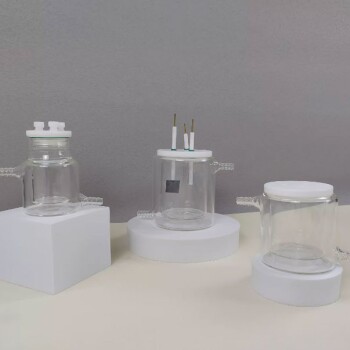
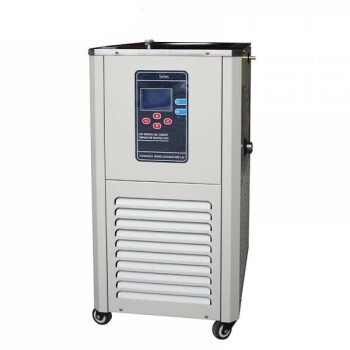
Precision temperature control is the critical enabler of effective atmospheric pressure chemical recycling. In processes such as acid/base-catalyzed transesterification, these vessels act as the stabilizing force, maintaining a mild environment typically between 80 °C and 100 °C. This specific thermal regulation is required to selectively break down resin matrices without compromising the structural integrity of the reinforcement materials.
The viability of chemical recycling relies on selectivity—applying specific energy levels to sever chemical bonds in the resin while leaving the fiber untouched. Precision control ensures the recovery of near-virgin quality carbon fibers by preventing the thermal degradation that occurs with less accurate heating methods.
The Mechanics of Selective Degradation
To understand why standard vessels are insufficient, one must look at the chemistry occurring at the molecular level. The goal is to separate the matrix (resin) from the reinforcement (fiber) without brute force.
Targeting Specific Chemical Bonds
Advanced recycling processes, such as transesterification, rely on chemical selectivity. The reaction is designed to target and cleave ester bonds or specific cross-linking points within the resin matrix.
The Necessity of Mild Environments
This chemical severing must occur within a strict temperature window, usually 80 °C to 100 °C. Precision vessels maintain this "mild" environment, ensuring the chemical reaction remains active without escalating into uncontrolled thermal decomposition.
Preserving Material Integrity
The ultimate metric of success in chemical recycling is the quality of the output. If the recovered fiber is damaged, the process loses its economic and environmental value.
Protecting Mechanical Properties
Carbon fibers are sensitive to excessive thermal stress. Accurate temperature control ensures the energy input is sufficient to dissolve the resin but low enough to leave the mechanical properties of the fibers unaltered.
Retaining Fabric Structure
Beyond individual fiber strength, the arrangement of the material matters. Proper thermal regulation allows for the recovery of the material with its fabric structure intact, enabling it to be reused in high-performance applications.
Understanding the Trade-offs
While precision temperature control offers the highest quality output, it requires a strict adherence to operational parameters.
The Risk of Thermal Overshoot
If the temperature control lacks precision and exceeds the upper threshold (even briefly), you risk damaging the fiber surface. This degrades the near-virgin quality of the output, rendering it suitable only for down-cycling rather than high-value reuse.
The Cost of Inefficiency
Conversely, if the temperature drops below the optimal 80 °C floor, the depolymerization process slows or halts. This results in incomplete resin removal, requiring additional processing cycles and reducing overall efficiency.
Making the Right Choice for Your Goal
Selecting the right reaction vessel is about aligning your equipment capabilities with your material quality targets.
- If your primary focus is Material Value: You must prioritize vessels with high-precision feedback loops to ensure the recovered fibers retain near-virgin mechanical properties.
- If your primary focus is Process Consistency: You need equipment that guarantees strict adherence to the 80–100 °C window to ensure reliable cleavage of ester bonds in every batch.
True sustainability in chemical recycling is achieved when the recovered material performs indistinguishably from the original.
Summary Table:
| Feature | Precision Control Requirement | Impact on Material Quality |
|---|---|---|
| Temperature Window | Strict 80°C - 100°C | Prevents thermal degradation of fibers |
| Bond Cleavage | Selective (e.g., Ester bonds) | Ensures clean resin-fiber separation |
| Material Integrity | High Mechanical Retention | Near-virgin carbon fiber recovery |
| Structure Preservation | Controlled Thermal Input | Retains fabric arrangement for reuse |
| Process Efficiency | Stable Thermal Feedback | Prevents incomplete depolymerization |
Revolutionize Your Recycling Process with KINTEK Precision
Achieving near-virgin material recovery requires more than just heat; it requires absolute thermal stability. KINTEK specializes in advanced laboratory equipment designed to meet the rigorous demands of chemical recycling. Our range of high-temperature high-pressure reactors and autoclaves, alongside precision-engineered chemical reaction vessels, ensures your transesterification and depolymerization processes remain within the critical 80–100 °C window.
Whether you are focusing on carbon fiber recovery or advanced resin research, KINTEK provides the high-performance tools—from crushing systems and hydraulic presses to PTFE consumables and ceramics—needed to maintain material integrity and process consistency.
Ready to elevate your lab's recycling efficiency? Contact our technical experts today to find the perfect equipment solution for your specific application.
References
- Carlos A. Navarro, Travis J. Williams. A structural chemistry look at composites recycling. DOI: 10.1039/d0mh01085e
This article is also based on technical information from Kintek Solution Knowledge Base .
Related Products
- Custom PTFE Teflon Parts Manufacturer for Reagent Wide Mouth Fine Mouth Sample High Temperature Bottles
- Custom PTFE Teflon Parts Manufacturer for PTFE Measuring Cylinder 10/50/100ml
- High Purity Pure Graphite Crucible for Evaporation
- Customizable High Pressure Reactors for Advanced Scientific and Industrial Applications
- Engineering Advanced Fine Ceramics Alumina Crucibles (Al2O3) for Thermal Analysis TGA DTA
People Also Ask
- What makes PTFE bottles suitable for static leaching? Ensure Zero-Contamination for Glass Testing
- Why Use PTFE Sample Bottles for Coal Demineralization? Ensure Chemical Stability and Data Integrity
- Why are PTFE containers necessary for selective HF etching of MAX phases? Ensure Safe & Pure MXene Synthesis
- Why use high-quality PTFE containers for CO2 reduction electrolytes? Eliminate silicon contamination and ensure data.
- Why is a PTFE container required for acid leaching of silicon nanosheets? Ensure High Purity and Safety