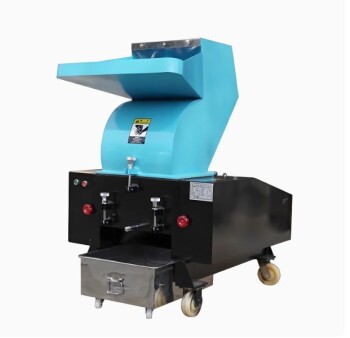
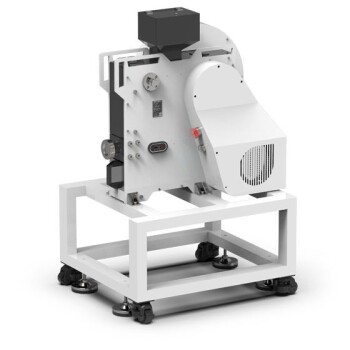
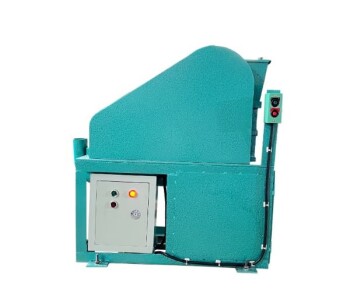
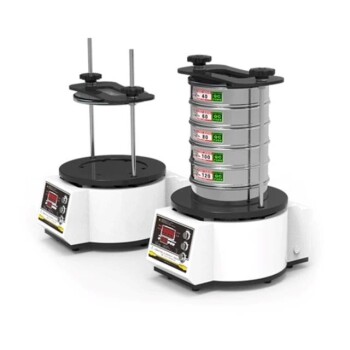
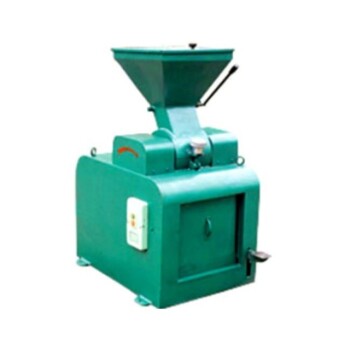
Crushing and sieving systems are the critical control mechanisms that dictate the efficiency and quality of the pyrolysis process. They function to convert dried biomass into a uniform powder with specific particle dimensions, such as 40 mesh or between 250–500 µm. By mechanically reducing particle size, these systems maximize surface area to ensure rapid, uniform heat transfer, which is the prerequisite for thorough volatile release and consistent chemical reactions.
By eliminating internal diffusion resistance and maximizing surface area, proper feedstock preparation ensures that heat penetrates every particle simultaneously. This leads to the complete release of volatile components and highly reproducible product yields.
Optimizing Thermal Dynamics
Maximizing Surface Area
The primary technical objective of crushing is to significantly increase the specific surface area of the biomass.
By reducing raw material to a fine powder (e.g., 40 mesh), you expose more material directly to the heat source. This facilitates faster heat transfer rates, allowing the pyrolysis reaction to initiate almost immediately upon entry into the reactor.
Eliminating Diffusion Resistance
Large or irregular biomass particles act as thermal insulators.
They create internal diffusion resistance, where the outside of the particle heats up significantly faster than the core. Reducing particles to a range of 250 µm to 500 µm eliminates this temperature gradient, ensuring the entire particle reaches pyrolysis temperature simultaneously.
Ensuring Process Consistency
The Role of Classification
Sieving is not just about filtration; it is about standardization.
Using a vibrating sieve, you classify crushed materials to ensure that only particles meeting a specific standard (such as 100 mesh) enter the reactor. This prevents the "mix-match" effect where dust and large chunks are processed together, which would lead to unpredictable reaction kinetics.
Data Reproducibility
For both laboratory research and industrial production, consistency is paramount.
When the feedstock size is strictly controlled, the release of volatile components becomes predictable. This results in reproducible product yield data, allowing operators to verify that changes in output are due to reactor parameters, not inconsistent raw materials.
Understanding the Risks of Improper Preparation
Localized Over-Pyrolysis
If particle sizes vary too widely, the smallest "fines" heat up much faster than the rest of the batch.
This can lead to localized over-pyrolysis, where the biomass degrades beyond the target point. This alters the chemical composition of the resulting bio-oil or gas, often degrading its quality.
Incomplete Degradation
Conversely, oversized particles that bypass the sieving process introduce inefficiency.
These particles often suffer from incomplete degradation. The heat may not penetrate the core effectively during the residence time, leaving unreacted material inside and reducing the overall conversion efficiency of the system.
Making the Right Choice for Your Goal
To achieve reliable pyrolysis results, you must tailor your mechanical preparation to your specific processing targets.
- If your primary focus is reproducible research data: Use high-precision sieving to maintain a strict particle range (e.g., 250 µm to 500 µm) to strictly eliminate variables in your yield calculations.
- If your primary focus is maximizing reactor efficiency: Calibrate your crushing system to achieve a specific mesh size (such as 40 or 100 mesh) that ensures thorough volatile release without excessive energy expenditure on grinding.
Precise feedstock preparation is not merely a preliminary step; it is the fundamental variable that secures the quality and uniformity of your final energy product.
Summary Table:
| Parameter | Targeted Dimension | Function in Pyrolysis |
|---|---|---|
| Particle Size | 40 - 100 Mesh (250–500 µm) | Maximizes surface area for rapid heat transfer |
| Size Uniformity | Sieve-Classified | Eliminates internal diffusion resistance and thermal gradients |
| Consistency | Standardized Batching | Ensures reproducible product yields and data accuracy |
| Quality Control | Mechanical Screening | Prevents localized over-pyrolysis and incomplete degradation |
Maximize Your Pyrolysis Efficiency with KINTEK Precision
At KINTEK, we understand that high-quality bio-oil and gas start with perfect feedstock preparation. Our industrial-grade crushing and milling systems and high-precision sieving equipment are engineered to eliminate internal diffusion resistance and ensure consistent thermal dynamics for your biomass research or production.
Whether you are performing laboratory-scale research with our tube furnaces and high-pressure reactors or scaling up industrial output, KINTEK provides the comprehensive tools you need—from hydraulic presses for pelletizing to cooling solutions for bio-oil recovery.
Ready to achieve reproducible results and superior conversion rates? Contact our laboratory equipment experts today to find the ideal crushing and sieving solution for your specific application.
References
- Leni Maulinda, Ahmadi Ahmadi. The Influence of Pyrolysis Time and Temperature on the Composition and Properties of Bio-Oil Prepared from Tanjong Leaves (Mimusops elengi). DOI: 10.3390/su151813851
This article is also based on technical information from Kintek Solution Knowledge Base .
Related Products
- Laboratory Test Sieves and Sieving Machines
- Three-dimensional electromagnetic sieving instrument
- Laboratory Vibratory Sieve Shaker Machine for Dry and Wet Three-Dimensional Sieving
- Powerful Plastic Crusher Machine
- Laboratory Jaw Crusher
People Also Ask
- What are laboratory test sieves used for? A Guide to Particle Size Analysis
- How do you calculate the sieve test? Master Particle Size Distribution for Quality Control
- How does a lab test sieve contribute to biomass charcoal powder preparation? Achieve Uniform Particle Size
- What are the specifications for test sieves? A Guide to ASTM & ISO Standards for Accurate Particle Analysis
- What materials are required for sieving? Achieve Accurate Particle Size Analysis