Knowledge Why Use Glassy Carbon Crucibles for Geological Fusion? Ensure High-Purity Trace Zirconium Analysis Results
Author avatar

Tech Team · Kintek Solution

Updated 3 weeks ago

Why Use Glassy Carbon Crucibles for Geological Fusion? Ensure High-Purity Trace Zirconium Analysis Results


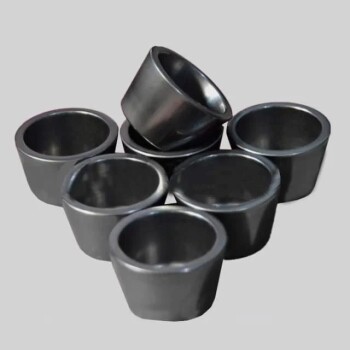
Glassy carbon crucibles are the superior choice for fusion pre-treatment because they possess exceptional chemical and thermal stability at the high temperatures required to melt geological samples. Unlike traditional metal vessels, glassy carbon resists degradation when used with aggressive fluxes like lithium tetraborate. This prevents the leaching of impurity ions, preserving the sample's integrity for precise trace zirconium analysis.

By eliminating the cross-contamination often seen with metal alternatives, glassy carbon crucibles create the high-purity environment necessary for accurate Inductively Coupled Plasma Mass Spectrometry (ICP-MS) results.

The Mechanics of Sample Integrity

Unmatched Chemical Stability

Geological analysis often requires breaking down complex mineral structures using strong fluxes.

Glassy carbon offers extreme resistance to chemical attack during this process. This allows you to use effective fluxes, such as lithium tetraborate, without damaging the crucible or contaminating the melt.

Thermal Resilience

The fusion process requires intense heat to liquefy solid rock samples.

Glassy carbon is engineered to maintain structural integrity under these high-temperature conditions. This stability ensures the vessel remains inert throughout the entire fusion procedure.

Ensuring Accuracy in Trace Analysis

The Problem with Contamination

In trace element analysis, even microscopic amounts of foreign material can skew results.

When the crucible itself reacts with the sample or flux, it introduces background interference. This makes it difficult to distinguish between the actual zirconium in the rock and the contamination from the container.

The Glassy Carbon Advantage

Glassy carbon serves as a neutral barrier.

Because it does not release ions into the solution, it ensures a high-purity environment. This is critical for ICP-MS, where sensitivity is high, and the goal is to measure the exact composition of the geological mineral, not the container holding it.

Understanding the Risks of Alternatives

The Pitfalls of Metal Crucibles

While metal crucibles are traditional, they present significant drawbacks for high-precision work.

The primary reference indicates that metal crucibles are prone to introducing impurity ions into the mixture. This leaching effect compromises the baseline accuracy of the measurement, rendering them less suitable for sensitive zirconium analysis.

Stability vs. Reactivity

The core trade-off is between the inert nature of glassy carbon and the reactive potential of metals.

Choosing the wrong vessel material introduces a variable that you cannot easily control. Glassy carbon removes this variable, providing a consistent, stable baseline for your data.

Making the Right Choice for Your Goal

To ensure your geological data is defensible and accurate, apply these principles to your workflow:

  • If your primary focus is Trace Precision: Prioritize glassy carbon to eliminate background noise and prevent the introduction of rogue impurity ions.
  • If your primary focus is Complex Sample Matrices: Use glassy carbon to safely employ aggressive fluxes like lithium tetraborate without degrading the containment vessel.

By selecting the correct crucible material, you transform the fusion process from a potential source of error into a reliable foundation for analysis.

Summary Table:

Feature Glassy Carbon Advantage Impact on Analysis
Chemical Stability Resists aggressive fluxes like lithium tetraborate Prevents leaching of impurity ions
Thermal Resilience Maintains structural integrity at high temperatures Reliable fusion of complex rock samples
Sample Purity Serves as a neutral, non-reactive barrier Eliminates background interference for ICP-MS

Enhance Your Analytical Precision with KINTEK

At KINTEK, we understand that the integrity of your geological samples depends on the quality of your consumables. We provide high-purity glassy carbon crucibles, ceramics, and PTFE products specifically designed for demanding fusion pre-treatments. Our extensive portfolio also features advanced high-temperature furnaces (muffle, vacuum, and atmosphere) and crushing systems to streamline your laboratory workflow.

Don't let container contamination compromise your trace element results. Rely on KINTEK for the high-performance tools your research demands. Contact us today to optimize your lab's performance!

References

  1. Н. В. Печищева, O. V. Melchakova. Zirconium in modern analytical chemistry. DOI: 10.1515/revac-2017-0016

This article is also based on technical information from Kintek Solution Knowledge Base .

Related Products

People Also Ask

Related Products

Glassy Carbon Electrochemical Electrode

Glassy Carbon Electrochemical Electrode

Upgrade your experiments with our Glassy Carbon Electrode. Safe, durable, and customizable to fit your specific needs. Discover our complete models today.

Engineering Advanced Fine Ceramics Alumina Crucibles (Al2O3) for Thermal Analysis TGA DTA

Engineering Advanced Fine Ceramics Alumina Crucibles (Al2O3) for Thermal Analysis TGA DTA

TGA/DTA thermal analysis vessels are made of aluminum oxide (corundum or aluminum oxide). It can withstand high temperature and is suitable for analyzing materials that require high temperature testing.

Alumina Al2O3 Ceramic Crucible Semicircle Boat with Lid for Engineering Advanced Fine Ceramics

Alumina Al2O3 Ceramic Crucible Semicircle Boat with Lid for Engineering Advanced Fine Ceramics

Crucibles are containers widely used for melting and processing various materials, and semicircular boat-shaped crucibles are suitable for special smelting and processing requirements. Their types and uses vary by material and shape.

Electron Beam Evaporation Coating Oxygen-Free Copper Crucible and Evaporation Boat

Electron Beam Evaporation Coating Oxygen-Free Copper Crucible and Evaporation Boat

Electron Beam Evaporation Coating Oxygen-Free Copper Crucible enables precise co-deposition of various materials. Its controlled temperature and water-cooled design ensure pure and efficient thin film deposition.

Electron Beam Evaporation Coating Gold Plating Tungsten Molybdenum Crucible for Evaporation

Electron Beam Evaporation Coating Gold Plating Tungsten Molybdenum Crucible for Evaporation

These crucibles act as containers for the gold material evaporated by the electron evaporation beam while precisely directing the electron beam for precise deposition.

Custom Machined and Molded PTFE Teflon Parts Manufacturer with PTFE Crucible and Lid

Custom Machined and Molded PTFE Teflon Parts Manufacturer with PTFE Crucible and Lid

PTFE crucibles, made from pure Teflon, offer chemical inertness and resistance from -196°C to 280°C, ensuring compatibility with a wide range of temperatures and chemicals. These crucibles feature machine-finished surfaces for easy cleaning and prevention of contamination, making them ideal for precise laboratory applications.

Evaporation Crucible for Organic Matter

Evaporation Crucible for Organic Matter

An evaporation crucible for organic matter, referred to as an evaporation crucible, is a container for evaporating organic solvents in a laboratory environment.

Electron Beam Evaporation Coating Tungsten Crucible and Molybdenum Crucible for High Temperature Applications

Electron Beam Evaporation Coating Tungsten Crucible and Molybdenum Crucible for High Temperature Applications

Tungsten and molybdenum crucibles are commonly used in electron beam evaporation processes due to their excellent thermal and mechanical properties.

Engineering Advanced Fine Alumina Al2O3 Ceramic Crucible for Laboratory Muffle Furnace

Engineering Advanced Fine Alumina Al2O3 Ceramic Crucible for Laboratory Muffle Furnace

Alumina ceramic crucibles are used in some materials and metal melting tools, and flat-bottomed crucibles are suitable for melting and processing larger batches of materials with better stability and uniformity.

Arc-Shaped Alumina Ceramic Crucible High Temperature Resistant for Engineering Advanced Fine Ceramics

Arc-Shaped Alumina Ceramic Crucible High Temperature Resistant for Engineering Advanced Fine Ceramics

In the journey of scientific exploration and industrial production, every detail is crucial. Our arc-shaped alumina ceramic crucibles, with their excellent high temperature resistance and stable chemical properties, have become a powerful assistant in laboratories and industrial fields. They are made of high-purity alumina materials and manufactured through precision processes to ensure excellent performance in extreme environments.

Electron Beam Evaporation Coating Conductive Boron Nitride Crucible BN Crucible

Electron Beam Evaporation Coating Conductive Boron Nitride Crucible BN Crucible

High-purity and smooth conductive boron nitride crucible for electron beam evaporation coating, with high temperature and thermal cycling performance.

Boron Nitride (BN) Crucible for Phosphorous Powder Sintered

Boron Nitride (BN) Crucible for Phosphorous Powder Sintered

Phosphorus powder sintered boron nitride (BN) crucible has a smooth surface, dense, pollution-free and long service life.

Bomb Type Probe for Steelmaking Production Process

Bomb Type Probe for Steelmaking Production Process

Bomb-type probe for precise steelmaking control: measures carbon content (±0.02%) and temperature (20℃ accuracy) in 4-8s. Boost efficiency now!

Automatic Lab Cold Isostatic Press CIP Machine Cold Isostatic Pressing

Automatic Lab Cold Isostatic Press CIP Machine Cold Isostatic Pressing

Efficiently prepare samples with our Automatic Lab Cold Isostatic Press. Widely used in material research, pharmacy, and electronic industries. Provides greater flexibility and control compared to electric CIPs.

Laboratory High Pressure Horizontal Autoclave Steam Sterilizer for Lab Use

Laboratory High Pressure Horizontal Autoclave Steam Sterilizer for Lab Use

The horizontal autoclave steam sterilizer adopts the gravity displacement method to remove the cold air in the inner chamber, so that the inner steam and cold air content is less, and the sterilization is more reliable.

Laboratory Sterilizer Lab Autoclave Pulsating Vacuum Desktop Steam Sterilizer

Laboratory Sterilizer Lab Autoclave Pulsating Vacuum Desktop Steam Sterilizer

The pulsating vacuum desktop steam sterilizer is a compact and reliable device used for rapid sterilization of medical, pharmaceutical, and research items.

Desktop Fast Laboratory Autoclave Sterilizer 35L 50L 90L for Lab Use

Desktop Fast Laboratory Autoclave Sterilizer 35L 50L 90L for Lab Use

The desktop fast steam sterilizer is a compact and reliable device used for rapid sterilization of medical, pharmaceutical, and research items. It efficiently sterilizes surgical instruments, glassware, medicines, and resistant materials, making it suitable for various applications.

Graphite Vacuum Furnace Negative Material Graphitization Furnace

Graphite Vacuum Furnace Negative Material Graphitization Furnace

Graphitization furnace for battery production has uniform temperature and low energy consumption. Graphitization furnace for negative electrode materials: an efficient graphitization solution for battery production and advanced functions to enhance battery performance.

Square Lab Press Mold for Laboratory Applications

Square Lab Press Mold for Laboratory Applications

Create uniform samples easily with Square Lab Press Mold - available in various sizes. Ideal for battery, cement, ceramics, and more. Custom sizes available.

Desktop Fast High Pressure Laboratory Autoclave Sterilizer 16L 24L for Lab Use

Desktop Fast High Pressure Laboratory Autoclave Sterilizer 16L 24L for Lab Use

The desktop fast steam sterilizer is a compact and reliable device used for rapid sterilization of medical, pharmaceutical, and research items.


Leave Your Message