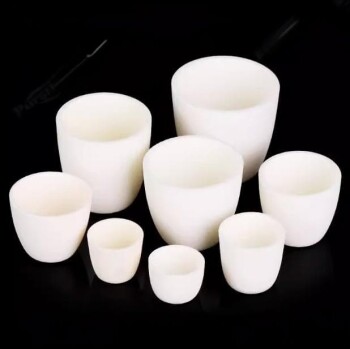
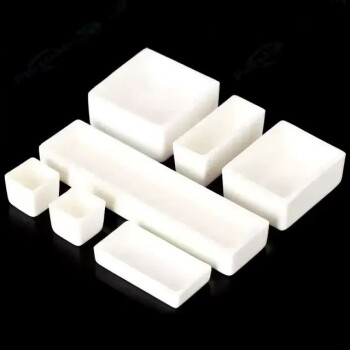
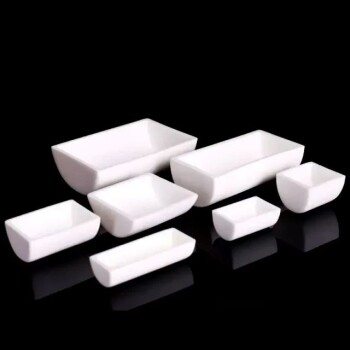
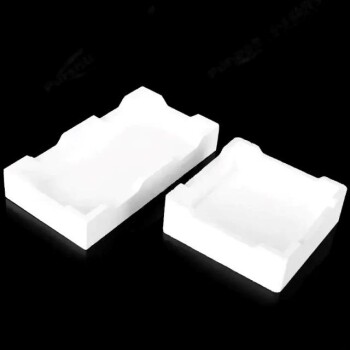
High-alumina crucibles are the definitive choice for the heat treatment of Cs-zeolite at 1100 °C due to their dual capability to withstand extreme heat and resist chemical attack. Specifically, these containers prevent the Cs-aluminosilicate samples from penetrating or reacting with the crucible walls, ensuring the sample remains pure and the structural data remains valid.
Core Takeaway The selection of high-alumina is not just about heat resistance; it is about experimental isolation. By creating a chemically inert barrier, these crucibles ensure that observed changes in the material are intrinsic phase transformations, not artifacts of environmental contamination.
The Chemistry of Containment at 1100 °C
Exceptional Chemical Inertness
At temperatures as high as 1100 °C, many standard laboratory ceramics become reactive. High-alumina crucibles possess exceptional chemical inertness, meaning they do not engage in chemical reactions with the sample material.
For Cs-zeolite specifically, this inertness is critical. It prevents the vessel walls from chemically interacting with the Cs-aluminosilicate samples, which would otherwise alter the chemical composition of the zeolite.
Preventing Physical Penetration
Beyond surface reactions, high-temperature treatment carries the risk of the sample physically migrating into the container material.
High-alumina material is dense and stable enough to prevent penetration between the crucible walls and the sample. This containment is vital for retaining the entire sample mass and preventing the loss of volatile components into the crucible structure.
Preserving Data Integrity
Accurate Phase Transformation Analysis
The primary goal of these experiments is often to observe the intrinsic phase transformation of the Cs-zeolite.
If the container reacts with the sample, it changes the sample's thermodynamic environment. High-alumina crucibles eliminate this variable, ensuring that any structural changes observed are due to the heat treatment alone, not external interference.
Eliminating External Impurities
Contamination is the enemy of high-precision material science.
By refusing to react or degrade, high-alumina crucibles prevent the introduction of external impurities that could interfere with downstream analysis. This ensures that the final properties of the heat-treated material reflect its true stoichiometry.
Common Pitfalls in High-Temperature Containment
The Risk of Reactive Containers
A common mistake in high-temperature experiments is selecting a crucible based solely on its melting point.
If a crucible withstands the heat but lacks chemical stability, it acts as a reactant rather than a container. This leads to compromised data, where the researcher cannot distinguish between the sample's natural behavior and its reaction with the vessel.
Misinterpreting "Heat Resistance"
It is critical to understand that heat resistance does not imply inertness.
While many materials can survive 1100 °C, few can do so while maintaining a strictly non-interactive surface against complex silicates like Cs-zeolite. Failing to prioritize inertness leads to sample penetration and cross-contamination.
Making the Right Choice for Your Goal
To ensure your experimental setup yields valid, reproducible results, consider your specific analytical needs:
- If your primary focus is Phase Analysis: Prioritize high-alumina to ensure that observed structural changes are intrinsic to the sample and not caused by container reactions.
- If your primary focus is Sample Purity: Select high-alumina to prevent the leaching of external impurities that could alter the chemical stoichiometry of the Cs-aluminosilicate.
High-alumina crucibles provide the requisite isolation to turn a high-temperature oven into a precision scientific instrument.
Summary Table:
| Feature | Benefit for Cs-Zeolite Treatment |
|---|---|
| Chemical Inertness | Prevents reactions between Cs-aluminosilicate and the crucible walls |
| High Density | Prevents physical penetration of the sample into the container structure |
| Thermal Stability | Maintains structural integrity at extreme temperatures (1100 °C+) |
| Purity Protection | Eliminates external impurities to ensure accurate phase transformation analysis |
Elevate Your Material Research with KINTEK Precision
Don't let container contamination compromise your high-temperature data. KINTEK specializes in premium laboratory equipment and consumables designed for the most demanding research environments.
Whether you need high-purity alumina crucibles, high-temperature furnaces (muffle, tube, vacuum), or advanced crushing and milling systems, our solutions ensure experimental isolation and data integrity. From high-pressure reactors to PTFE and ceramic consumables, we provide the tools you need for precise material science.
Ready to upgrade your lab's performance? Contact our experts today to find the perfect fit for your application!
References
- Guido Cerri, Antonio Brundu. A Six-Year Hydration Evaluation of Cs-Bearing Materials at Room Temperature and 55% Relative Humidity Simulating Radioactive Waste with Different Crystallinities. DOI: 10.3390/molecules29061302
This article is also based on technical information from Kintek Solution Knowledge Base .
Related Products
- Arc-Shaped Alumina Ceramic Crucible High Temperature Resistant for Engineering Advanced Fine Ceramics
- Engineering Advanced Fine Alumina Al2O3 Ceramic Crucible for Laboratory Muffle Furnace
- Alumina Al2O3 Ceramic Crucible Semicircle Boat with Lid for Engineering Advanced Fine Ceramics
- Engineering Advanced Fine Ceramics Alumina Al2O3 Crucible With Lid Cylindrical Laboratory Crucible
- Engineering Advanced Fine Ceramics Alumina Crucibles (Al2O3) for Thermal Analysis TGA DTA
People Also Ask
- Why Use Alumina Crucibles & Powder Burial for NaSICON? Ensure Phase Purity and Prevent Elemental Volatilization
- What is the primary purpose of using alumina crucibles for LLTO ceramics? Optimize Your High-Temperature Sintering
- Why are alumina crucibles and mother powder essential for LATP sintering? Optimize Your Solid Electrolyte Performance
- Why are high-purity alumina crucibles used for liquid lead corrosion experiments? Ensure Data Accuracy at 550°C
- Primary considerations for choosing alumina crucibles and quartz tubes in indium intercalation: Ensure Material Purity