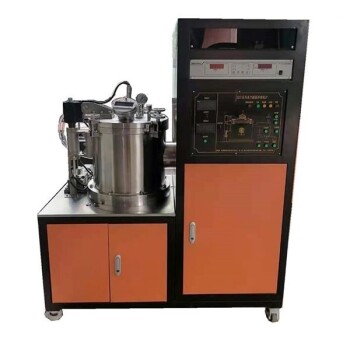
High-precision temperature control is a strict requirement for the melt-quenching of alkali metal oxide glass because the process demands a precise thermal balance between liquefaction and chemical preservation. You must use high-temperature muffle or tube furnaces to reach the extreme temperatures needed to melt the raw materials (often exceeding 1000°C), while simultaneously preventing the loss of volatile components through exact temperature regulation.
Success in synthesizing glass electrolytes relies on achieving a fully homogenized melt without altering its chemical stoichiometry. High-precision furnaces allow you to exceed the liquidus temperature for uniformity while strictly limiting thermal overshoots that destroy the material's composition.
Achieving Complete Homogenization
The primary challenge in preparing alkali metal oxide glass is thermodynamic. You are not simply heating materials; you are forcing a phase change in a complex mixture.
Overcoming the Liquidus Temperature
To create a viable glass, you must heat the raw materials above their liquidus temperature.
This threshold often exceeds 1000°C for these specific electrolytes. High-temperature muffle or tube furnaces are engineered to sustain these extreme environments reliably, ensuring that no solid particles remain suspended in the melt.
Ensuring Component Uniformity
Heat must be applied evenly to ensure the mix is fully homogenized.
If the temperature fluctuates or is distributed unevenly, the resulting glass will suffer from structural defects. A precise furnace ensures every gram of the batch reaches the same thermal state, creating a consistent baseline for the electrolyte.
Preserving Chemical Composition
The "alkali" nature of these electrolytes introduces a critical vulnerability: volatility.
preventing Volatilization
Alkali metal oxides are prone to volatilization—evaporating out of the melt—if the temperature drifts too high.
This is where high precision becomes critical. If the furnace overshoots the target temperature even slightly, you lose active components. This changes the chemical composition, leading to inaccuracies in the final stoichiometry and poor ionic conductivity.
Maintaining Stoichiometric Accuracy
High-precision control locks the temperature in a safe zone.
It keeps the heat high enough to melt the material but low enough to retain the volatile alkali components within the matrix. This balance is impossible to maintain with standard, low-precision heating equipment.
Controlling Viscosity and Structure
The state of the melt immediately before quenching dictates the quality of the final glass.
Optimizing Melt Viscosity
The furnace provides a melt with the appropriate viscosity.
This fluid state is fundamental for the subsequent quenching step. If the viscosity is incorrect (due to poor temperature control), the material may not quench uniformly.
Securing the Amorphous Matrix
The ultimate goal is to obtain a uniform, non-crystalline glass matrix.
Precision heating ensures the material is in the perfect state to be frozen (quenched) into an amorphous solid. Inconsistencies in the heating phase can lead to unwanted crystallization, which drastically reduces the performance of the electrolyte.
Understanding the Trade-offs
While both muffle and tube furnaces are capable tools, choosing between them involves distinct operational considerations.
Muffle Furnaces: Capacity and Range
Muffle furnaces are robust and capable of reaching extreme temperatures (up to 1800°C or even 3000°C).
They are excellent for batch processing and general high-temperature applications like sintering. However, they generally offer less granular control over the atmosphere compared to tube furnaces.
Tube Furnaces: Advanced Control
Tube furnaces often provide multi-zone temperature control.
This allows for more complex thermal profiles. While generally more expensive than muffle furnaces, they offer superior precision for sensitive syntheses where thermal gradients need to be strictly managed.
Making the Right Choice for Your Goal
Selecting the right equipment depends on the specific sensitivity of your electrolyte composition.
- If your primary focus is preventing composition loss: Prioritize a furnace with the highest available PID control accuracy to strictly limit volatilization of alkali components.
- If your primary focus is complex thermal profiling: Consider a multi-zone tube furnace to manage heating gradients more effectively than a standard muffle furnace.
By controlling the heat, you control the chemistry; precision in the furnace is the only way to guarantee performance in the glass.
Summary Table:
| Feature | Muffle Furnace | Tube Furnace | Importance in Melt-Quenching |
|---|---|---|---|
| Temperature Range | Up to 1800°C+ | High Precision Control | Reaching liquidus temp (>1000°C) |
| Atmosphere Control | Limited/Standard | Advanced/Multi-zone | Preventing alkali volatilization |
| Heating Uniformity | High (Batch) | Superior (Zonal) | Ensuring full homogenization |
| Primary Benefit | Large capacity | Stoichiometric accuracy | Consistent amorphous matrix |
Elevate Your Material Synthesis with KINTEK Precision
Don't let volatile components compromise your research. KINTEK specializes in high-performance laboratory equipment designed for the rigorous demands of glass electrolyte synthesis. Whether you require a high-temperature muffle furnace for batch processing or a multi-zone tube furnace for advanced thermal profiling, our solutions ensure the stoichiometric accuracy and uniform heating your electrolytes demand.
From crushing and milling systems to vacuum and atmosphere furnaces, KINTEK provides a comprehensive range of tools including high-temperature high-pressure reactors, pellet presses, and PTFE consumables to support your entire workflow.
Ready to achieve superior ionic conductivity? Contact our technical experts today to find the perfect precision heating solution for your lab.
References
- Ram Krishna Hona, Gurjot S. Dhaliwal. Alkali Ionic Conductivity in Inorganic Glassy Electrolytes. DOI: 10.4236/msce.2023.117004
This article is also based on technical information from Kintek Solution Knowledge Base .
Related Products
- 1200℃ Muffle Furnace Oven for Laboratory
- 1800℃ Muffle Oven Furnace for Laboratory
- High Temperature Muffle Oven Furnace for Laboratory Debinding and Pre Sintering
- 1700℃ Muffle Oven Furnace for Laboratory
- 1400℃ Muffle Oven Furnace for Laboratory
People Also Ask
- How does a muffle furnace ensure reliability in calcification roasting? Achieve Precision in Pellets Conversion
- Why is a laboratory high-temperature muffle furnace required for the post-annealing treatment of copper oxide?
- What role does a laboratory high-temperature muffle furnace play in iron-based composite phase structure development?
- How is a laboratory high-temperature muffle furnace utilized in sol-gel synthesis for perovskite catalysts?
- How does a muffle furnace influence 8YSZ ceramic densification? Master Precision Sintering at 1500°C