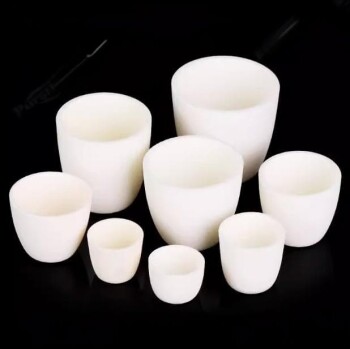
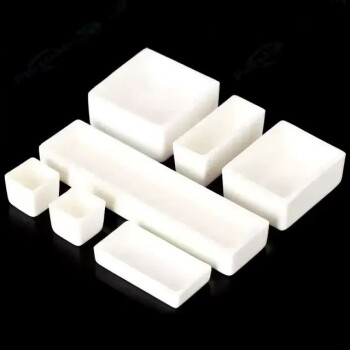
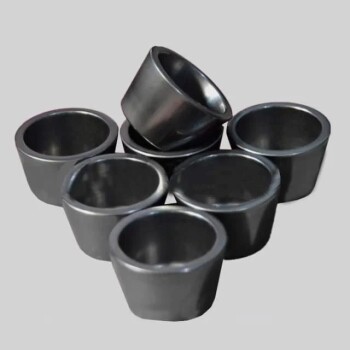
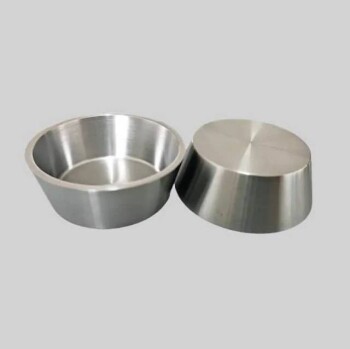
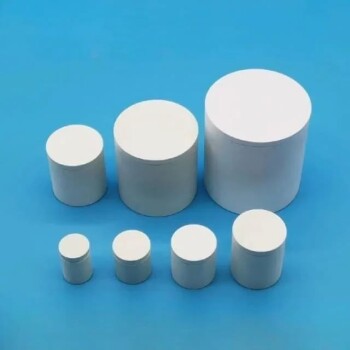
High-purity alumina and quartz crucibles are the industry standard because they provide exceptional thermal stability and chemical inertness at extreme temperatures. These materials effectively resist erosion from molten salts, metal vapors, and corrosive precursors, ensuring that no impurities from the vessel wall leach into the sample during calcination or melting.
The selection of alumina or quartz is driven by the need to maintain a "clean" reaction environment where the vessel remains a passive container rather than a chemical participant, thereby guaranteeing the intrinsic properties and purity of the final inorganic product.
Thermal Stability and Chemical Inertness
Resilience to Extreme Temperatures
High-purity alumina crucibles are capable of maintaining structural integrity at temperatures exceeding 1500°C. This allows for long-duration heating of precursor mixtures, such as those used in creating MAX phase particles, without the vessel softening or deforming.
Resistance to Chemical Erosion
During high-temperature processes, many materials become highly reactive toward molten salts or phosphorus-rich melts. High-purity alumina and quartz act as a barrier, resisting chemical attack and preventing the "poisoning" of the sample by container components.
Preventing Impurity Leaching
At the molecular level, these crucibles prevent ions from the vessel material from diffusing into the sample. This is critical for synthesizing electrocatalysts or active battery materials, where even trace contaminants can significantly degrade electrochemical performance.
Maintaining Experimental Integrity
Shielding from Furnace Environments
Crucibles do more than hold the sample; they act as a shield against impurities present within the furnace chamber or heating elements. By using high-purity consumables, researchers ensure that the resulting material is free from cross-contamination and environmental fallout.
Accuracy in Kinetic Measurements
In experiments involving mass gain or loss—such as the oxidation of graphite or stainless steel—the vessel must remain completely non-reactive. Because alumina does not react with oxygen or carbon at high temperatures, any measured weight change is attributed solely to the sample, ensuring data reliability.
Facilitating Efficient Material Handling
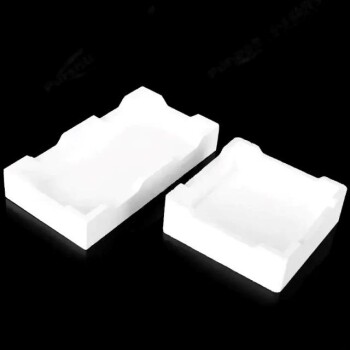
Quartz boats are specifically valued for their geometry, which allows for the batch loading and unloading of samples in tube furnaces. This physical convenience, combined with high chemical stability, makes quartz an ideal choice for carbonization and gasification processes.
Understanding the Trade-offs and Limitations
Temperature Thresholds
While both materials are stable, they have different thermal ceilings. Quartz typically reaches its limit around 1100°C to 1200°C, whereas high-purity alumina can safely operate in environments up to 1700°C depending on the grade.
Chemical Sensitivity to Specific Agents
Despite their inertness, these materials are not universal; for example, quartz is highly susceptible to attack by strong alkalis or hydrofluoric acid. Alumina, while more robust, can still be affected by certain aggressive molten fluxes if the exposure is prolonged at maximum temperatures.
Thermal Shock and Fragility
Both materials are ceramic-based and possess low ductility, making them prone to cracking if subjected to rapid temperature changes. Precision in heating and cooling rates is required to prevent "thermal shock," which can lead to vessel failure and sample loss.
Making the Right Choice for Your Goal
To ensure the success of your synthesis or analysis, select your vessel based on the specific thermal and chemical demands of your process.
- If your primary focus is extreme high-temperature stability (above 1200°C): Use high-purity alumina crucibles, as they maintain inertness and structural integrity at temperatures where quartz would fail.
- If your primary focus is batch processing in tube furnaces: Utilize quartz boats, which offer the best balance of chemical purity and ease of handling for loading multiple samples.
- If your primary focus is sensitive electrochemical or catalytic activity: Prioritize "high-purity" grades (99.9%+) of alumina to prevent trace metal diffusion that could poison the catalyst's active sites.
- If your primary focus is accurate mass-change kinetics: Ensure the crucible material is verified to be non-reactive with your specific atmosphere (e.g., oxygen or reducing gases) at the target temperature.
The integrity of your final material depends entirely on the silence of the vessel in which it was created.
Summary Table:
| Feature | High-Purity Alumina Crucibles | Quartz Crucibles/Boats |
|---|---|---|
| Max Temperature | Up to 1700°C | 1100°C - 1200°C |
| Chemical Resistance | High (Resists molten salts/metals) | Good (Susceptible to alkalis/HF) |
| Best Application | Ultra-high temp & catalyst synthesis | Batch processing in tube furnaces |
| Structural Stability | Excellent at extreme heat | Risk of softening above 1200°C |
| Primary Benefit | Prevents ion leaching/contamination | Ideal geometry for material handling |
Elevate Your Material Synthesis with KINTEK Precision
Ensure the integrity of your research by choosing the right vessel for your high-temperature processes. KINTEK specializes in high-performance laboratory equipment and consumables, providing the thermal stability and chemical purity your experiments demand.
From our ultra-high-purity alumina and quartz crucibles to our advanced muffle, tube, and vacuum furnaces, we offer a comprehensive ecosystem for material science. Whether you are working on battery research, electrocatalysts, or inorganic synthesis, our portfolio of high-temperature reactors, ceramic consumables, and crushing systems is designed to eliminate contamination and deliver repeatable results.
Don't let vessel impurities compromise your data. Contact KINTEK today to find the perfect high-purity solution for your laboratory!
References
- Priyanka Verma, Hiromi Yamashita. Amine Functionalization Within Hierarchically‐Porous Zeotype Framework for Plasmonic Catalysis over PdAu Nanoparticles. DOI: 10.1002/cctc.202201182
This article is also based on technical information from Kintek Solution Knowledge Base .
Related Products
- Arc-Shaped Alumina Ceramic Crucible High Temperature Resistant for Engineering Advanced Fine Ceramics
- Engineering Advanced Fine Alumina Al2O3 Ceramic Crucible for Laboratory Muffle Furnace
- High Purity Pure Graphite Crucible for Evaporation
- Engineering Advanced Fine Ceramics Alumina Al2O3 Crucible With Lid Cylindrical Laboratory Crucible
- High Purity Pure Graphite Crucible for Electron Beam Evaporation
People Also Ask
- Why Use Alumina Crucibles & Powder Burial for NaSICON? Ensure Phase Purity and Prevent Elemental Volatilization
- What is the primary purpose of using alumina crucibles for LLTO ceramics? Optimize Your High-Temperature Sintering
- Why are alumina crucibles and mother powder essential for LATP sintering? Optimize Your Solid Electrolyte Performance
- Why are high-purity alumina crucibles used for liquid lead corrosion experiments? Ensure Data Accuracy at 550°C
- Primary considerations for choosing alumina crucibles and quartz tubes in indium intercalation: Ensure Material Purity