Knowledge Why are high-strength graphite molds necessary for Cu/Ti3SiC2/C/MWCNTs composites? Ensure Precision at 950°C
Author avatar

Tech Team · Kintek Solution

Updated 5 days ago

Why are high-strength graphite molds necessary for Cu/Ti3SiC2/C/MWCNTs composites? Ensure Precision at 950°C


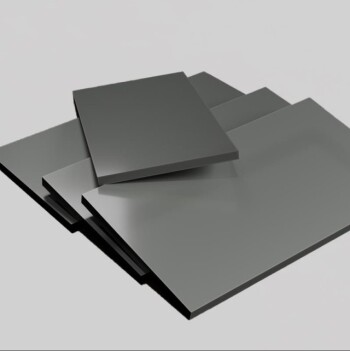
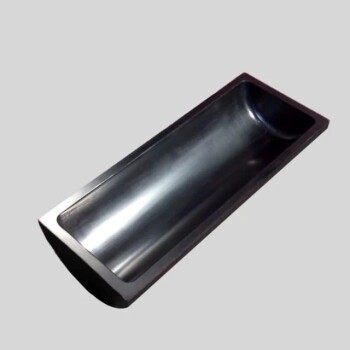
High-strength graphite molds are essential because they maintain structural integrity while subjecting the powder mixture to significant mechanical pressure (specifically 27.7 MPa) at 950°C. They act as a precise container that transfers hydraulic force without deforming, ensuring the copper-based composite is densified into the correct geometric shape.

Fabrication at these extreme conditions requires a mold material that offers a "dual-defense": it must act as a rigid pressure transfer medium while simultaneously preventing the copper matrix from bonding to the container walls.

The Mechanics of High-Temperature Densification

Withstanding Mechanical Load at 950°C

The primary function of the mold is to act as a pressure transfer medium.

At 950°C, many standard mold materials soften or lose tensile strength. High-strength graphite, however, retains its mechanical properties, allowing it to transmit uniaxial pressure (27.7 MPa) from hydraulic cylinders directly to the powder mixture without yielding.

Ensuring Dimensional Precision

The mold must serve as a rigid container to define the final geometry of the composite.

If the mold deforms even slightly under the heat and pressure, the resulting Cu/Ti3SiC2/C/MWCNTs sample will suffer from geometric inaccuracies. High-strength graphite ensures the sample is formed to precise dimensions by resisting fracture and creep.

Uniform Thermal Distribution

Graphite possesses excellent thermal conductivity.

This property allows heat to pass efficiently through the mold to the powder mixture. This ensures that the composite samples sinter uniformly, avoiding thermal gradients that could lead to internal stresses or uneven densification.

The Material Interaction Advantage

Superior Demolding for Copper Matrices

A specific challenge with copper-based materials is their tendency to adhere to mold walls during sintering.

According to your primary reference, graphite offers superior demolding properties for copper-based materials. This ensures that once the process is complete, the composite can be removed cleanly without damaging the surface or the mold.

Understanding the Trade-offs

The Consumable Nature of Graphite

While graphite is mechanically robust at high temperatures, it is generally considered a consumable in pressure-assisted sintering.

Repeated exposure to high mechanical stress and thermal cycling can eventually degrade the mold's surface finish or structural integrity. You must inspect molds regularly for micro-cracks or wear that could compromise future samples.

Oxidation Sensitivity

Graphite molds maintain stability best in vacuum or inert atmospheres.

While they are excellent at 950°C, exposure to oxygen at these temperatures would cause the mold to degrade rapidly. Ensure your fabrication environment is strictly controlled to preserve the life of the mold.

Making the Right Choice for Your Goal

To maximize the quality of your Cu/Ti3SiC2/C/MWCNTs composites, align your mold selection with your specific processing objectives:

  • If your primary focus is Dimensional Accuracy: Prioritize high-strength graphite grades rated significantly above your target pressure of 27.7 MPa to ensure zero deformation.
  • If your primary focus is Surface Finish: Rely on the graphite's inherent demolding properties, but ensure the mold surface is pristine to prevent mechanical interlocking with the copper matrix.

The success of your composite relies not just on the powder mixture, but on the mold's ability to remain invisible—chemically inert and mechanically rigid—throughout the heating cycle.

Summary Table:

Feature Requirement at 950°C Graphite Mold Advantage
Mechanical Strength Must withstand 27.7 MPa Retains rigidity; resists creep and deformation
Thermal Conductivity Rapid, uniform heating Excellent heat transfer; minimizes thermal gradients
Chemical Interaction Prevent copper adhesion Superior demolding properties for copper matrices
Dimensional Control Precise geometric accuracy High fracture resistance ensures exact sample shapes
Operating Environment Vacuum or inert gas High stability in controlled sintering atmospheres

Elevate Your Composite Fabrication with KINTEK

Achieve uncompromising precision in your high-temperature material research. KINTEK specializes in advanced laboratory solutions, providing the high-strength graphite components and high-pressure systems necessary for complex sintering processes.

Whether you are working with Cu/Ti3SiC2/C/MWCNTs or other advanced materials, our portfolio—including high-temperature furnaces (muffle, vacuum, and CVD), hydraulic pellet presses, and specialized crucibles—is designed to meet the most rigorous mechanical and thermal demands.

Ready to optimize your lab’s results? Contact us today to discover how our high-performance consumables and equipment can streamline your research and development.

Related Products

People Also Ask

Related Products

Vertical High Temperature Graphite Vacuum Graphitization Furnace

Vertical High Temperature Graphite Vacuum Graphitization Furnace

Vertical high temperature graphitization furnace for carbonization and graphitization of carbon materials up to 3100℃.Suitable for shaped graphitization of carbon fiber filaments and other materials sintered in a carbon environment.Applications in metallurgy, electronics, and aerospace for producing high-quality graphite products like electrodes and crucibles.

1800℃ Muffle Oven Furnace for Laboratory

1800℃ Muffle Oven Furnace for Laboratory

KT-18 muffle furnace with Japan Al2O3 polycrystalline fibe and Silicon Molybdenum heating element, up to 1900℃, PID temperature control and 7" smart touch screen. Compact design, low heat loss, and high energy efficiency. Safety interlock system and versatile functions.

1700℃ Muffle Oven Furnace for Laboratory

1700℃ Muffle Oven Furnace for Laboratory

Get superior heat control with our 1700℃ Muffle Furnace. Equipped with intelligent temperature microprocessor, TFT touch screen controller & advanced insulation materials for precise heating up to 1700C. Order now!

1400℃ Laboratory High Temperature Tube Furnace with Alumina Tube

1400℃ Laboratory High Temperature Tube Furnace with Alumina Tube

Looking for a tube furnace for high-temperature applications? Our 1400℃ Tube Furnace with Alumina Tube is perfect for research and industrial use.

1700℃ Laboratory High Temperature Tube Furnace with Alumina Tube

1700℃ Laboratory High Temperature Tube Furnace with Alumina Tube

Looking for a high-temperature tube furnace? Check out our 1700℃ Tube Furnace with Alumina Tube. Perfect for research and industrial applications up to 1700C.

Hexagonal Boron Nitride HBN Ceramic Ring

Hexagonal Boron Nitride HBN Ceramic Ring

Boron nitride ceramic (BN) rings are commonly used in high temperature applications such as furnace fixtures, heat exchangers and semiconductor processing.

1700℃ Controlled Atmosphere Furnace Nitrogen Inert Atmosphere Furnace

1700℃ Controlled Atmosphere Furnace Nitrogen Inert Atmosphere Furnace

KT-17A Controlled atmosphere furnace: 1700℃ heating, vacuum sealing technology, PID temperature control, and versatile TFT smart touch screen controller for laboratory and industrial use.

Vacuum Sealed Continuous Working Rotary Tube Furnace Rotating Tube Furnace

Vacuum Sealed Continuous Working Rotary Tube Furnace Rotating Tube Furnace

Experience efficient material processing with our vacuum-sealed rotary tube furnace. Perfect for experiments or industrial production, equipped with optional features for controlled feeding and optimized results. Order now.

Dental Porcelain Zirconia Sintering Ceramic Vacuum Press Furnace

Dental Porcelain Zirconia Sintering Ceramic Vacuum Press Furnace

Get precise dental results with Dental Vacuum Press Furnace. Automatic temperature calibration, low noise tray, and touch screen operation. Order now!

Electric Rotary Kiln Pyrolysis Furnace Plant Machine Calciner Small Rotary Kiln Rotating Furnace

Electric Rotary Kiln Pyrolysis Furnace Plant Machine Calciner Small Rotary Kiln Rotating Furnace

Electric rotary kiln - precisely controlled, it's ideal for calcination and drying of materials like lithium cobalate, rare earths, and non-ferrous metals.

Multi Heating Zones CVD Tube Furnace Machine Chemical Vapor Deposition Chamber System Equipment

Multi Heating Zones CVD Tube Furnace Machine Chemical Vapor Deposition Chamber System Equipment

KT-CTF14 Multi Heating Zones CVD Furnace - Precise Temperature Control and Gas Flow for Advanced Applications. Max temp up to 1200℃, 4 channels MFC mass flow meter, and 7" TFT touch screen controller.

Split Chamber CVD Tube Furnace with Vacuum Station Chemical Vapor Deposition System Equipment Machine

Split Chamber CVD Tube Furnace with Vacuum Station Chemical Vapor Deposition System Equipment Machine

Efficient split chamber CVD furnace with vacuum station for intuitive sample checking and quick cooling. Up to 1200℃ max temperature with accurate MFC mass flowmeter control.

1200℃ Controlled Atmosphere Furnace Nitrogen Inert Atmosphere Furnace

1200℃ Controlled Atmosphere Furnace Nitrogen Inert Atmosphere Furnace

Discover our KT-12A Pro Controlled atmosphere furnace - high precision, heavy duty vacuum chamber, versatile smart touch screen controller, and excellent temperature uniformity up to 1200C. Ideal for both laboratory and industrial application.

Controlled Nitrogen Inert Hydrogen Atmosphere Furnace

Controlled Nitrogen Inert Hydrogen Atmosphere Furnace

KT-AH Hydrogen atmosphere furnace - induction gas furnace for sintering/annealing with built-in safety features, dual housing design, and energy-saving efficiency. Ideal for lab and industrial use.

Small Vacuum Heat Treat and Tungsten Wire Sintering Furnace

Small Vacuum Heat Treat and Tungsten Wire Sintering Furnace

The small vacuum tungsten wire sintering furnace is a compact experimental vacuum furnace specially designed for universities and scientific research institutes. The furnace features a CNC welded shell and vacuum piping to ensure leak-free operation. Quick-connect electrical connections facilitate relocation and debugging, and the standard electrical control cabinet is safe and convenient to operate.

Electric Rotary Kiln Continuous Working Small Rotary Furnace Heating Pyrolysis Plant

Electric Rotary Kiln Continuous Working Small Rotary Furnace Heating Pyrolysis Plant

Efficiently calcine and dry bulk powder and lump fluid materials with an electric heating rotary furnace. Ideal for processing lithium ion battery materials and more.

Touchscreen Automatic Vacuum Heat Press

Touchscreen Automatic Vacuum Heat Press

Precision vacuum heat press for labs: 800°C, 5-ton pressure, 0.1MPa vacuum. Ideal for composites, solar cells, aerospace.

Laboratory manual slicer

Laboratory manual slicer

Manual microtome is a high-precision cutting device designed for laboratories, industry and medical fields. It is suitable for the preparation of thin slices of various materials such as paraffin samples, biological tissues, battery materials, food, etc.

KF ISO Stainless Steel Vacuum Flange Blind Plate for High Vacuum Systems

KF ISO Stainless Steel Vacuum Flange Blind Plate for High Vacuum Systems

Discover KF/ISO stainless steel vacuum flange blind plates, ideal for high vacuum systems in semiconductor, photovoltaic, and research labs. High-quality materials, efficient sealing, and easy installation.<|end▁of▁sentence|>

Custom PTFE Wafer Holders for Lab and Semiconductor Processing

Custom PTFE Wafer Holders for Lab and Semiconductor Processing

This is a high-purity, custom-machined PTFE (Teflon) holder, expertly designed for the secure handling and processing of delicate substrates like conductive glass, wafers, and optical components.


Leave Your Message