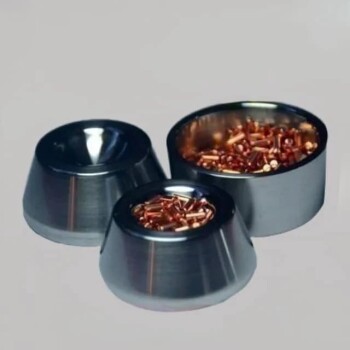
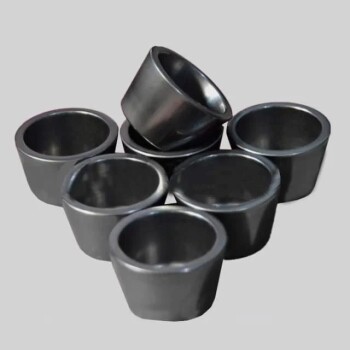
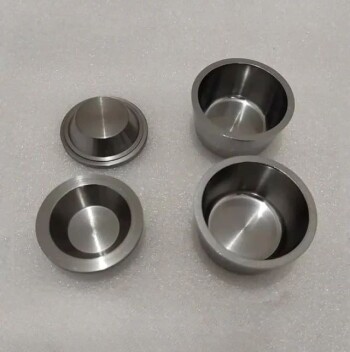
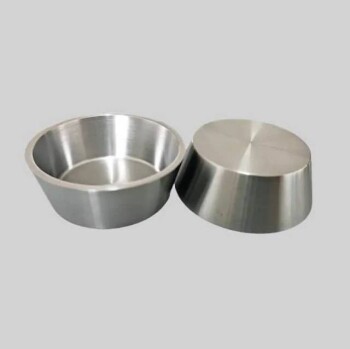
Platinum crucibles are the industry standard for rare earth element analysis because they serve as a chemically invisible container during the rigorous fusion process. They possess an extremely high melting point and exceptional chemical inertness, allowing them to withstand the aggressive alkaline fluxes used to melt samples without degrading or releasing impurities that would skew analytical results.
The Core Insight High-precision analysis requires more than just high temperatures; it requires a sterile chemical environment. Platinum is essential because it remains stable in the presence of strong fluxes, preventing crucible-derived contamination and ensuring the low detection limits necessary for identifying trace rare earth elements.
The Critical Role of Material Inertness
Withstanding Aggressive Chemical Fluxes
Fusion experiments often utilize strong alkaline fluxes to dissolve rock or soil samples. These chemical agents are highly corrosive and would rapidly attack standard laboratory materials like glass or ceramic.
Platinum possesses exceptional chemical inertness, allowing it to resist corrosion even when in direct contact with these aggressive fluxes. This resistance ensures the physical integrity of the crucible throughout the experiment.
Operating at Extreme Temperatures
Fusion requires intense heat to melt solid samples into a liquid state for analysis. The vessel must maintain its structural integrity far beyond the melting point of the sample and the flux.
Platinum is utilized specifically for its extremely high melting point. It allows the sample to be heated to the necessary extremes without the crucible softening, warping, or melting.
Achieving Analytical Precision
Eliminating Background Interference
In rare earth element analysis, the goal is often to measure trace-level quantities. Any foreign material entering the sample creates "noise" that can mask the presence of the elements you are trying to measure.
Because platinum does not corrode, it ensures that no impurities from the crucible material are introduced into the sample.
Securing Low Detection Limits
The absence of contamination is directly linked to the sensitivity of the analysis. To achieve low detection limits, the background chemistry must be as clean as possible.
By preventing the leaching of vessel materials, platinum crucibles ensure that the detected signal comes solely from the sample, not the container.
Common Pitfalls: The Risk of Substitution
Why Standard Materials Fail
Attempting to use materials other than high-grade inert metals creates a high likelihood of reaction. Standard lab-grade materials lack the requisite resistance to both the thermal and chemical stress of fusion.
The Necessity of "Lab-Grade" Purity
In scientific applications, "good enough" is often insufficient. As noted in analytical guidelines, only inert materials like platinum or zirconium are suitable for these crucibles.
Using inferior materials is not a cost-saving measure; it is a source of sample contamination that renders trace-level data invalid.
Ensuring Data Integrity for Your Project
When designing your experimental protocol, your choice of crucible determines the baseline accuracy of your results.
- If your primary focus is Trace Analysis: You must use platinum to prevent leaching and maintain the lowest possible detection limits for rare earth elements.
- If your primary focus is Sample Fusion: You require platinum or zirconium to withstand the corrosive nature of strong alkaline fluxes at high heat.
By selecting platinum, you remove the variable of container interference, ensuring your data reflects the true composition of your sample.
Summary Table:
| Feature | Platinum Crucibles | Standard Ceramic/Glass |
|---|---|---|
| Melting Point | Extremely High (approx. 1768°C) | Moderate/Variable |
| Chemical Inertness | Exceptional (Resists Alkaline Fluxes) | Low (Prone to Corrosion) |
| Contamination Risk | Virtually Zero (Chemically Invisible) | High (Leaches Impurities) |
| Analytical Precision | Enables Trace-Level Detection | High Background Interference |
| Durability | High Resistance to Thermal Stress | Prone to Cracking/Warping |
Elevate Your Analytical Precision with KINTEK
Don’t let crucible-derived contamination compromise your rare earth element research. KINTEK provides premium, lab-grade platinum and zirconium crucibles designed to withstand the most aggressive alkaline fluxes and extreme temperatures.
As specialists in laboratory equipment and consumables, we offer a comprehensive range of solutions including high-temperature furnaces, crushing and milling systems, and ceramic or PTFE consumables to support your entire workflow.
Ensure data integrity for your next project—Contact KINTEK today to find the perfect high-purity tools for your laboratory!
References
- V. Balaram. Advances in Analytical Techniques and Applications in Exploration, Mining, Extraction, and Metallurgical Studies of Rare Earth Elements. DOI: 10.3390/min13081031
This article is also based on technical information from Kintek Solution Knowledge Base .
Related Products
- Electron Beam Evaporation Coating Gold Plating Tungsten Molybdenum Crucible for Evaporation
- High Purity Pure Graphite Crucible for Evaporation
- High Purity Pure Graphite Crucible for Electron Beam Evaporation
- Arc-Shaped Alumina Ceramic Crucible High Temperature Resistant for Engineering Advanced Fine Ceramics
- Engineering Advanced Fine Ceramics Alumina Al2O3 Crucible With Lid Cylindrical Laboratory Crucible
People Also Ask
- What is the container that holds the metal source material called in e-beam evaporation? Ensure Purity and Quality in Your Thin-Film Deposition
- What materials are used in electron beam evaporation? Master High-Purity Thin Film Deposition
- What is the process of e-beam coating? Achieve High-Purity, Precise Thin Films for Your Lab
- What is e-beam evaporation? Achieve High-Purity Thin Film Deposition for Your Lab
- What is the voltage of e-beam evaporation? Achieve Precise Thin-Film Deposition