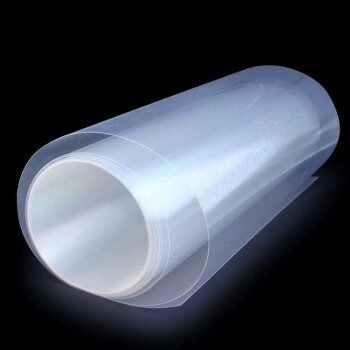
Precisely controlled cooling and extraction systems are the architects of membrane geometry. They are critical because they directly dictate the phase separation process that solidifies the Ethylene Chlorotrifluoroethylene (ECTFE) structure. Specifically, cooling rates define pore size and porosity, while extraction ensures the structural integrity of those pores by safely removing diluents without causing collapse.
The cooling and extraction stages are not merely finishing steps; they are the definitive control points for membrane performance. Precise thermal regulation determines the microscopic architecture, while careful extraction locks that architecture in place.
The Mechanism of Structure Formation
To understand the criticality of cooling, you must first understand the state of the material prior to this stage.
The High-Energy Starting Point
ECTFE is insoluble in organic solvents at room temperature. As a result, the fabrication process relies on Thermally Induced Phase Separation (TIPS).
Before cooling begins, the polymer is subjected to high temperatures (180°C to 250°C) to overcome strong crystalline forces. This creates a uniform casting solution by mixing the polymer with diluents like Dibutyl Phthalate (DBP) or Acetyl Tributyl Citrate (ATBC).
The Transition Phase
Once this heated, uniform solution is cast, the cooling system takes over. Its primary function is to induce phase separation.
This is the moment the homogeneous solution splits into a polymer-rich phase (which becomes the membrane matrix) and a polymer-lean phase (which becomes the pores).
The Role of Controlled Cooling
The cooling system is the primary lever for controlling the physical properties of the membrane.
Regulating Pore Size and Porosity
The system regulates the temperature of the cooling medium to exert precise control over the rate of cooling.
This rate determines whether the material undergoes liquid-liquid or solid-liquid phase separation. By manipulating this variable, engineers can fine-tune the final pore size and overall porosity of the membrane.
Solidifying the Matrix
Beyond geometry, the cooling system is responsible for the physical solidification of the membrane structure.
Consistent thermal regulation ensures that the polymer crystallizes uniformly, creating a stable matrix that can withstand the subsequent extraction process.
The Criticality of Extraction Systems
Once the structure is solidified, it still contains residual diluents within the polymer matrix. The extraction system is required to remove these non-volatile components.
Replacing Residual Diluents
The extraction system introduces volatile extraction reagents to the membrane.
These reagents permeate the structure and replace the diluents (such as DBP or ATBC) used during the initial heating phase.
Preventing Pore Collapse
This is the most critical function of the extraction phase. If diluents are removed incorrectly, the capillary forces or structural instability can cause the newly formed pores to close up.
A precisely controlled extraction system ensures that the exchange of fluids happens smoothly, preventing pore collapse and finalizing a stable, open porous microstructure.
Common Pitfalls to Avoid
Failing to maintain precision in these systems leads to distinct failure modes in ECTFE membranes.
Thermal Inconsistency
If the cooling medium temperature fluctuates, the phase separation rate will vary across the membrane.
This results in heterogeneous pore sizes, creating weak spots in the membrane or inconsistent filtration performance.
Incomplete Extraction
If the extraction system is inefficient, residual diluents remain trapped in the matrix.
This can lead to chemical contamination of the filtrate later on, or it may plasticize the polymer, reducing the mechanical strength and thermal stability of the final product.
Making the Right Choice for Your Goal
When designing or selecting fabrication equipment for ECTFE membranes, align your system capabilities with your specific performance targets.
- If your primary focus is Filtration Selectivity: Prioritize the precision of the cooling system's temperature control. This is the variable that dictates pore size distribution.
- If your primary focus is Permeability and Flow Rate: Focus on the extraction system efficiency. Ensuring total removal of diluents prevents pore blockage and maximizes open porosity.
The quality of an ECTFE membrane is effectively determined the moment the cooling curve is defined and sealed the moment extraction is complete.
Summary Table:
| System | Primary Role | Key Impact on Membrane |
|---|---|---|
| Cooling System | Regulates Phase Separation Rate | Dictates pore size, porosity, and matrix solidification |
| Extraction System | Removes Residual Diluents | Prevents pore collapse and ensures structural stability |
| Thermal Control | Consistency across medium | Eliminates heterogeneous pore sizes and weak spots |
| Reagent Exchange | Replaces non-volatile components | Maximizes permeability and prevents chemical contamination |
Elevate Your Membrane Research with KINTEK
Precision is non-negotiable when fabricating high-performance ECTFE membranes. KINTEK specializes in advanced laboratory equipment and consumables designed to meet the rigorous demands of material science. From precisely regulated cooling solutions and high-temperature reactors for TIPS processes to centrifuges and extraction tools, we provide the end-to-end technology needed to ensure uniform pore structures and prevent structural failure.
Whether you are refining filtration selectivity or maximizing flow rates, our portfolio—including ultra-low temperature freezers, crushing systems, and specialized ceramic crucibles—supports every stage of your R&D.
Ready to optimize your fabrication process? Contact us today to discover how KINTEK can enhance your lab's efficiency and results.
References
- Zhangbin Liao, Enrico Drioli. Preparation, Modification, and Application of Ethylene-Chlorotrifluoroethylene Copolymer Membranes. DOI: 10.3390/membranes14020042
This article is also based on technical information from Kintek Solution Knowledge Base .
Related Products
People Also Ask
- What is the function of a proton exchange membrane in a PEC cell? Enhancing CO2 Reduction Safety and Efficiency
- What initial steps are required before using a new proton exchange membrane? Ensure Peak Performance and Longevity
- What should be done if a proton exchange membrane is found to be contaminated or damaged? Restore Performance or Replace for Safety
- How should a proton exchange membrane be installed? A Guide to Flawless Assembly for Peak Performance
- What contaminants should be avoided during the operation of a proton exchange membrane? Protect Your PEM from Heavy Metals & Organics