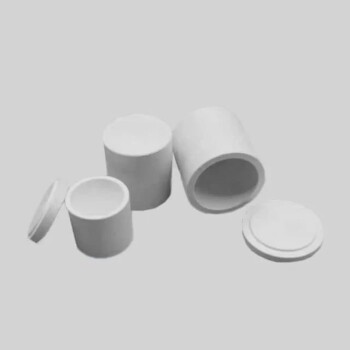
Quartz crucibles with lids are the industry standard for biomass carbonization because they provide a controlled, oxygen-free micro-environment while maintaining extreme chemical purity at high temperatures. The lid acts as a physical barrier that prevents the biomass precursor from undergoing oxidative combustion (burning to ash), while the quartz material ensures that no container-derived impurities contaminate the resulting carbon or catalyst structure.
Core Takeaway: The combination of a quartz vessel and a matching lid is essential to transition biomass from organic matter to high-quality carbon by preventing oxidation and ensuring chemical inertness under intense thermal stress.
Isolation and Atmospheric Control
Preventing Oxidative Combustion
The primary function of the lid is to effectively isolate the precursors from external air. Without this barrier, the presence of oxygen at high temperatures would cause the biomass to undergo complete incineration rather than the desired carbonization or pyrolysis.
Creating a Localized Micro-Environment
The lid helps maintain a localized semi-anaerobic or micro-hypoxic environment inside the furnace. This is critical for preserving specific elements, such as nitrogen, within the biomass structure, which is necessary for the formation of advanced materials like Fe-N-C electrocatalysts.
Controlling Volatilization
By creating a micro-reducing environment, the lid ensures that mass loss results strictly from the thermal decomposition and volatilization of organic matter. This prevents the combustion of fixed carbon, allowing for the precise determination of volatile matter and high-yield carbon production.
Material Integrity and Chemical Purity
Chemical Inertness at Extreme Temperatures
Quartz and high-purity ceramic materials exhibit excellent chemical stability, meaning they do not react with the sample or active components (like iron or cobalt) during the reaction. This prevents the introduction of external impurities that could degrade the electrocatalytic performance of the final product.
Thermal Shock Resistance
Carbonization often involves rapid temperature increases (e.g., up to 900°C) in a tube or muffle furnace. Quartz is specifically valued for its high thermal shock resistance, allowing it to withstand these fluctuations without cracking or deforming.
Ensuring Experimental Reliability
Because quartz maintains a constant mass and does not melt into the reactants, it ensures the reliability of experimental data. This is particularly important for analytical processes like ash weight measurement, where even trace amounts of container reaction could skew the results.
Understanding the Trade-offs
Limits of Gas Exchange
While the lid is necessary to prevent oxidation, it also restricts the escape of byproduct gases. If the fit is too tight and the heating rate is too aggressive, internal pressure can build up or unwanted secondary reactions between the volatiles and the carbon can occur.
Fragility and Maintenance
Quartz is highly resistant to heat but physically brittle and sensitive to surface contamination. Fingerprints or alkali metal residues on the surface can cause "devitrifaction" at high temperatures, which weakens the crucible and may lead to failure over multiple heating cycles.
Cost vs. Performance
Compared to standard porcelain, high-purity quartz is significantly more expensive. While it offers superior purity and thermal shock resistance, it may be overkill for low-temperature applications where absolute chemical inertness is not the primary concern.
How to Apply This to Your Process
Choosing the Right Approach
- If your primary focus is material purity: Always use high-purity quartz to ensure no side reactions occur between the vessel and your precursors or catalysts.
- If your primary focus is maximizing carbon yield: Ensure the lid is properly seated to maintain a strict semi-anaerobic environment, preventing any oxygen ingress during the cooling phase.
- If your primary focus is catalyst performance (e.g., Fe-N-C): Use the lid to trap a micro-environment that preserves nitrogen levels, which is essential for active site formation.
The correct use of quartz crucibles with lids transforms a simple heating process into a precision chemical reaction that yields high-performance carbon materials.
Summary Table:
| Key Feature | Primary Function | Impact on Biomass Carbonization |
|---|---|---|
| Airtight Lid | Atmospheric Isolation | Prevents oxidative combustion; creates a micro-anaerobic environment. |
| High-Purity Quartz | Chemical Inertness | Prevents contamination of catalysts (e.g., Fe-N-C) from the vessel. |
| Thermal Stability | Shock Resistance | Withstands rapid temperature ramps (up to 900°C) without cracking. |
| Vessel Integrity | Mass Stability | Ensures accurate measurement of volatile loss and final carbon yield. |
Achieve Superior Carbon Synthesis with KINTEK Precision
Don't compromise your material integrity with subpar equipment. At KINTEK, we provide the high-purity tools necessary for advanced research, from specialized quartz and ceramic crucibles to precision muffle and tube furnaces.
Whether you are developing next-generation electrocatalysts or optimizing biomass yields, our comprehensive range of high-temperature solutions—including vacuum furnaces, CVD systems, and high-pressure reactors—is engineered to meet the strictest laboratory standards.
Ready to elevate your lab's performance? Contact KINTEK today to find the perfect thermal solution for your research!
References
- E. Grigorova, Ivanka Stoycheva. Hydrogen Storage Properties of Ball Milled MgH2 with Additives- Ni, V and Activated Carbons Obtained from Different By-Products. DOI: 10.3390/ma16206823
This article is also based on technical information from Kintek Solution Knowledge Base .
Related Products
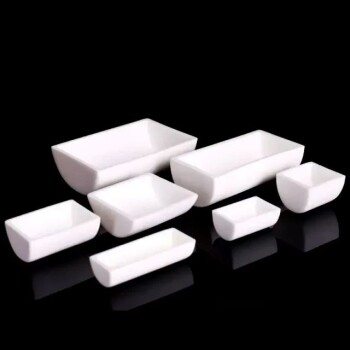
- Alumina Al2O3 Ceramic Crucible Semicircle Boat with Lid for Engineering Advanced Fine Ceramics
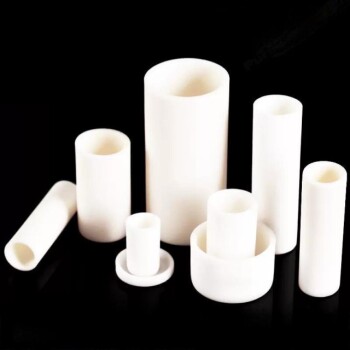
- Engineering Advanced Fine Ceramics Alumina Al2O3 Crucible With Lid Cylindrical Laboratory Crucible
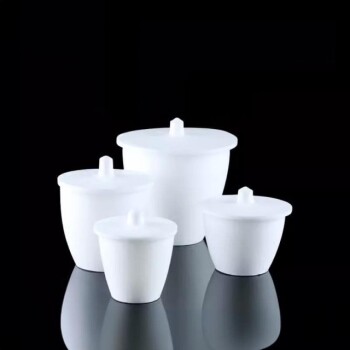
- Custom Machined and Molded PTFE Teflon Parts Manufacturer with PTFE Crucible and Lid
- Carbon Graphite Boat -Laboratory Tube Furnace with Cover
- Electron Beam Evaporation Coating Oxygen-Free Copper Crucible and Evaporation Boat
People Also Ask
- Why are alumina crucibles and mother powder essential for LATP sintering? Optimize Your Solid Electrolyte Performance
- Why are high-purity alumina crucibles used for liquid lead corrosion experiments? Ensure Data Accuracy at 550°C
- Why Use Alumina Crucibles & Powder Burial for NaSICON? Ensure Phase Purity and Prevent Elemental Volatilization
- What is the primary purpose of using alumina crucibles for LLTO ceramics? Optimize Your High-Temperature Sintering
- What are the benefits of using an alumina crucible with a lid for TiB2 nanopowder heat treatment? Ensure High Purity