Knowledge Why are silica boats or high-purity ceramic crucibles used for Ni-TiO2 sintering? Ensure Pure Catalyst Results
Author avatar

Tech Team · Kintek Solution

Updated 16 hours ago

Why are silica boats or high-purity ceramic crucibles used for Ni-TiO2 sintering? Ensure Pure Catalyst Results


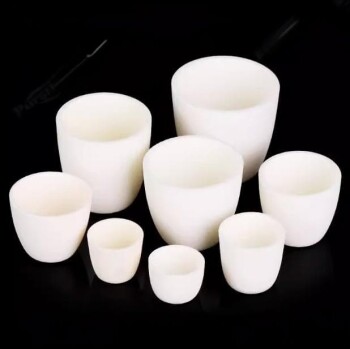
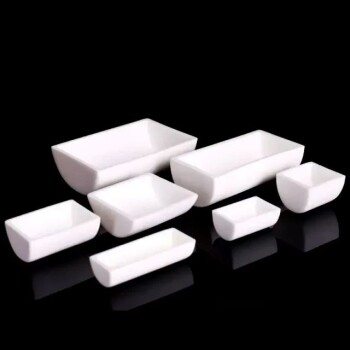
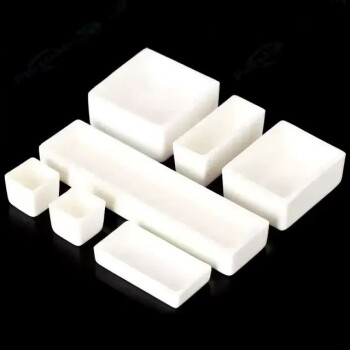
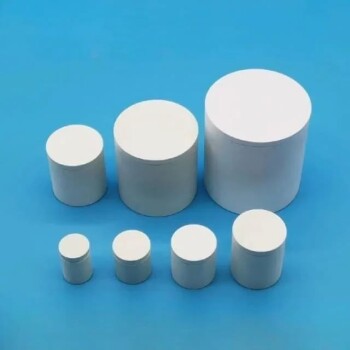
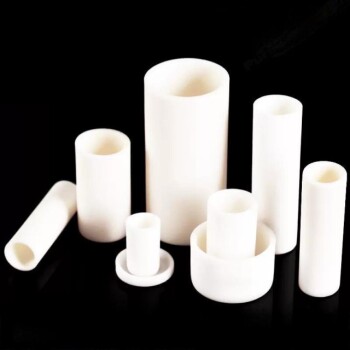
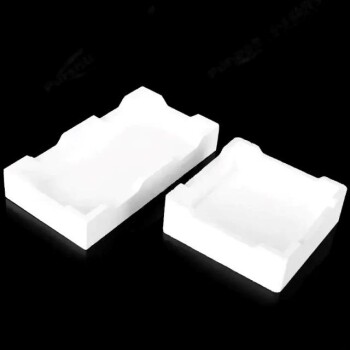
Silica boats and high-purity ceramic crucibles are selected for the final sintering stage primarily due to their exceptional thermal resistance and chemical inertness. When processing Ni-TiO2 nanocomposites at 500 °C in an air environment, these vessels act as stable containers that do not react with the sample, ensuring the final product remains free of contamination.

The choice of crucible is critical for maintaining the elemental purity of the catalyst. By resisting chemical interaction during heat treatment, these vessels prevent external impurities from compromising the Ni-TiO2 structure.

Achieving Stability Under Heat

Withstanding the Sintering Environment

The sintering process for Ni-TiO2 nanocomposites requires sustained heating at 500 °C in an air atmosphere.

Silica and high-purity ceramics are engineered to maintain their structural integrity under these specific thermal conditions. They do not soften, warp, or degrade, providing a reliable physical platform for the thermal treatment.

Chemical Inertness

At elevated temperatures, many materials become reactive and can bond with the substances they contain.

Silica boats and ceramic crucibles possess high chemical stability. They do not react chemically with the Ni-TiO2 nanocomposites, ensuring that the vessel itself does not alter the sample's composition during the heating phase.

The Criticality of Purity

Preventing External Contamination

The primary goal during the final sintering stage is to stabilize the nanocomposite structure without introducing defects.

Using lower-grade containers could cause external impurities to leach into the nanomaterial. High-purity vessels act as an effective barrier, preventing foreign elements from migrating into the sample.

Ensuring Catalyst Quality

For Ni-TiO2 to function effectively as a catalyst, it requires a specific and unadulterated chemical makeup.

By eliminating the risk of container-sample reactivity, these crucibles ensure the high purity of the catalyst. This guarantees that the final properties of the material are improved, rather than degraded, by the sintering process.

Understanding the Limitations

Mechanical Brittleness

While chemically robust, silica and high-purity ceramics are mechanically brittle.

They require careful physical handling to avoid chipping or breakage during the loading and unloading of the furnace. A dropped crucible often results in the total loss of the sample.

Thermal Shock Sensitivity

Although resistant to high steady-state temperatures, these materials can be sensitive to rapid temperature changes.

Sudden cooling or heating can cause the vessels to crack. It is essential to ramp temperatures up and down gradually to preserve the integrity of the boat or crucible.

Making the Right Choice for Your Synthesis

To ensure your Ni-TiO2 nanocomposites perform as intended, consider the following regarding your containment vessels:

  • If your primary focus is catalytic performance: Prioritize high-purity silica or ceramic to guarantee no foreign atoms interfere with the active sites of the catalyst.
  • If your primary focus is experimental reproducibility: Standardize the type of crucible used across all batches to ensure consistent thermal conductivity and lack of contamination.

Selecting the correct vessel is a fundamental step in ensuring the chemical fidelity and performance of your synthesized nanomaterials.

Summary Table:

Feature Silica/Ceramic Benefits Impact on Ni-TiO2 Nanocomposites
Thermal Resistance Stable up to 500°C+ Maintains structural integrity during heat treatment
Chemical Inertness Non-reactive surface Prevents leaching and ensures elemental purity
Purity Level High-grade materials Protects active catalytic sites from contamination
Durability High heat stability Reliable platform for consistent experimental results

Elevate Your Nanomaterial Synthesis with KINTEK Precision

Don't let container contamination compromise your research. KINTEK specializes in high-performance laboratory equipment and consumables designed for the most demanding thermal processes. Whether you are sintering Ni-TiO2 nanocomposites or developing next-generation catalysts, our premium ceramics, crucibles, and high-temperature furnaces (muffle, tube, and vacuum) provide the chemical inertness and thermal stability your lab requires.

From high-purity silica boats to advanced crushing and milling systems, KINTEK delivers the tools needed to ensure material purity and experimental reproducibility.

Ready to optimize your sintering results? Contact KINTEK today to find the perfect laboratory solutions for your team!

References

  1. Sandhya Singh Azad kumar, Gaurav Hitkari. Synthesis of Ni-TiO2 nanocomposites and photocatalytic degradation of oxalic acid in waste water. DOI: 10.15680/ijirset.2015.0412097

This article is also based on technical information from Kintek Solution Knowledge Base .

Related Products

People Also Ask

Related Products

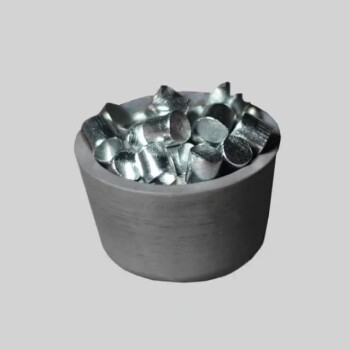
High Purity Pure Graphite Crucible for Evaporation

High Purity Pure Graphite Crucible for Evaporation

Vessels for high temperature applications, where materials are kept at extremely high temperatures to evaporate, allowing thin films to be deposited on substrates.

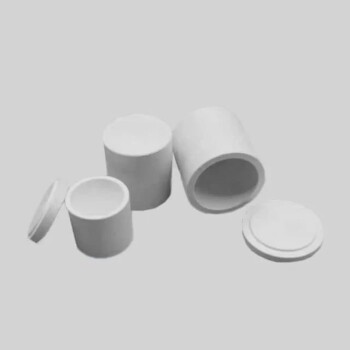
Ceramic Evaporation Boat Set Alumina Crucible for Laboratory Use

Ceramic Evaporation Boat Set Alumina Crucible for Laboratory Use

It can be used for vapor deposition of various metals and alloys. Most metals can be evaporated completely without loss. Evaporation baskets are reusable.1

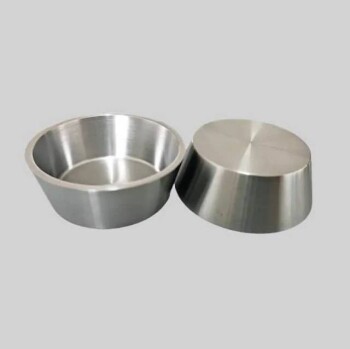
Folding Molybdenum Tantalum Boat With or Without Cover

Folding Molybdenum Tantalum Boat With or Without Cover

Molybdenum boat is an important carrier for preparing molybdenum powder and other metal powders, with high density, melting point, strength and temperature resistance.

Carbon Graphite Boat -Laboratory Tube Furnace with Cover

Carbon Graphite Boat -Laboratory Tube Furnace with Cover

Covered Carbon Graphite Boat Laboratory Tube Furnaces are specialized vessels or vessels made of graphite material designed to withstand extreme high temperatures and chemically aggressive environments.

Evaporation Boat for Organic Matter

Evaporation Boat for Organic Matter

The evaporation boat for organic matter is an important tool for precise and uniform heating during the deposition of organic materials.

Molybdenum Tungsten Tantalum Special Shape Evaporation Boat

Molybdenum Tungsten Tantalum Special Shape Evaporation Boat

Tungsten Evaporation Boat is ideal for vacuum coating industry and sintering furnace or vacuum annealing. we offers tungsten evaporation boats that are designed to be durable and robust, with long operating lifetimes and to ensure consistent smooth and even spreading of the molten metals.

High Performance Laboratory Stirrers for Diverse Applications

High Performance Laboratory Stirrers for Diverse Applications

Precise laboratory overhead stirrers for high-viscosity mixing. Durable, customizable, and ideal for research. Explore models now!

Molybdenum Tungsten Tantalum Evaporation Boat for High Temperature Applications

Molybdenum Tungsten Tantalum Evaporation Boat for High Temperature Applications

Evaporation boat sources are used in thermal evaporation systems and are suitable for depositing various metals, alloys and materials. Evaporation boat sources are available in different thicknesses of tungsten, tantalum and molybdenum to ensure compatibility with a variety of power sources. As a container, it is used for vacuum evaporation of materials. They can be used for thin film deposition of various materials, or designed to be compatible with techniques such as electron beam fabrication.

Tungsten Evaporation Boat for Thin Film Deposition

Tungsten Evaporation Boat for Thin Film Deposition

Learn about tungsten boats, also known as evaporated or coated tungsten boats. With a high tungsten content of 99.95%, these boats are ideal for high-temperature environments and widely used in various industries. Discover their properties and applications here.

Silicon Carbide (SIC) Ceramic Plate for Engineering Advanced Fine Ceramics

Silicon Carbide (SIC) Ceramic Plate for Engineering Advanced Fine Ceramics

Silicon nitride (sic) ceramic is an inorganic material ceramic that does not shrink during sintering. It is a high-strength, low-density, high-temperature-resistant covalent bond compound.

Silicon Carbide (SIC) Ceramic Sheet Wear-Resistant Engineering Advanced Fine Ceramics

Silicon Carbide (SIC) Ceramic Sheet Wear-Resistant Engineering Advanced Fine Ceramics

Silicon carbide (sic) ceramic sheet is composed of high-purity silicon carbide and ultra-fine powder, which is formed by vibration molding and high-temperature sintering.

High Purity Zinc Foil for Battery Lab Applications

High Purity Zinc Foil for Battery Lab Applications

There are very few harmful impurities in the chemical composition of zinc foil, and the surface of the product is straight and smooth; it has good comprehensive properties, processability, electroplating colorability, oxidation resistance and corrosion resistance, etc.

Customizable Laboratory High Temperature High Pressure Reactors for Diverse Scientific Applications

Customizable Laboratory High Temperature High Pressure Reactors for Diverse Scientific Applications

High-pressure lab reactor for precise hydrothermal synthesis. Durable SU304L/316L, PTFE liner, PID control. Customizable volume & materials. Contact us!

High Temperature Wear-Resistant Alumina Al2O3 Plate for Engineering Advanced Fine Ceramics

High Temperature Wear-Resistant Alumina Al2O3 Plate for Engineering Advanced Fine Ceramics

High temperature wear-resistant insulating alumina plate has excellent insulation performance and high temperature resistance.

Custom PTFE Teflon Parts Manufacturer Grinding Bowl

Custom PTFE Teflon Parts Manufacturer Grinding Bowl

PTFE is renowned for its exceptional chemical resistance, thermal stability, and low friction properties, making it a versatile material in various industries. The PTFE grinding bowl, specifically, finds applications where these properties are crucial.

Three-dimensional electromagnetic sieving instrument

Three-dimensional electromagnetic sieving instrument

KT-VT150 is a desktop sample processing instrument for both sieving and grinding. Grinding and sieving can be used both dry and wet. The vibration amplitude is 5mm and the vibration frequency is 3000-3600 times/min.

Platinum Sheet Electrode for Laboratory and Industrial Applications

Platinum Sheet Electrode for Laboratory and Industrial Applications

Elevate your experiments with our Platinum Sheet Electrode. Crafted with quality materials, our safe and durable models can be tailored to fit your needs.

Custom PTFE Teflon Parts Manufacturer for PTFE Buchner Funnel and Triangular Funnel

Custom PTFE Teflon Parts Manufacturer for PTFE Buchner Funnel and Triangular Funnel

The PTFE funnel is a piece of laboratory equipment used primarily for filtration processes, particularly in the separation of solid and liquid phases in a mixture. This setup allows for efficient and rapid filtration, making it indispensable in various chemical and biological applications.

Round Bidirectional Press Mold for Lab

Round Bidirectional Press Mold for Lab

The round bidirectional press mold is a specialized tool used in high-pressure molding processes, particularly for creating intricate shapes from metal powders.

Custom PTFE Teflon Parts Manufacturer Laboratory High Temperature Mixing Paddle Mixer

Custom PTFE Teflon Parts Manufacturer Laboratory High Temperature Mixing Paddle Mixer

The PTFE mixing paddle mixer is a versatile and robust tool designed for laboratory use, particularly in environments requiring high resistance to chemicals and extreme temperatures. Crafted from high-quality PTFE, this mixer boasts several key features that enhance its functionality and durability.


Leave Your Message