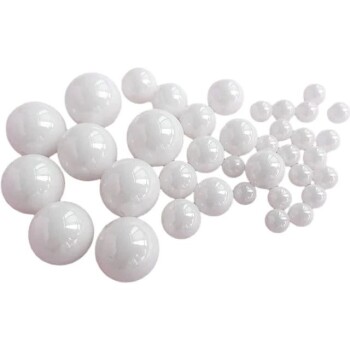
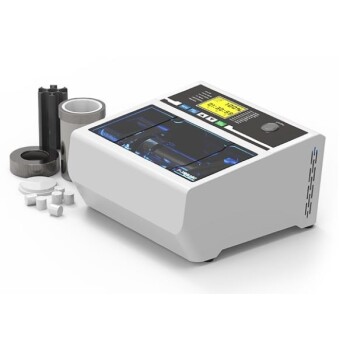
Zirconia grinding media are strictly required because they provide the necessary hardness and chemical inertness to prevent metallic contamination during synthesis. Unlike stainless steel, zirconia ensures that iron impurities do not leach into the sulfide electrolyte powder during the high-energy ball milling process, preserving the material's purity and electrochemical performance.
The Core Insight Sulfide solid-state electrolytes are exceptionally sensitive to foreign contaminants. The use of zirconia is not merely a preference for durability; it is a fundamental containment strategy to prevent side reactions and metallic short circuits that would otherwise render the electrolyte useless.
The Critical Role of Material Purity
Preventing Metallic Contamination
The primary reason for selecting zirconia over materials like stainless steel is the elimination of metallic impurities. Sulfide electrolytes are synthesized through long-duration, high-energy milling.
If stainless steel jars were used, the intense mechanical impact would cause iron (Fe) or chromium particles to abrade into the powder. Zirconia is significantly harder and more wear-resistant, effectively negating this risk.
Avoiding Side Reactions
Sulfide precursors are chemically active and prone to reacting with their environment. Metallic contaminants can act as catalysts for unwanted side reactions.
Zirconia is chemically inert. It does not react with the sulfide raw materials, ensuring that the chemical composition of the final product remains exactly as intended.
Mechanisms of Action
High-Impact Energy Transfer
High density is a key characteristic of zirconia grinding balls. This density allows the balls to generate sufficient kinetic energy during the milling process.
This energy is crucial for facilitating the mechanochemical reaction required to synthesize the material. The impact force drives the amorphization or alloying of the powder, transforming the raw precursors into a functional solid electrolyte.
Stability Under Stress
The synthesis of sulfide electrolytes often involves hours of high-speed impact. Zirconia media possess superior wear resistance, allowing them to withstand this mechanical stress without degrading.
This durability ensures that the media remains intact throughout the process, maintaining consistent milling conditions from start to finish.
Understanding the Risks of Alternatives
The Cost of Contamination
It is critical to understand why alternatives are rejected. If metallic impurities like iron are introduced into the powder, they can lead to internal short circuits within the battery cell.
Furthermore, these impurities degrade the ionic conductivity of the material. The presence of foreign metals disrupts the crystal structure or glass phase necessary for efficient ion transport.
Electrochemical Instability
Contaminated electrolytes suffer from poor electrochemical stability. This manifests as performance degradation during battery cycling, significantly shortening the lifespan of the energy storage device.
Making the Right Choice for Your Goal
If your primary focus is Electrochemical Stability:
- Prioritize zirconia to eliminate metallic iron, which is the leading cause of internal shorts and side reactions in sulfide electrolytes.
If your primary focus is Synthesis Efficiency:
- Rely on the high density of zirconia balls to provide the necessary kinetic impact for rapid and complete amorphization of the precursors.
If your primary focus is Material Longevity:
- Utilize zirconia for its wear resistance to ensure that long-duration milling does not result in media degradation or powder cross-contamination.
To achieve a high-performance sulfide solid electrolyte, the inertness and hardness of zirconia are not optional features, but absolute prerequisites.
Summary Table:
| Feature | Zirconia Grinding Media | Stainless Steel Media |
|---|---|---|
| Hardness & Wear | Superior; minimal abrasion | Moderate; potential for erosion |
| Contamination | Chemically inert; no metal leaching | Risk of iron/chromium impurities |
| Impact Energy | High density for efficient reaction | Varies by grade |
| Chemical Stability | Stable with sulfide precursors | Potential for unwanted side reactions |
| Battery Safety | Prevents internal short circuits | High risk of metallic shorts |
Elevate Your Solid-State Battery Research with KINTEK
Precision in material synthesis starts with the right equipment. At KINTEK, we specialize in providing high-performance laboratory solutions tailored for the most demanding research environments. Whether you are developing next-generation sulfide electrolytes or advanced battery materials, our zirconia grinding jars, high-density grinding media, and planetary ball mills ensure your powders remain free from metallic contamination.
Our extensive portfolio also includes:
- Battery Research Tools: Electrolytic cells, electrodes, and comprehensive testing consumables.
- Advanced Furnaces: High-temperature tube, vacuum, and atmosphere furnaces for controlled synthesis.
- Processing Equipment: Hydraulic pellet presses, crushing and milling systems, and sieving tools.
- Material Handling: Specialized PTFE products, ceramics, and crucibles for chemical inertness.
Don't compromise your electrochemical performance. Partner with KINTEK for durable, high-purity laboratory equipment that delivers consistent results every time.
Contact Our Technical Experts Today to find the perfect milling configuration for your laboratory!
Related Products
- Laboratory Jar Ball Mill with Alumina Zirconia Grinding Jar and Balls
- Precision Machined Zirconia Ceramic Ball for Engineering Advanced Fine Ceramics
- Laboratory Jar Mill with Agate Grinding Jar and Balls
- Laboratory Ball Mill Jar Mill with Metal Alloy Grinding Jar and Balls
- Nature Agate Mortar and Pestle for Grinding and Mixing
People Also Ask
- What are the primary functions of using a ball mill for BZCY72 powder? Achieve High Purity and Enhanced Sintering
- In what way does a laboratory ball mill affect material properties when modifying PHBV/pulp fiber composites?
- Why is a laboratory ball mill required for ultra-fine fly ash? Unlock Nano-Scale Adsorption Power
- What is the function of a laboratory ball mill in the preparation of AMMCs? Optimize Dispersion & Grain Refinement
- What is the function of a laboratory ball mill in the pretreatment of waste tire char (WTC)? Optimize Material Reactivity