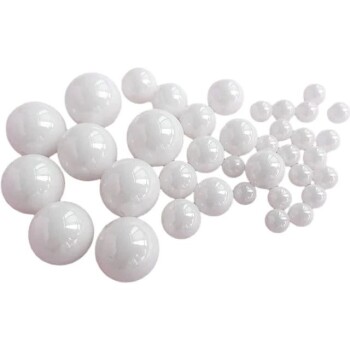
The selection of Zirconia (ZrO2) grinding media is a critical engineering decision driven by the need to maintain absolute chemical purity during extended processing. Zirconia jars and balls are uniquely capable of withstanding high-intensity milling for durations as long as 120 hours without degrading, preventing the introduction of metallic contaminants like iron into the LiNi0.5Mn1.5O4 (LNMO) cathode material.
Core Takeaway The choice of zirconia is not merely about hardness; it is a strategic measure to eliminate contamination variables. By utilizing chemically inert and wear-resistant media, researchers ensure that the electrochemical performance of the LNMO material is defined solely by its synthesis chemistry, not by foreign impurities introduced during mechanical processing.
Preserving Material Purity
The primary challenge in synthesizing high-voltage cathode materials like LNMO is maintaining chemical integrity during rigorous mechanical treatment.
Eliminating Metallic Contamination
Standard grinding media, such as stainless steel, inevitably suffer from abrasion during milling. This shedding introduces metallic contaminants, specifically iron, into the sample. Even trace amounts of iron can be detrimental to the electrochemical stability of the final battery material.
Chemical Inertness
Zirconia is chemically inert. Unlike metallic media which might react with precursors, zirconia remains stable. This ensures that the delicate stoichiometry of the LNMO remains unaltered, preventing side reactions that could compromise the purity of the cathode material.
Enduring High-Intensity Processing
The synthesis of LNMO often requires "long-term" mechanical treatment to achieve the necessary particle size and phase distribution.
Surviving Extended Durations
The process requires equipment to endure extreme stress for up to 120 hours. Zirconia’s exceptional durability ensures that the jars and balls remain intact throughout this prolonged timeframe, whereas softer materials would degrade rapidly.
Superior Wear Resistance
Zirconia exhibits exceptional hardness. This resistance to wear is vital not just for the survival of the equipment, but for the consistency of the process. It ensures that the milling energy remains constant over days of operation without the media losing significant mass or shape.
The Mechanics of Milling Efficiency
Beyond protection, zirconia actively contributes to the efficiency of the mechanochemical reaction.
High Density for Kinetic Energy
Zirconia is significantly denser than many alternative ceramic materials. High-density grinding balls possess greater mass, which translates to higher impact kinetic energy during the tumbling process.
Facilitating Solid-Phase Reactions
This increased impact energy is necessary to drive the solid-phase reactions and mixing required for LNMO synthesis. The dense media ensures that the mechanical energy is effectively transferred to the powder, optimizing the efficiency of the synthesis even at the micro-scale.
Understanding the Trade-offs
While zirconia is the superior choice for this application, it is important to understand the operational context compared to other materials.
Brittleness vs. Ductility
Unlike steel, which is ductile, zirconia is a ceramic and inherently brittle. While it offers superior hardness, it requires careful handling to prevent chipping or fracturing upon sudden, localized impact outside of the milling environment.
Cost vs. Performance
High-quality zirconia media represents a higher upfront investment compared to standard steel or lower-grade ceramics. However, this cost is a necessary trade-off to avoid the "hidden cost" of ruined batches caused by iron contamination or equipment failure during 100+ hour runs.
Making the Right Choice for Your Goal
When setting up your milling protocol for battery materials, align your media choice with your specific technical requirements:
- If your primary focus is Electrochemical Stability: Select zirconia to strictly prevent iron contamination, which causes voltage fade and instability.
- If your primary focus is Process Durability: Rely on zirconia to withstand milling times exceeding 100 hours without media degradation.
- If your primary focus is Reaction Efficiency: Leverage the high density of zirconia to maximize the kinetic energy transfer into your precursors.
By selecting zirconia, you convert the variable of "mechanical processing" into a constant, ensuring your results reflect the true potential of your material.
Summary Table:
| Feature | Zirconia (ZrO2) | Stainless Steel | Benefit for LNMO Synthesis |
|---|---|---|---|
| Contamination Risk | Chemically Inert (Zero Iron) | High (Iron/Metallic) | Protects electrochemical stability |
| Wear Resistance | Exceptional Hardness | Moderate | Maintains process consistency for 120h+ |
| Density/Energy | High Density (6.0 g/cm³) | High (7.8 g/cm³) | Effective solid-phase reaction kinetics |
| Chemical Stability | Highly Stable | Risk of Oxidation | Prevents precursor side-reactions |
Elevate Your Battery Material Synthesis with KINTEK
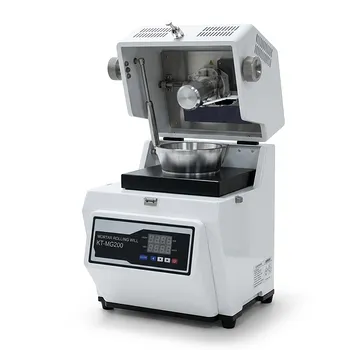
Precision in battery research starts with the right tools. KINTEK specializes in high-performance laboratory equipment, providing the zirconia grinding jars, high-density grinding balls, and planetary ball mills necessary to achieve the absolute chemical purity required for LNMO and other high-voltage cathode materials.
Beyond milling, our comprehensive portfolio includes high-temperature furnaces, hydraulic pellet presses, and battery research consumables designed to streamline your workflow from precursor synthesis to final characterization. Don't let metallic contamination compromise your electrochemical performance—partner with KINTEK for durable, inert, and efficient solutions.
Contact KINTEK Today for a Specialized Quote
Related Products
- Laboratory Jar Ball Mill with Alumina Zirconia Grinding Jar and Balls
- Precision Machined Zirconia Ceramic Ball for Engineering Advanced Fine Ceramics
- Laboratory Ball Mill Jar Mill with Metal Alloy Grinding Jar and Balls
- Laboratory Jar Mill with Agate Grinding Jar and Balls
- Laboratory Grinding Mill Mortar Grinder for Sample Preparation
People Also Ask
- What are the primary functions of using a ball mill for BZCY72 powder? Achieve High Purity and Enhanced Sintering
- In what way does a laboratory ball mill affect material properties when modifying PHBV/pulp fiber composites?
- Why is a laboratory ball mill required for ultra-fine fly ash? Unlock Nano-Scale Adsorption Power
- What is the function of a laboratory ball mill in the preparation of AMMCs? Optimize Dispersion & Grain Refinement
- What is the function of a laboratory ball mill in the pretreatment of waste tire char (WTC)? Optimize Material Reactivity