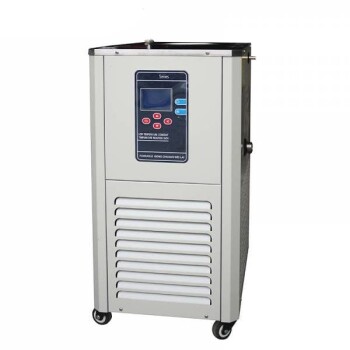
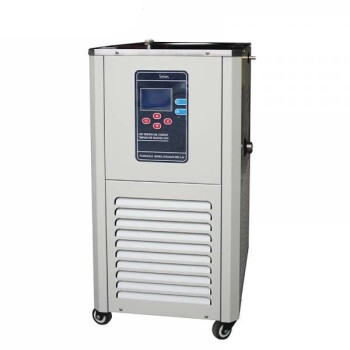
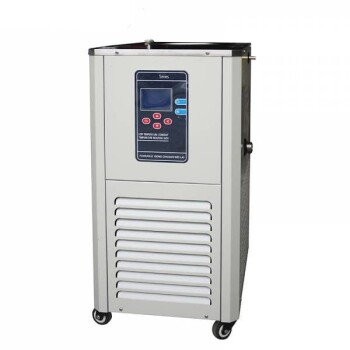
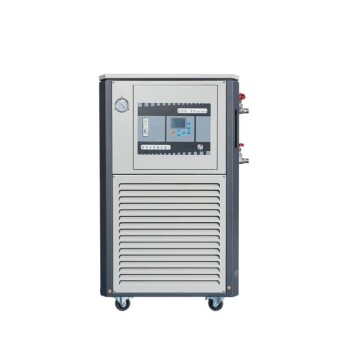
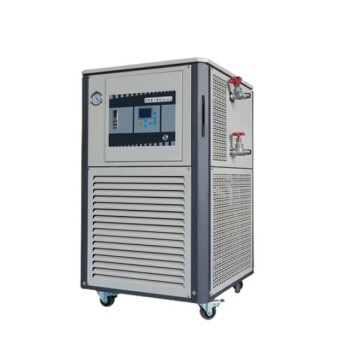
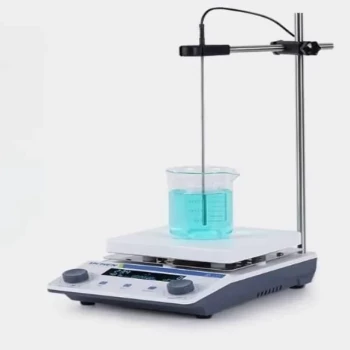
A constant temperature water bath system is strictly necessary to maintain precise thermal control over the electrolyte during the Cu–TiO2 electrodeposition process. Without this external regulation, the heat naturally generated by the electrolysis would cause temperature fluctuations, destabilizing the process and leading to inconsistent composite coatings.
Core Takeaway: Temperature is a governing variable in electrochemistry that dictates reaction speed and fluid properties. By stabilizing the thermal environment, a water bath ensures that conductivity and reaction kinetics remain constant, guaranteeing that every layer of the composite is deposited under identical conditions.
The Role of Thermal Stability in Electrodeposition
Controlling Electrolyte Conductivity
Temperature has a direct linear relationship with electrolyte conductivity. As the solution warms, ions move more freely, changing the electrical resistance of the bath.
A constant temperature water bath locks this variable in place. This ensures that the current applied results in a predictable deposition rate rather than fluctuating with the changing resistance of the fluid.
Regulating Ion Migration Rates
The speed at which copper ions and TiO2 particles travel to the cathode is determined by ion migration rates.
If the temperature is allowed to drift, these migration rates will vary. This leads to uneven distribution of particles within the copper matrix, compromising the structural integrity of the composite.
Stabilizing Interface Reaction Kinetics
The actual chemical bonding that occurs at the electrode surface is governed by interface reaction kinetics.
These reactions are highly sensitive to thermal energy. A stable temperature ensures the reduction of copper and the entrapment of TiO2 particles occur at a steady, controlled pace, preventing rapid or uncontrolled growth phases.
Managing Heat Generation
Counteracting Electrolysis Heat
The process of passing electrical current through a solution inherently generates heat, known as Joule heating.
Without a cooling or regulating medium, the electrolyte temperature would rise continuously during the experiment. The water bath acts as a thermal buffer, absorbing this excess heat to maintain the setpoint.
Ensuring Experimental Reproducibility
For data to be valid, an experiment must be repeatable.
Fluctuating temperatures introduce a "noise" variable that makes it impossible to replicate results. Using a water bath eliminates this variable, ensuring that differences in the final coating are due to your intentional parameter changes, not environmental instability.
Understanding the Trade-offs
Equipment Complexity vs. Process Control
Implementing a water bath system adds bulk to the experimental setup and requires additional calibration time.
However, the trade-off of omitting the system is significantly higher. Attempting electrodeposition without thermal control simplifies the physical setup but complicates the data analysis, often rendering the results unusable due to poor consistency.
Making the Right Choice for Your Goal
To maximize the quality of your Cu–TiO2 composite, apply the following principles:
- If your primary focus is Research Quality: Always use a water bath to ensure that your data regarding coating thickness and particle distribution is statistically significant and reproducible.
- If your primary focus is Process Scaling: Use the water bath data to model the thermal management systems required for larger industrial plating tanks.
Mastering temperature control is the first step toward mastering the microstructure of your composite.
Summary Table:
| Factor Affected | Role of Water Bath Stability | Impact on Cu–TiO2 Quality |
|---|---|---|
| Electrolyte Conductivity | Maintains constant electrical resistance | Predictable and uniform deposition rates |
| Ion Migration Rates | Regulates speed of ions/TiO2 particles | Even particle distribution in copper matrix |
| Reaction Kinetics | Stabilizes chemical bonding at surface | Controlled growth and structural integrity |
| Joule Heating | Absorbs heat generated by electrolysis | Prevents process destabilization and drift |
| Reproducibility | Eliminates thermal 'noise' variables | Ensures consistent, valid experimental data |
Elevate Your Material Research with KINTEK Precision Solutions
Achieving the perfect Cu–TiO2 composite requires more than just chemistry—it requires absolute environmental control. KINTEK specializes in high-performance laboratory equipment designed to stabilize your most sensitive processes. From precise constant temperature cooling solutions and water baths to advanced electrolytic cells, electrodes, and high-temperature reactors, we provide the tools necessary for repeatable, high-quality results.
Whether you are optimizing battery research, scaling electrodeposition, or mastering material microstructure, our comprehensive range of consumables—including PTFE products, ceramics, and crucibles—ensures your lab is equipped for excellence.
Ready to eliminate process variables and secure your data integrity? Contact our technical experts today to find the perfect thermal management and electrochemical solutions for your laboratory.
References
- Ірина Скнар, Dmitriy Gerasimenko. Development of a new suspension electrolyte based on methane-sulphonic acid for the electrodeposition of Cu–TiO2 composites. DOI: 10.15587/1729-4061.2021.224224
This article is also based on technical information from Kintek Solution Knowledge Base .
Related Products
- High Temperature Constant Temperature Heating Circulator Water Bath Chiller Circulator for Reaction Bath
- 50L Chiller Water Bath Cooling Circulator Low Temperature Constant Temperature Reaction Bath
- 30L Chiller Water Bath Cooling Circulator Low Temperature Constant Temperature Reaction Bath
- 10L Chilling Circulator Cooling Water Bath Low Temperature Constant Temperature Reaction Bath
- 40L Chiller Water Bath Cooling Circulator Low Temperature Constant Temperature Reaction Bath
People Also Ask
- What is the necessity of a circulating water bath in chlorate production? Optimize Yield & Purity with Precision
- How do constant temperature circulators impact weight-loss immersion tests? Ensure Precision in Corrosion Analysis
- How does a constant temperature circulator support the leaching reaction of gold scrap? Optimize Gold Recovery Results
- Why is a constant temperature water bath used for precursor storage in CVD? Achieve Stable Nanocrystalline SiC Deposition
- Why is a high-precision constant temperature water bath necessary for anaerobic digestion? Ensure Success at 37±0.02°C