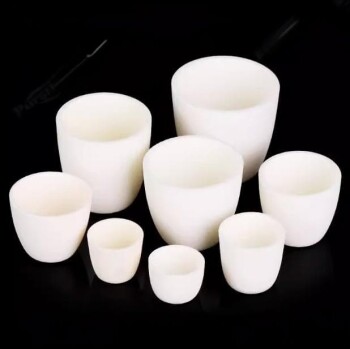
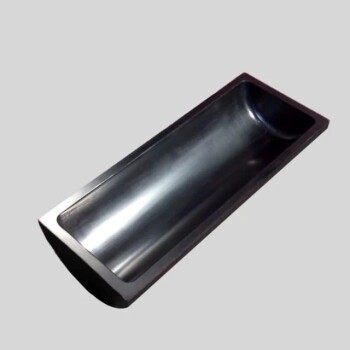
High-purity alumina ceramic boats are the industry standard for processing AlCrFeCoNi alloy powders because they offer a unique combination of extreme thermal stability and total chemical inertness. At oxidation temperatures of 1000 °C and above, these carriers do not react with the high-entropy alloy or its resulting oxide scale, ensuring the chemical purity of the material and the accuracy of experimental data.
The selection of high-purity alumina is driven by the need to prevent cross-contamination and ensure structural integrity during intense thermal cycling. It acts as a neutral stage that allows researchers to isolate the oxidation behavior of the alloy without interference from the container itself.
Exceptional Chemical Inertness
Preventing Material Contamination
AlCrFeCoNi is a complex high-entropy alloy that is highly sensitive to impurity elements during high-temperature reactions. High-purity alumina (Al₂O₃) does not chemically interact with the alloy components, ensuring the final material—often used as an active anode—maintains its intended chemical profile.
Stability Against Oxide Scales
During oxidation, the alloy forms various oxide layers on its surface. Alumina boats are specifically chosen because they do not bond with or react to these generated oxide scales, preserving the integrity of the sample for surface morphology analysis.
Superior Thermal Performance
Resilience to High Temperatures
High-temperature oxidation experiments typically occur at or above 1000 °C (sometimes reaching 1200 °C or higher). High-purity alumina retains its mechanical strength and structural shape in these extreme environments without softening or collapsing.
Thermal Shock Resistance
Experimental protocols often require moving samples rapidly from high temperatures to room temperature. Alumina ceramic is designed to withstand this frequent thermal cycling without cracking, which is essential for long-duration cyclic oxidation tests.
Precision in Measurement and Analysis
Constant Mass for Data Accuracy
To measure oxidation rates, researchers must track micro-gram level weight changes in the alloy. Because high-purity alumina is oxidation-resistant and does not lose mass at high temperatures, the boat’s weight remains extremely stable, ensuring that all recorded weight gain is attributed solely to the alloy's oxidation.
Facilitating Surface Morphology
Because the boat does not "stick" to the sample or react with the flux, the alloy powders can be easily removed after the process. This allows for clear, accurate imaging of the powder surfaces using scanning electron microscopy without interference from container debris.
Understanding the Trade-offs
Brittleness and Handling
While alumina is thermally robust, it is a ceramic material and remains inherently brittle. It cannot withstand significant mechanical impact or dropping, requiring careful handling during loading and unloading from the furnace.
Cost vs. Purity
Lower-purity alumina boats (e.g., 95% or 99%) are less expensive but contain silicate phases that can soften or become reactive at temperatures exceeding 1000 °C. For AlCrFeCoNi alloys, using anything less than high-purity (99.5%+) alumina risks leaching impurities like silicon into the alloy, potentially skewing the oxidation results.
Making the Right Choice for Your Goal
Recommendations for High-Temperature Processing
- If your primary focus is analytical precision: Use the highest purity alumina available (99.7%+) to ensure that mass change measurements are not corrupted by boat degradation or moisture absorption.
- If your primary focus is long-term cyclic testing: Prioritize boats specifically rated for thermal shock resistance to prevent cracking during repeated furnace insertions and withdrawals.
- If your primary focus is cost-effective synthesis: Only consider lower-purity ceramics if the operating temperature is well below 800 °C and the alloy components are known to be non-reactive with silicates.
Choosing high-purity alumina ensures that your experimental results reflect the true properties of the alloy rather than the limitations of the container.
Summary Table:
| Feature | Advantage | Benefit for AlCrFeCoNi Research |
|---|---|---|
| Chemical Inertness | Non-reactive with alloy components | Prevents sample contamination and ensures purity |
| Thermal Stability | Maintains strength at 1000°C+ | Prevents boat collapse during high-temp oxidation |
| Mass Stability | Constant weight during heating | Ensures accurate measurement of oxidation rates |
| Thermal Shock Resistance | Withstands rapid temperature changes | Ideal for long-duration cyclic oxidation testing |
| High Purity (99.5%+) | Free of silicate phases | Eliminates leaching and interference with morphology |
Elevate Your Materials Research with KINTEK Precision
Achieve uncompromising accuracy in your high-temperature experiments with KINTEK’s premium laboratory solutions. Whether you are investigating the oxidation behavior of high-entropy alloys like AlCrFeCoNi or developing next-generation battery materials, our high-purity alumina boats, crucibles, and ceramic components provide the inert environment and thermal resilience your work demands.
KINTEK specializes in a comprehensive range of thermal and material processing equipment, including:
- High-Temperature Furnaces: Muffle, tube, vacuum, and atmosphere furnaces for precise heat treatment.
- Material Preparation: Advanced crushing, milling, and hydraulic presses for pellet and sample preparation.
- Specialized Reactors: High-temperature high-pressure reactors, autoclaves, and electrolytic cells.
- Laboratory Consumables: Precision-engineered PTFE, ceramics, and cooling solutions (ULT freezers, freeze dryers).
Ensure total data integrity and eliminate cross-contamination. Contact KINTEK today to consult with our experts on the ideal equipment and consumables for your specific research goals.
References
- Dávid Csík, Karel Saksl. High-Entropy Composite Coating Based on AlCrFeCoNi as an Anode Material for Li-Ion Batteries. DOI: 10.3390/coatings13071219
This article is also based on technical information from Kintek Solution Knowledge Base .
Related Products
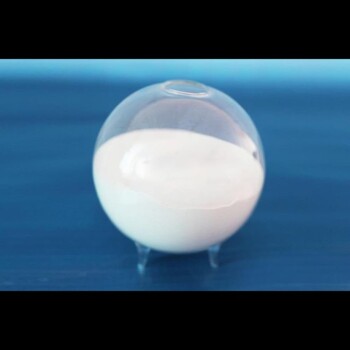
- High Purity Alumina Granulated Powder for Engineering Advanced Fine Ceramics
- Alumina Al2O3 Ceramic Crucible Semicircle Boat with Lid for Engineering Advanced Fine Ceramics
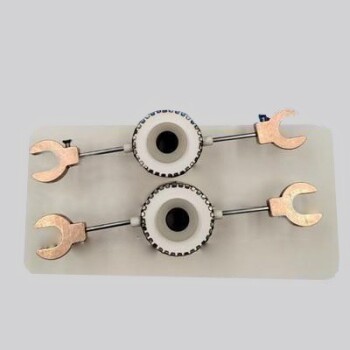
- Aluminized Ceramic Evaporation Boat for Thin Film Deposition
- Ceramic Evaporation Boat Set Alumina Crucible for Laboratory Use
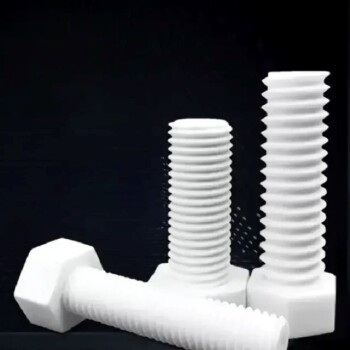
- High Quality Alumina Ceramic Screw for Engineering Advanced Fine Ceramics with High Temperature Resistance and Insulation
People Also Ask
- What is the function of high-purity alumina powder in pack cementation? Ensure Uniform Aerospace Blade Coatings
- How should alumina powder be selected for polishing a disc electrode, and what is the procedure for removing scratches? Achieve a Perfect Mirror Finish
- What are the properties and handling precautions for alumina powder as a polishing material? Achieve a Flawless Finish with Precision
- Why is it necessary to apply alumina powder to graphite molds for TiC10/Cu-Al2O3? Ensure Smooth Release.
- What measures should be taken to prevent cross-contamination when using different sizes of alumina powder?