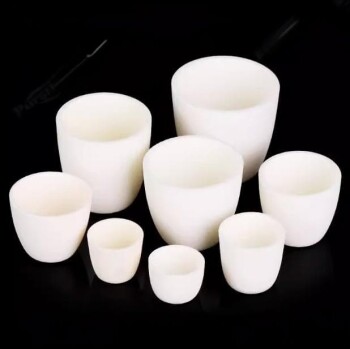
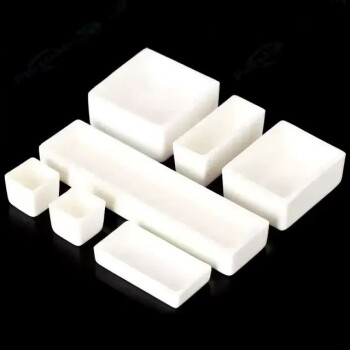
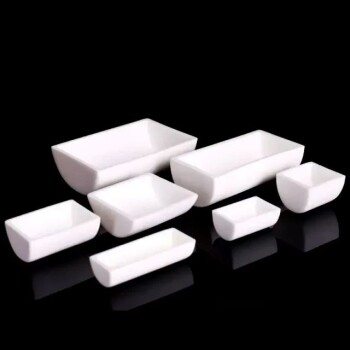
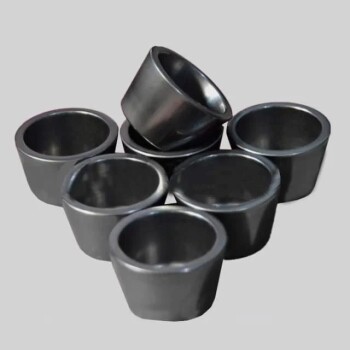
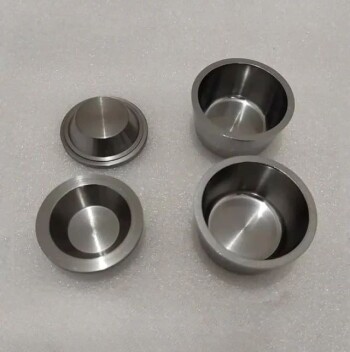
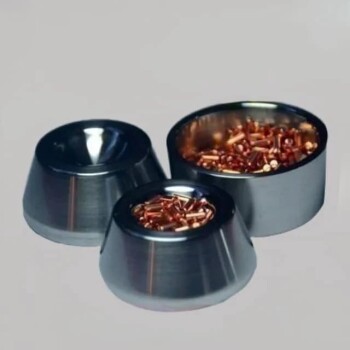
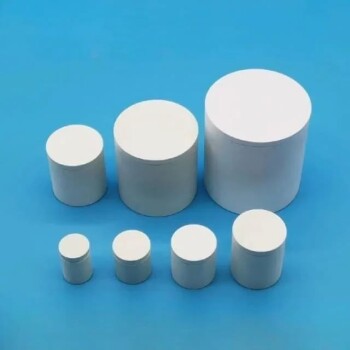
High-purity alumina crucibles are essential in molten salt purification because they provide an exceptionally stable, non-reactive environment that preserves the chemical integrity of the salt. These containers exhibit superior chemical inertness and thermal stability, allowing them to withstand both long-duration dehydration annealing and the highly corrosive nature of molten chloride, fluoride, or nitrate salts. By resisting chemical erosion, they ensure that the salt melt is not contaminated by the container material, which is critical for achieving high-purity results.
The core value of a high-purity alumina crucible lies in its ability to act as a "neutral" vessel that withstands extreme corrosive environments without leaching impurities. This ensures that the chemical composition of the purified salt remains dictated solely by the process itself, rather than by interactions with the container.
Maintaining Chemical Purity in Corrosive Environments
Prevention of Material Contamination
During the purification of mixed salts, such as NaCl-KCl-MgCl2, the container must not react with the melt. High-purity alumina (typically 99.5% purity) ensures that no foreign elements migrate from the crucible walls into the salt. This is vital for maintaining the strict chemical purity required for subsequent electrolytic or sintering processes.
Resistance to Molten Salt Erosion
Molten salts, particularly chlorides, fluorides, and hydroxides, are aggressively corrosive at high temperatures. Alumina’s dense structure prevents the penetration of these melts into the crucible walls. This resistance to erosion maintains the structural integrity of the vessel during long-duration experiments reaching temperatures up to 650°C or even higher in specific electrolytic environments.
Stability in Strong Alkaline and Acidic Melts
Beyond simple salts, high-purity alumina resists the "strong alkaline melts" often found in hydroxide electrolytes. It prevents the crucible components from contaminating the electrolyte, which is a prerequisite for accurate corrosion product analysis in alloys. Without this stability, the data gathered would be skewed by the presence of dissolved container materials.
Thermal Performance and Dehydration
Withstanding High-Temperature Dehydration
The purification process often begins with dehydration annealing at temperatures around 300°C to remove moisture contamination. Alumina crucibles possess the thermal shock resistance necessary to transition through these heating phases without cracking. This allows for the effective removal of water, which is a primary impurity in many salt mixtures like FLiNaK.
High-Temperature Structural Strength
In processes like the electrolytic deoxygenation of calcium chloride (CaCl2), temperatures can reach 1173 K. High-purity alumina maintains its mechanical strength and structural shape at these extremes. This prevents the vessel from deforming or failing under the weight of the molten salt load at near-white-hot temperatures.
Facilitating Phase Purity in Sintering
When used for MAX phase sintering, the crucible must hold raw materials like titanium or aluminum without reacting. Because alumina is chemically inert to these metallic components at high heat, it ensures that the resulting sintered blocks maintain a pure phase composition. This makes it an ideal choice for materials science applications where precision is non-negotiable.
Understanding the Trade-offs
Brittleness and Handling
While alumina is thermally stable, it remains a ceramic material and is inherently brittle. Rapid, uneven cooling can lead to thermal stress fractures, meaning heating and cooling cycles must be carefully managed. This requires more precise equipment and longer cycle times compared to metallic containers.
Cost vs. Purity Requirements
High-purity alumina (99.5% and above) is significantly more expensive than lower-grade ceramics or standard laboratory glassware. While lower-grade alumina might suffice for general heating, it contains silica or other binders that can leach into the melt. Using anything less than high-purity alumina risks introducing systematic errors into sensitive chemical analyses.
Applying This to Your Purification Project
Making the Right Choice for Your Goal
- If your primary focus is moisture removal: Ensure the crucible is rated for dehydration annealing above 300°C to facilitate the complete removal of water without risk of vessel fracture.
- If your primary focus is electrochemical analysis: Use a 99.5% purity alumina vessel to ensure that any observed corrosion or electrical signals result solely from the sample and not from container degradation.
- If your primary focus is high-temperature electrolysis (above 1000 K): Verify the structural density of the alumina to prevent the molten salts from penetrating the crucible walls over long durations.
High-purity alumina remains the definitive choice for molten salt purification because it provides the most reliable barrier between the aggressive chemistry of the melt and the integrity of the final product.
Summary Table:
| Feature | Benefit for Purification | Application Example |
|---|---|---|
| 99.5% Alumina Purity | Prevents leaching of foreign elements | Mixed salt (NaCl-KCl-MgCl2) purification |
| Corrosion Resistance | Withstands aggressive chlorides/fluorides | High-temperature electrochemical analysis |
| Thermal Stability | Resists shock during dehydration cycles | Moisture removal (Dehydration annealing) |
| Mechanical Strength | Maintains structural integrity at 1000K+ | Electrolytic deoxygenation and sintering |
Elevate Your Research Precision with KINTEK
Maximize the purity and reliability of your chemical processes with KINTEK’s high-performance laboratory solutions. Whether you are performing complex molten salt purification or advanced materials sintering, our 99.5% high-purity alumina crucibles, ceramic components, and specialized high-temperature furnaces are designed to withstand the most corrosive environments.
From high-pressure reactors to precision crushing and milling systems, KINTEK provides the high-quality consumables and equipment essential for cutting-edge laboratory success. Contact our technical experts today to discuss your project requirements and discover how our premium portfolio can enhance your lab's efficiency and data accuracy.
References
- Kunjal Patel, Sundeep Mukherjee. Molten Salt Corrosion Behavior of Dual-Phase High Entropy Alloy for Concentrating Solar Power Systems. DOI: 10.3390/e25020296
This article is also based on technical information from Kintek Solution Knowledge Base .
Related Products
- Arc-Shaped Alumina Ceramic Crucible High Temperature Resistant for Engineering Advanced Fine Ceramics
- Engineering Advanced Fine Alumina Al2O3 Ceramic Crucible for Laboratory Muffle Furnace
- Engineering Advanced Fine Ceramics Alumina Al2O3 Crucible With Lid Cylindrical Laboratory Crucible
- Engineering Advanced Fine Ceramics Alumina Crucibles (Al2O3) for Thermal Analysis TGA DTA
- Alumina Al2O3 Ceramic Crucible Semicircle Boat with Lid for Engineering Advanced Fine Ceramics
People Also Ask
- Why Use Alumina Crucibles & Powder Burial for NaSICON? Ensure Phase Purity and Prevent Elemental Volatilization
- What is the primary purpose of using alumina crucibles for LLTO ceramics? Optimize Your High-Temperature Sintering
- Why are alumina crucibles and mother powder essential for LATP sintering? Optimize Your Solid Electrolyte Performance
- Why are high-purity alumina crucibles used for liquid lead corrosion experiments? Ensure Data Accuracy at 550°C
- Primary considerations for choosing alumina crucibles and quartz tubes in indium intercalation: Ensure Material Purity