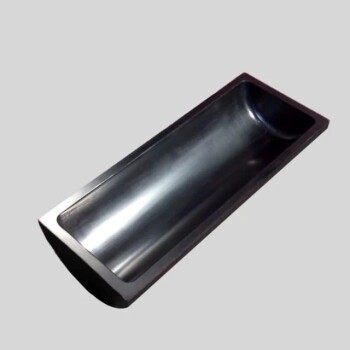
A high-temperature crucible acts as the critical barrier protecting Silicon Carbide (SiC) particles during the intense roasting phase. This vessel is strictly necessary because the process typically requires temperatures around 1100°C, a threshold where standard containers would lose structural integrity or chemically interact with the sample. The crucible ensures the SiC powder remains isolated from physical deformation and atomic contamination.
The roasting phase of SiC demands a vessel capable of withstanding extreme thermal stress without softening, fracturing, or reacting. The crucible’s primary function is to serve as an inert shield, guaranteeing the purity of the final material by preventing the diffusion of contaminants from the container walls into the SiC particles.
The Physics of Thermal Stability
Withstanding Extreme Heat
The roasting phase for Silicon Carbide often involves temperatures reaching or exceeding 1100°C.
At these distinct thermal levels, many standard laboratory materials will soften or melt. A high-temperature crucible provides the necessary thermal stability to maintain its rigid shape throughout the entire heating cycle.
Preventing Structural Failure
Beyond simple melting, the vessel must resist fracturing under thermal stress.
If a container fractures during the roast, the SiC powder is lost or contaminated immediately. The crucible is engineered to remain physically robust, preventing catastrophic failure during the ramp-up to peak temperature.
Ensuring Material Purity
Blocking Contaminant Diffusion
High heat accelerates atomic movement, increasing the risk of diffusion.
Without a specialized crucible, atoms from the container material can migrate into the SiC powder. The crucible acts as a diffusion barrier, ensuring that foreign elements do not infiltrate the SiC reinforcement particles.
Chemical Inertness
The crucible must be chemically passive relative to the SiC and the surrounding environment.
For example, when processes involve corrosive agents like molten salts (such as mixtures of sodium chloride and potassium chloride), the crucible must resist chemical attack. This chemical inertness prevents impurities from leaching into the reaction system, which is vital for maintaining the high quality of the final SiC product.
Understanding the Trade-offs
Material Specificity
Not all high-temperature crucibles are universally compatible.
While a crucible may withstand 1100°C, it must be matched to the specific chemical environment. For instance, alumina crucibles are excellent for certain SiC processes involving molten salts, but using the wrong crucible material for a specific chemical mixture can still lead to corrosion.
Thermal Shock Sensitivity
Even the most robust crucibles have physical limitations regarding temperature change rates.
While they can handle high absolute temperatures, rapid heating or cooling can cause thermal shock. This often results in cracking, even if the material is theoretically rated for the target temperature.
Making the Right Choice for Your Goal
To ensure the success of your SiC roasting process, select your crucible based on your specific purity and thermal requirements.
- If your primary focus is High Purity: Prioritize a crucible material known for exceptional chemical inertness to prevent atomic diffusion and contamination of the SiC particles.
- If your primary focus is Process Safety: Ensure the crucible is rated well above your peak operating temperature (e.g., capable of handling 1150°C if roasting at 1100°C) to avoid softening or fracturing.
Ultimately, the crucible is not just a container; it is a foundational component of the process engineering that dictates the structural and chemical integrity of your final Silicon Carbide product.
Summary Table:
| Feature | Requirement for SiC Roasting | Benefit for Final Product |
|---|---|---|
| Thermal Stability | Resilience at 1100°C+ | Prevents vessel melting and structural failure |
| Chemical Inertness | Non-reactive with SiC/Salts | Ensures material purity and blocks diffusion |
| Physical Integrity | Resistance to thermal shock | Protects sample from loss due to fractures |
| Material Choice | Alumina or specialized ceramics | Optimized compatibility with chemical environment |
Elevate Your Material Purity with KINTEK
Don't compromise your Silicon Carbide production with subpar containers. KINTEK specializes in high-performance laboratory equipment, offering a premium range of high-temperature crucibles, ceramic labware, and muffle furnaces designed to withstand the most rigorous thermal environments.
Whether you are performing complex SiC roasting, dental sintering, or advanced battery research, our expert team provides the precision tools you need to prevent contamination and ensure structural integrity. From alumina and PTFE consumables to high-pressure reactors and vacuum furnaces, we deliver the reliability your research demands.
Ready to optimize your high-temperature processes? Contact KINTEK today for a customized solution!
Related Products
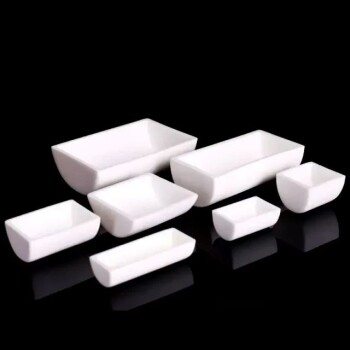
- Engineering Advanced Fine Ceramics Alumina Crucibles (Al2O3) for Thermal Analysis TGA DTA
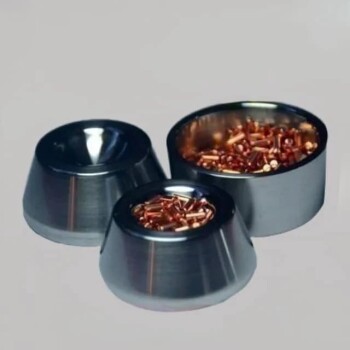
- Electron Beam Evaporation Coating Oxygen-Free Copper Crucible and Evaporation Boat
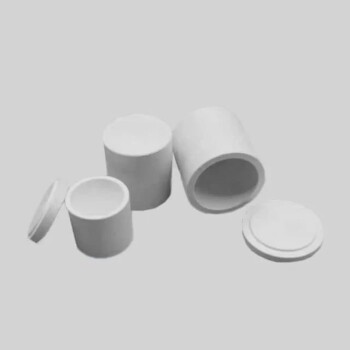
- Engineering Advanced Fine Ceramics Alumina Al2O3 Crucible With Lid Cylindrical Laboratory Crucible
- Alumina Al2O3 Ceramic Crucible Semicircle Boat with Lid for Engineering Advanced Fine Ceramics
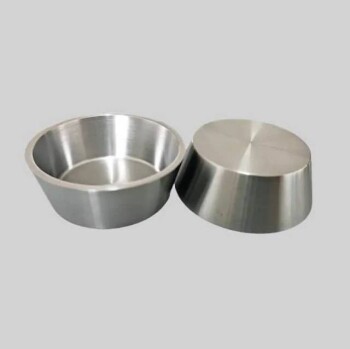
- Electron Beam Evaporation Coating Gold Plating Tungsten Molybdenum Crucible for Evaporation
People Also Ask
- Why Use Alumina Crucibles for TGA of Bicyclic Carbonates? Ensure Data Purity & Chemical Inertness
- Why are alumina crucibles and mother powder essential for LATP sintering? Optimize Your Solid Electrolyte Performance
- Why are high-purity alumina crucibles used for liquid lead corrosion experiments? Ensure Data Accuracy at 550°C
- What is the primary purpose of using alumina crucibles for LLTO ceramics? Optimize Your High-Temperature Sintering
- Why Use Alumina Crucibles & Powder Burial for NaSICON? Ensure Phase Purity and Prevent Elemental Volatilization