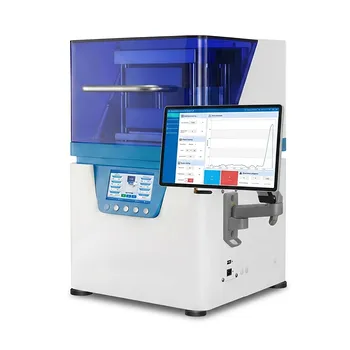
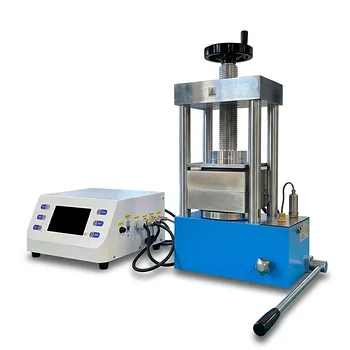
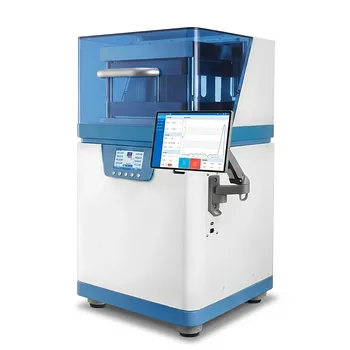
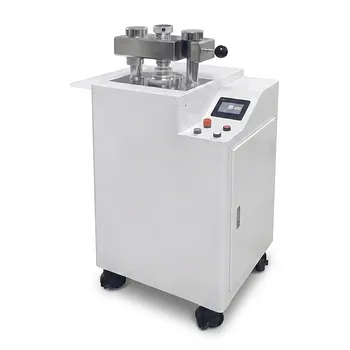
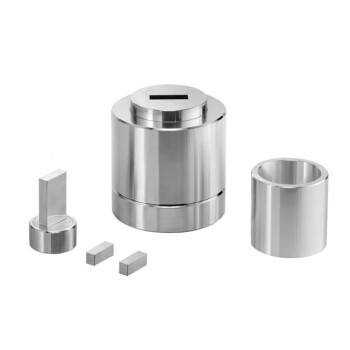
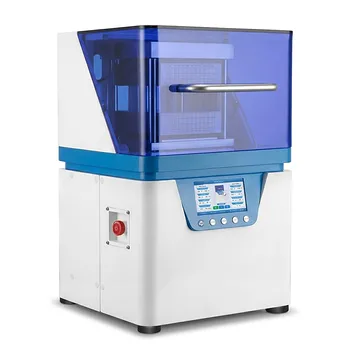
The laboratory hydraulic press is the primary tool for converting loose catalyst powders into standardized "green bodies" with uniform density and mechanical integrity.
This equipment is necessary because it applies controlled, uniform static pressure to eliminate air gaps and uneven pore distribution within a powder sample. By compressing the material into a regular geometric shape, the press ensures consistent sample density and structural stability, which are critical requirements for accurate characterization, reproducible experimental data, and reliable performance in chemical reactors.
Core Takeaway: Compacting catalyst powders into dense green bodies eliminates physical variables that would otherwise compromise analytical accuracy and material performance, providing a stable, standardized foundation for both testing and synthesis.
Ensuring Analytical Accuracy and Reproducibility
Eliminating Pore Heterogeneity
Loose powders contain irregular voids and unevenly distributed pores that can lead to inconsistent results during physical property testing. A hydraulic press applies uniform static pressure to rearrange particles, effectively removing entrapped air and creating a homogenous internal structure.
Optimizing Surface Geometry for Characterization
Analytical techniques like X-ray Diffraction (XRD) and X-ray Photoelectron Spectroscopy (XPS) require a flat, consistent sample surface to maximize signal intensity. Using a press to create dense, flat pellets ensures a uniform surface height, which is vital for the precision of the collected analytical data.
Improving Data Reproducibility
Consistency is the cornerstone of scientific research. By utilizing a press to achieve a specific density and shape, researchers ensure that every sample tested is physically identical, allowing any observed changes to be attributed to the catalyst's chemistry rather than its physical packing.
Enhancing Material Properties and Reaction Kinetics
Facilitating Atomic Diffusion
In solid-state synthesis, the speed of a reaction depends on the contact between particles. High-pressure compaction reduces the physical distance between powder particles, increasing the contact area and shortening the diffusion path required for phase formation during subsequent heating.
Providing Mechanical Strength for Handling
Green bodies must have sufficient mechanical strength to be handled without breaking. The pressure from a hydraulic press facilitates particle interlocking, ensuring the sample remains intact during transport, crushing, sieving, or loading into a reactor.
Preventing Material Loss in Flow Reactors
Catalysts used in electrochemical or gas-flow reactors must resist "powdering" under high flow rates. Pre-pressing powders into dense structures—often followed by crushing and sieving to specific sizes—ensures the catalyst maintains its structural integrity and isn't lost within the gas flow field.
Understanding the Trade-offs and Limitations
The Risk of Over-Compaction
While high pressure increases density, excessive force can crush the actual catalyst particles or close necessary pores, potentially reducing the active surface area. It is critical to determine the optimal pressure that balances mechanical strength with the preservation of the material's catalytic properties.
Pressure Gradients and Friction
Friction between the powder and the mold walls can cause pressure gradients, leading to a green body that is denser at the edges than in the center. Using lubricants or specific mold designs is often necessary to ensure the density is truly uniform throughout the entire volume of the pellet.
Post-Processing Shrinkage
Even a well-pressed green body will undergo changes during sintering or high-temperature annealing. If the initial compaction is not uniform, the sample may suffer from warping, cracking, or irregular shrinkage as it densifies further in the furnace.
Applying Pressing Techniques to Your Workflow
Making the Right Choice for Your Goal
To achieve the best results with a laboratory hydraulic press, consider your primary objective for the catalyst green body:
- If your primary focus is surface characterization (XRD/XPS): Prioritize producing a flat, mirror-like pellet surface at moderate pressures to ensure signal accuracy without altering the crystal structure.
- If your primary focus is solid-state synthesis: Utilize high pressure (often measured in tons) to maximize particle contact and accelerate the formation of new chemical phases.
- If your primary focus is reactor performance testing: Focus on achieving a specific mechanical strength and density that can withstand flow conditions without causing a significant pressure drop.
Mastering the powder compaction process transforms a raw powder into a high-precision scientific specimen, ensuring your research is built on a foundation of physical consistency and technical excellence.
Summary Table:
| Key Benefit | Impact on Catalyst Preparation | Resulting Advantage |
|---|---|---|
| Pore Homogeneity | Eliminates air gaps and uneven voids | Accurate physical property analysis |
| Surface Geometry | Creates flat, consistent pellet surfaces | Maximum signal intensity for XRD/XPS |
| Atomic Diffusion | Increases particle-to-particle contact | Faster kinetics in solid-state synthesis |
| Mechanical Strength | Facilitates particle interlocking | Durability during reactor loading and flow |
| Reproducibility | Standardizes density and geometry | Consistent data across experimental trials |
Elevate Your Catalyst Research with KINTEK Precision
Consistency in sample preparation is the foundation of breakthrough scientific discovery. KINTEK specializes in high-performance laboratory equipment designed to bridge the gap between raw powder and standardized results. Our extensive range of laboratory hydraulic presses, including manual pellet presses, heated presses, and isostatic systems, ensures your catalyst green bodies achieve the perfect density every time.
Beyond compaction, we offer a complete workflow solution including crushing and milling systems, sieving equipment, and a full suite of high-temperature furnaces (muffle, tube, and vacuum) for post-pressing sintering. Whether you are optimizing reactor performance or performing sensitive surface characterization, KINTEK provides the tools and consumables—from PTFE products to ceramic crucibles—to ensure your lab operates with technical excellence.
Ready to standardize your sample preparation? Contact KINTEK today to discuss your specific application needs!
References
- Yan Sun, Xiwei Xu. Selective Hydrodeoxygenation of Lignin‐Derived Vanillin via Hetero‐Structured High‐Entropy Alloy/Oxide Catalysts. DOI: 10.1002/eem2.12638
This article is also based on technical information from Kintek Solution Knowledge Base .
Related Products
- Fully Automatic Heated Hydraulic Lab Press for Materials Sintering and Sample Preparation
- Heated Hydraulic Press Machine with Integrated Manual Heated Plates for Lab Use
- Hydraulic Diaphragm Lab Filter Press for Laboratory Filtration
- Manual Lab Heat Press
- Laboratory Manual Hydraulic Pellet Press for Lab Use
People Also Ask
- How is a laboratory hydraulic press used in the preparation of modified biochar samples for FTIR analysis? Expert Guide
- How does a laboratory heating hydraulic press contribute to the preparation of recycled graphite green bodies? - Optimize Density.
- How does the laboratory hydraulic press contribute to the preparation of solid targets for laser ablation?
- What role does a laboratory hydraulic press play in perovskite-MOF glass fabrication? Master Material Densification
- Why use a laboratory hydraulic press for Fe2O3-CoP conductivity? Achieve Precise Material Characterization