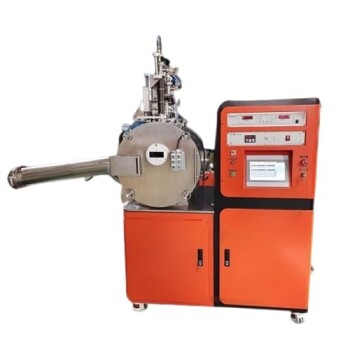
A non-consumable tungsten electrode is utilized primarily to guarantee absolute alloy purity while generating the intense heat required for refractory metals. In the preparation of complex alloys like Ti-Cr-Al-V, the electrode generates a controlled electric arc to melt the materials but remains physically intact. This ensures that no electrode material enters the melt pool, preserving the precise chemical composition of your alloy.
The core value of the tungsten electrode is its ability to deliver the energy required to melt high-melting-point components without becoming a variable in the chemical reaction itself.
Ensuring Chemical Precision and Purity
The primary challenge in creating multi-component alloys is maintaining the exact stoichiometric ratio of the constituent elements.
Preventing Material Contamination
The term non-consumable is the critical operational factor here. Unlike consumable electrodes used in other processes, the tungsten rod is not designed to melt or deposit material.
Because the electrode does not participate in the reaction, it eliminates the risk of introducing foreign tungsten inclusions into the Ti-Cr-Al-V melt pool.
Preserving Compositional Integrity
High-quality alloys require strict adherence to an initial chemical formula.
By ensuring the electrode remains separate from the melt, the furnace guarantees that the final alloy composition is determined solely by the raw materials you loaded, not by electrode degradation.
Achieving High-Temperature Stability
To melt elements like Titanium and Vanadium, the system requires an energy source capable of sustaining extreme thermal loads.
The Thermal Advantage of Tungsten
Tungsten is selected for this application because of its exceptionally high physical limits.
With a melting point of approximately 3422°C, tungsten can sustain a high-intensity arc without melting itself. This allows for minimal self-loss even when operating at the temperatures necessary to fuse refractory metals.
Ensuring Homogeneity
Multi-component alloys often contain elements with vastly different melting points.
The tungsten electrode facilitates extremely high local temperatures. This ensures that even the most heat-resistant components in your mix are fully melted and homogenized, rather than remaining as partially melted inclusions.
Understanding the Operational Trade-offs
While tungsten electrodes are superior for purity, the process requires strict environmental controls to function correctly.
The Critical Role of Shielding Gas
The "non-consumable" nature of the electrode is heavily dependent on a protective atmosphere.
The process must occur under high-purity argon protection. Without this inert gas shield, the tungsten would oxidize at high temperatures, leading to rapid electrode degradation and potential contamination of the melt.
Operational Limits
While tungsten is robust, it is not indestructible.
Improper arc control or insufficient cooling can still lead to minor erosion. Operators must monitor arc stability to ensure the electrode maintains its integrity throughout the melting cycle.
Making the Right Choice for Your Project
When configuring a vacuum arc furnace for alloy preparation, consider your specific material goals.
- If your primary focus is Compositional Accuracy: Rely on the tungsten electrode to isolate the melt from external contaminants, ensuring the final chemistry matches your initial calculations.
- If your primary focus is Melting Refractory Metals: Leverage the high melting point of tungsten to generate the extreme local heat needed to fully fuse elements like Vanadium or Titanium.
The tungsten electrode serves as a stable, high-thermal-capacity tool that delivers the energy needed for fusion while rigorously protecting the chemical integrity of your material.
Summary Table:
| Feature | Advantage for Ti-Cr-Al-V Preparation |
|---|---|
| High Melting Point (3422°C) | Sustains intense arcs required to melt refractory metals like Titanium and Vanadium. |
| Non-Consumable Nature | Prevents electrode material from entering the melt, ensuring absolute alloy purity. |
| Chemical Stability | Maintains exact stoichiometric ratios by eliminating foreign inclusions. |
| Thermal Efficiency | Provides high local temperatures to ensure full homogenization of all components. |
| Inert Gas Protection | Prevents tungsten oxidation, extending tool life and preserving melt quality. |
Precision Melting Solutions for Advanced Metallurgy
Elevate your material research with KINTEK, your premier partner for high-performance laboratory equipment. Whether you are developing complex multi-component alloys or processing refractory metals, our specialized vacuum arc furnaces and high-temperature induction melting systems are designed to meet the most rigorous purity standards.
From high-temperature high-pressure reactors to precision crushing and milling systems, KINTEK provides a comprehensive range of solutions for target customers in aerospace, dental, and battery research. Our portfolio includes:
- Advanced Furnaces: Muffle, tube, rotary, and CVD/PECVD systems.
- Material Processing: Hydraulic presses, isostatic presses, and high-purity consumables like PTFE and ceramics.
- Thermal Management: Cold traps, freeze dryers, and ULT freezers.
Ready to achieve superior compositional integrity in your next project? Contact our technical experts today to find the perfect equipment configuration for your laboratory.
References
- O.M. Velikodnyi, O.C. Tortika. MICROSTRUCTURE AND MECHANICAL PROPERTIES OF MULTICOMPONENT TI61CR10AL7V22 ALLOY. DOI: 10.46813/2024-150-070
This article is also based on technical information from Kintek Solution Knowledge Base .
Related Products
- Vacuum Arc Induction Melting Furnace
- Non Consumable Vacuum Arc Induction Melting Furnace
- Vacuum Induction Melting Spinning System Arc Melting Furnace
- Vacuum Hot Press Furnace Heated Vacuum Press Machine Tube Furnace
- Vacuum Sealed Continuous Working Rotary Tube Furnace Rotating Tube Furnace
People Also Ask
- How do vacuum induction or arc melting furnaces facilitate the synthesis of U-Al-C MAX phases? Precision Heat & Purity
- What core role does a Vacuum Induction Melting furnace play in nickel-free steel production? Achieve High-Purity Alloys
- What is the function of a vacuum arc melting furnace? Master Homogeneity for Amorphous Alloy Ribbons
- What is the function of a vacuum arc melting furnace? Prepare High-Purity Alx(CrFeNi)1-x High-Entropy Alloys
- What is the function of vacuum arc melting equipment? Creating High-Purity Ferrochrome (CrFe) Alloys