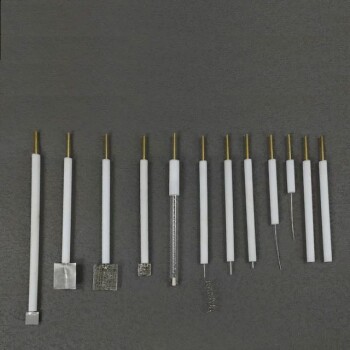
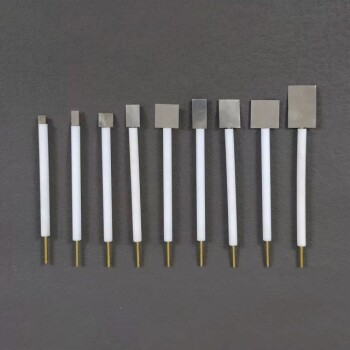
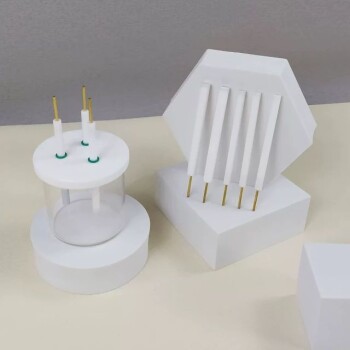
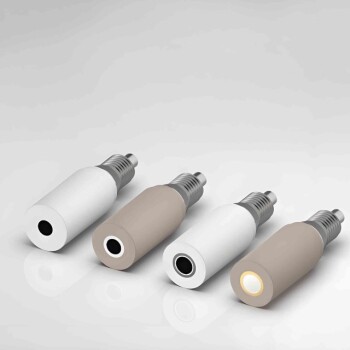
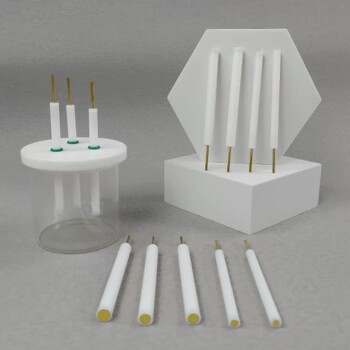
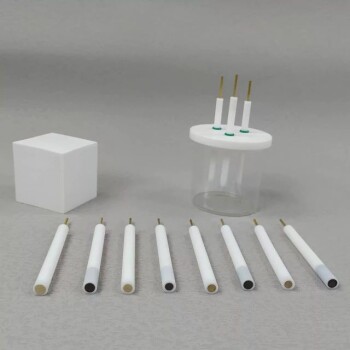
A platinum (Pt) counter electrode is fundamentally required due to its exceptional chemical inertness and high electrical conductivity. In the analysis of 17-4 PH stainless steel, particularly within aggressive acidic chloride environments, the Pt electrode acts as a stable channel to complete the electrical circuit without chemically reacting with the solution or the sample.
Core Takeaway The counter electrode’s sole purpose is to facilitate current flow without introducing variables into the experiment. Platinum is used because it remains passive in harsh electrolytes, ensuring that the measured corrosion current density is a true reflection of the 17-4 PH stainless steel's behavior, undistorted by external chemical byproducts.
The Critical Role of Chemical Inertness
Preventing Experimental Contamination
The primary function of a counter electrode (also known as an auxiliary electrode) is to complete the current loop.
However, it is vital that this electrode does not participate in the reaction itself.
Because platinum is chemically inert, it does not dissolve or release ions into the electrolyte, preserving the purity of the chemical environment.
Stability in Aggressive Media
Testing 17-4 PH stainless steel often involves acidic chloride media to simulate corrosive environments.
Many conductive materials would corrode or degrade under these specific conditions.
Platinum withstands this aggressive chemistry, maintaining a stable surface throughout the duration of the test.
Electrical Conductivity and Data Integrity
Ensuring Uniform Current Distribution
For accurate analysis, the current must flow evenly across the surface of the 17-4 PH stainless steel (the working electrode).
The primary reference indicates that the platinum counter electrode facilitates this uniform distribution.
This uniformity is a prerequisite for calculating valid corrosion current density data.
Providing a Stable Current Channel
The counter electrode must allow electrons to flow freely to support the reactions occurring at the working electrode.
Platinum’s excellent conductivity ensures a stable current channel that does not impede the circuit.
This stability prevents fluctuations that could obscure the polarization behavior of the material being tested.
Avoiding Electrolytic Polarization
In electrochemical testing, you want to measure the polarization of the sample, not the counter electrode.
If a counter electrode creates its own resistance or "polarization," it creates a bottleneck in the system.
Platinum allows for the completion of the circuit without generating significant additional electrolytic polarization.
Understanding the Trade-offs
Surface Area Considerations
While platinum is ideal chemically, the geometry of the electrode matters.
To prevent the counter electrode from limiting the reaction, it should ideally have a larger surface area than the working electrode.
This is why platinum mesh is often preferred over simple wire, as it provides high surface area to facilitate unrestricted current flow.
Cost vs. Performance
The obvious trade-off with platinum is the high material cost.
However, in the context of 17-4 PH analysis, the cost is justified by the elimination of experimental error.
Using a cheaper, reactive material could invalidate the entire dataset, leading to false conclusions about the steel's corrosion resistance.
Making the Right Choice for Your Goal
When configuring your electrochemical cell for 17-4 PH stainless steel, apply these principles:
- If your primary focus is Data Accuracy: Ensure your platinum counter electrode has a larger surface area (e.g., using a mesh) than your steel sample to prevent current bottlenecks.
- If your primary focus is Process Validation: Verify that the platinum is high-purity to ensure no trace contaminants alter the acidic chloride media during long-duration tests.
By utilizing a platinum counter electrode, you isolate the variable of interest—the 17-4 PH steel—guaranteeing that your corrosion data is both reproducible and scientifically valid.
Summary Table:
| Feature | Platinum (Pt) Benefit | Impact on Electrochemical Testing |
|---|---|---|
| Chemical Inertness | Does not dissolve in acidic chlorides | Prevents electrolyte contamination and sample distortion |
| Electrical Conductivity | Superior electron flow | Ensures a stable current channel and uniform distribution |
| Surface Stability | Remains passive in harsh media | Eliminates unwanted electrolytic polarization |
| Electrode Geometry | Available as high-surface mesh | Prevents current bottlenecks at the working electrode |
Elevate Your Electrochemical Research with KINTEK
Precision in material analysis starts with high-quality components. KINTEK specializes in advanced laboratory equipment and consumables designed for the most demanding research environments. Whether you are analyzing 17-4 PH stainless steel or developing next-generation energy solutions, our high-purity platinum counter electrodes and electrolytic cells ensure your data remains untainted and reproducible.
From electrolytic cells and electrodes to high-temperature furnaces, hydraulic presses, and battery research tools, we provide the comprehensive solutions your lab needs to achieve excellence. Don't let experimental variables compromise your results—leverage our expertise and premium consumables today.
Contact KINTEK Today to Optimize Your Lab Setup
References
- Michella Alnajjar, Mark T. F. Telling. Influence of microstructure and manganese sulfides on corrosion resistance of selective laser melted 17-4 PH stainless steel in acidic chloride medium. DOI: 10.1016/j.corsci.2020.108585
This article is also based on technical information from Kintek Solution Knowledge Base .
Related Products
- Platinum Auxiliary Electrode for Laboratory Use
- Platinum Sheet Electrode for Laboratory and Industrial Applications
- Rotating Platinum Disk Electrode for Electrochemical Applications
- Platinum Sheet Electrode for Battery Lab Applications
- RRDE rotating disk (ring disk) electrode / compatible with PINE, Japanese ALS, Swiss Metrohm glassy carbon platinum
People Also Ask
- What is the function of a platinum electrode as an auxiliary electrode? Ensure Precise Nickel Coating Corrosion Testing
- Why is platinum typically selected as the auxiliary electrode for electrochemical testing of oxazoline inhibitors?
- What does the auxiliary electrode do? Ensuring Accurate Electrochemical Measurements
- What are the roles of Pt counter and reference electrodes in nitrided steel testing? Optimize Your Electrochemical Data
- What are the advantages of using a platinum counter electrode? Ensure Purity in Photocatalytic Coating Deposition