Platinum (Pt) crucibles are the preferred choice for thermogravimetric analysis (TGA) of LCLA composite materials up to 900°C due to their exceptional thermal conductivity and chemical inertness. This material selection is critical for preventing reactions between the container and reactive lithium battery oxides, ensuring that the data reflects only the sample's behavior rather than artifacts from the crucible.
In high-temperature analysis of reactive battery materials, data purity is the priority. Platinum crucibles provide the necessary stability to prevent container-sample interactions, ensuring that recorded mass changes are exclusively attributable to the material's decomposition or phase transitions.
The Critical Role of Chemical Inertness
Stability in Oxidative Environments
LCLA materials are often analyzed in oxidative environments where lesser materials might degrade or react. Platinum possesses outstanding chemical stability under these specific conditions.
This resistance is vital when analyzing lithium battery oxide materials. It prevents the crucible itself from oxidizing or chemically interacting with the sample during the heating process.
Eliminating Data Contamination
The primary goal of TGA is to measure mass changes accurately. If the crucible reacts with the sample, the resulting data becomes a mix of sample decomposition and container corrosion.
By using platinum, you ensure that any recorded mass change is exclusively due to the sample's own processes, such as oxygen evolution or phase transitions. This isolation is the only way to validate the specific properties of the composite material.
Thermal Performance at High Temperatures
Withstanding Extreme Heat
TGA protocols for LCLA composites often require ramping temperatures up to 900°C. Platinum offers superior high-temperature resistance, allowing it to maintain structural integrity and chemical neutrality throughout this rigorous thermal cycle.
Ensuring Uniform Heating
Beyond simply surviving the heat, the crucible must transfer it efficiently. Platinum has excellent thermal conductivity.
This property ensures that heat is distributed uniformly across the sample. Uniform heating is essential for obtaining sharp, reproducible TGA curves, as it prevents thermal gradients that could lead to uneven decomposition rates within the material.
Common Pitfalls to Avoid
The Risk of Crucible-Sample Reactions
The most significant error in high-temperature TGA is selecting a crucible that is chemically compatible with the temperature but not the sample.
Using a crucible material with lower stability than platinum can lead to reactions with lithium oxides. This introduces "ghost" mass changes—signals that appear to be sample activity but are actually the vessel deteriorating. This completely invalidates the analysis of oxygen evolution or thermal stability.
Making the Right Choice for Your Analysis
Select your equipment based on the specific chemical nature of your sample and the temperature range required.
- If your primary focus is Data Integrity: Prioritize platinum crucibles to eliminate the risk of chemical interference with lithium oxides in oxidative environments.
- If your primary focus is Thermal Precision: Rely on platinum to ensure the uniform heat distribution necessary for accurate correlation between temperature and mass loss.
Using the correct crucible material is not just a logistical detail; it is a fundamental requirement for accurate materials characterization.
Summary Table:
| Feature | Platinum (Pt) Crucible Benefit | Impact on TGA Results |
|---|---|---|
| Chemical Inertness | Resists reaction with lithium battery oxides | Prevents data artifacts and sample contamination |
| Thermal Conductivity | Rapid and uniform heat distribution | Ensures sharp, reproducible TGA curves |
| Oxidation Resistance | Remains stable in oxidative environments | Maintains structural integrity up to 900°C |
| Mass Accuracy | Zero interaction with sample components | Validates precise oxygen evolution measurements |
Elevate Your Materials Characterization with KINTEK
Precision in thermogravimetric analysis begins with the right vessel. KINTEK specializes in high-performance laboratory equipment and consumables, providing the essential tools researchers need for accurate battery material analysis. From platinum and ceramic crucibles to advanced high-temperature furnaces and lithium battery research tools, we ensure your data remains pure and reproducible.
Whether you are analyzing LCLA composites or developing next-generation energy storage, our comprehensive range—including muffle furnaces, vacuum systems, and electrolytic cells—is designed to meet the most rigorous scientific standards.
Ready to optimize your lab's thermal analysis? Contact us today to discover how KINTEK’s high-quality consumables and equipment can enhance your research outcomes.
Related Products
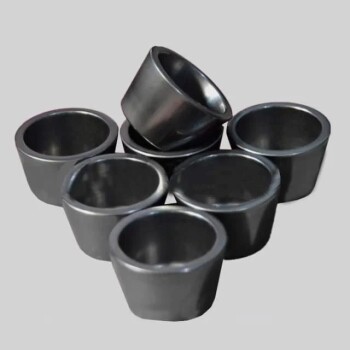
- High Purity Pure Graphite Crucible for Evaporation
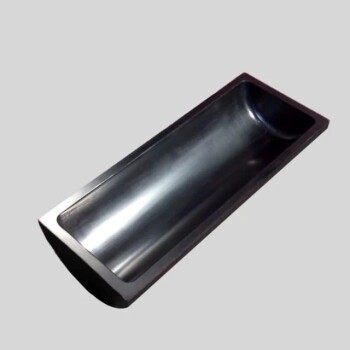
- High Purity Pure Graphite Crucible for Electron Beam Evaporation
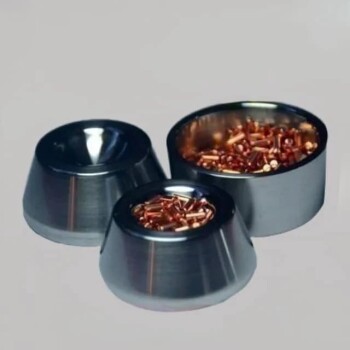
- Electron Beam Evaporation Coating Gold Plating Tungsten Molybdenum Crucible for Evaporation
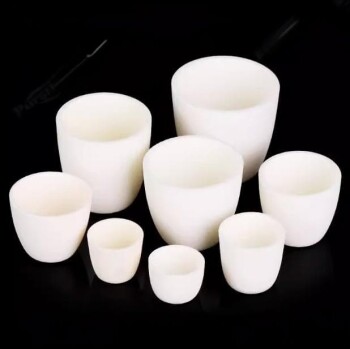
- Engineering Advanced Fine Ceramics Alumina Crucibles (Al2O3) for Thermal Analysis TGA DTA
- Engineering Advanced Fine Ceramics Alumina Al2O3 Crucible With Lid Cylindrical Laboratory Crucible
People Also Ask
- Why are high-purity graphite crucibles preferred for sulfide solid electrolytes? Achieve Superior Material Purity
- Why is a high-purity graphite crucible required for Chromel-TaC composites? Ensure Peak Purity at 1400°C
- What role do high-purity graphite crucibles play in molten salt corrosion research? Ensure Reactor-Grade Precision
- Why are high-purity graphite crucibles used for magnesium distillation? Ensure 3N8 Purity & Thermal Stability
- Why is a high-purity graphite crucible ideal for nitrogen-doped graphene at 1500 °C? Maximize Purity and Stability