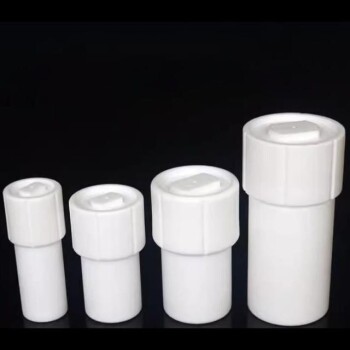
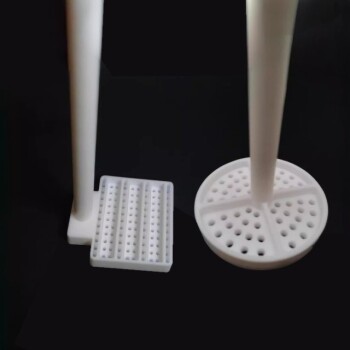
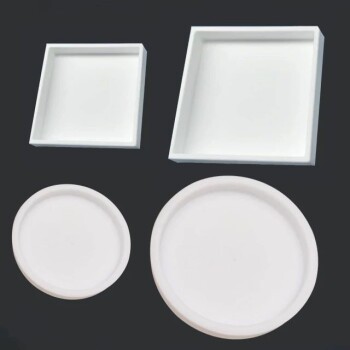
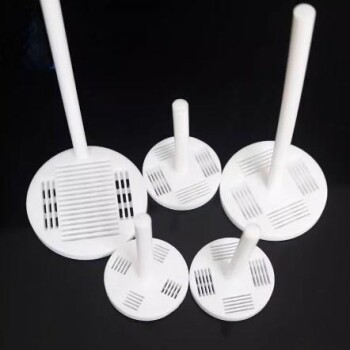
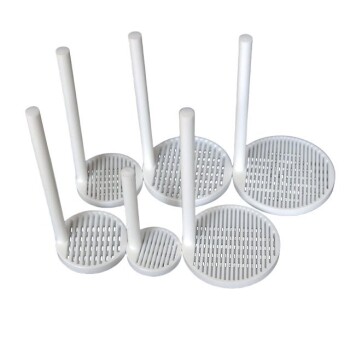
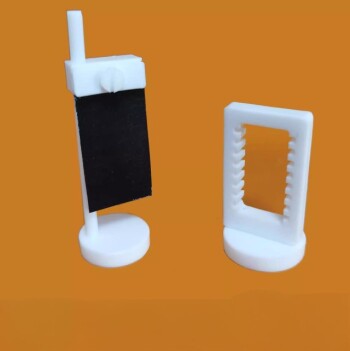
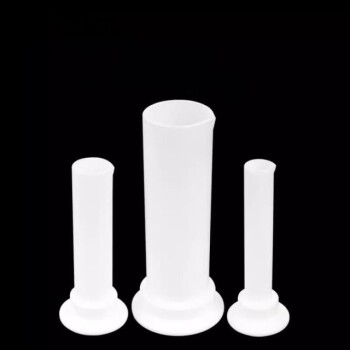
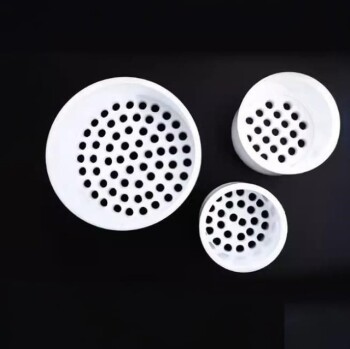
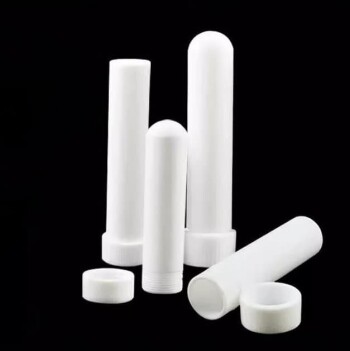
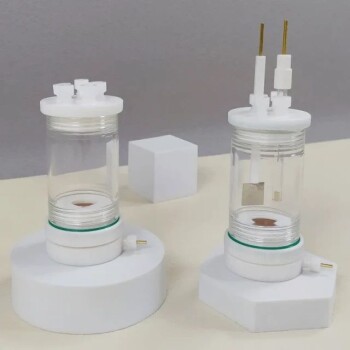
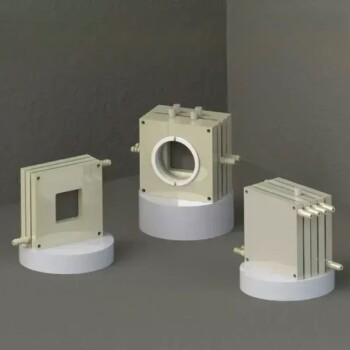
The critical necessity of a PTFE reaction tank for zirconium anodization arises from the aggressive nature of the electrolytes required for the process. Specifically, systems utilizing fluoride ions, such as ammonium fluoride (NH4F), will rapidly corrode standard laboratory glass and many metals. Using a tank made of Polytetrafluoroethylene (PTFE) provides the chemical inertness needed to contain these corrosive agents safely.
The use of PTFE is not merely a safety precaution; it is a fundamental requirement for process purity. It prevents the electrolyte from eroding the vessel and introducing foreign ions that would ruin the self-assembled growth of zirconium dioxide nanopores.
The Chemistry of Corrosion Resistance
Resisting Fluoride Attack
The electrochemical anodic oxidation of zirconium relies on electrolytes containing fluoride ions (e.g., NH4F).
While effective for anodization, these ions are notoriously corrosive to silicate-based materials. Standard borosilicate glassware will be etched and degraded by these solutions, leading to vessel failure.
The Inert Nature of PTFE
PTFE is distinct because of its exceptional chemical stability.
It acts as a robust barrier, remaining completely unreactive when exposed to ammonium fluoride. This ensures the structural integrity of the reaction tank and any associated seals throughout the experiment.
Maintaining Experimental Integrity
Preventing Impurity Introduction
The primary risk of using non-inert materials is not just leaks, but contamination.
If the reaction tank reacts with the electrolyte, it leaches dissolved material back into the solution. These impurity ions alter the chemical composition of the bath, introducing unpredictable variables into the electrochemical process.
Enabling Self-Assembly
Creating high-quality zirconium dioxide (ZrO2) nanopore arrays requires a highly controlled environment.
This process involves a precise mechanism of self-assembled growth. A clean, impurity-free environment—secured by the use of a PTFE tank—is critical to achieving uniform pore structure and avoiding defects in the final oxide layer.
Understanding the Trade-offs
Initial Cost vs. Long-Term Reliability
PTFE reaction vessels are generally more expensive than standard glass or polyethylene alternatives.
However, using cheaper materials introduces a high risk of chemical leaching. This leads to wasted samples and inconsistent data, making the upfront cost of PTFE a necessary investment for reproducibility.
Mechanical Considerations
While chemically superior, PTFE is softer than glass and can deform under high thermal stress or physical pressure.
Designers must ensure that the tank walls are sufficiently thick to maintain rigidity. Furthermore, seals must be inspected regularly to ensure they maintain a tight fit, as PTFE can "creep" or compress over time.
Making the Right Choice for Your Goal
To ensure the success of your zirconium anodization process, align your equipment choice with your technical objectives:
- If your primary focus is Nanopore Quality: Use a PTFE tank to eliminate contamination sources, ensuring the high purity required for defect-free self-assembly.
- If your primary focus is Safety and Longevity: Rely on PTFE to contain aggressive ammonium fluoride solutions without the risk of glass etching or catastrophic vessel degradation.
Using the correct materials foundation is the first step toward achieving precise, reproducible electrochemical results.
Summary Table:
| Feature | Standard Borosilicate Glass | PTFE (Polytetrafluoroethylene) |
|---|---|---|
| Fluoride Resistance | Poor (subject to etching) | Excellent (chemically inert) |
| Contamination Risk | High (leaches silicate ions) | Negligible (maintains purity) |
| Durability in NH4F | Low (structural failure) | High (long-term stability) |
| Application Suitability | General laboratory use | Aggressive electrochemical reactions |
| Nanopore Integrity | Compromised by impurities | Optimized for self-assembly |
Elevate Your Electrochemical Research with KINTEK Precision
Don't let vessel contamination compromise your results. KINTEK specializes in high-performance laboratory equipment, providing the chemical resistance and purity required for advanced material science. Whether you need PTFE products and crucibles for aggressive anodization or specialized electrolytic cells and electrodes, our solutions are engineered for excellence.
From high-temperature furnaces and vacuum systems to essential consumables, KINTEK supports every stage of your lab's workflow. Contact us today to secure the right equipment for your zirconium anodization project!
References
- Ewa Wierzbicka, Grzegorz D. Sulka. Photocatalytic Decolorization of Methyl Red on Nanoporous Anodic ZrO2 of Different Crystal Structures. DOI: 10.3390/cryst11020215
This article is also based on technical information from Kintek Solution Knowledge Base .
Related Products
- Custom PTFE Teflon Parts Manufacturer for Microwave Digestion Tank
- Custom PTFE Teflon Parts Manufacturer Corrosion Resistant Cleaning Rack Flower Basket
- Custom PTFE Teflon Parts Manufacturer for PTFE Containers
- Custom Machined and Molded PTFE Teflon Parts Manufacturer for Laboratory ITO FTO Conductive Glass Cleaning Flower Basket
- Custom PTFE Teflon Parts Manufacturer for Cleaning Racks
People Also Ask
- Why are PTFE containers required for PCT leaching tests? Ensure Chemical Inertness and Analytical Precision
- Why use high-quality PTFE containers for CO2 reduction electrolytes? Eliminate silicon contamination and ensure data.
- Why is PTFE Mandatory for Hydrofluoric Acid (HF) Handling? Ensure Safety and Data Integrity in Corrosion Testing
- Why is a PTFE container required for acid leaching of silicon nanosheets? Ensure High Purity and Safety
- Why are polytetrafluoroethylene (PTFE) containers essential for assessing the corrosion resistance of glassified waste?