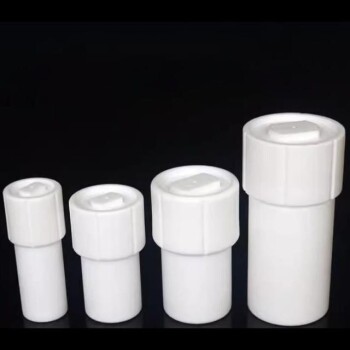
The copolymerization of carbon dioxide (CO2) and propylene oxide (PO) dictates strict engineering requirements that only specific hardware can meet. A stainless steel high-pressure reactor is considered core equipment because it safely withstands operating pressures up to 4.3 MPa while simultaneously managing the intense heat generated during the reaction.
The reactor acts as both a containment vessel and a quality control instrument. By integrating high-pressure resistance with precise thermal regulation, it ensures the safe synthesis of polymers with specific molecular weights and carbonate structures.
Engineering for High-Pressure Safety
Withstanding Critical Pressure Loads
The synthesis of CO2 and PO requires an environment capable of maintaining significant pressure to force the gases to react.
The stainless steel construction provides the necessary tensile strength to operate safely at pressures reaching up to 4.3 MPa.
Structural Integrity Under Stress
Standard glass or low-grade metal reactors cannot reliably contain this level of pressure without risking catastrophic failure.
Stainless steel ensures the vessel remains inert and physically stable, preventing leaks or ruptures during the polymerization cycle.
Achieving Precision Through Integrated Control
Managing Exothermic Reactions
The copolymerization process is exothermic, meaning it releases significant heat as the chemical bonds form.
Without active management, this heat can lead to "hot spots" or runaway reactions that degrade the product.
The Role of Magnetic Stirring
To counteract heat buildup, these reactors utilize magnetic stirring systems.
This feature ensures the reaction mixture is agitated uniformly, facilitating efficient heat dissipation throughout the vessel.
Real-Time Process Monitoring
Integrated temperature sensors provide immediate feedback on the internal conditions of the reactor.
This allows for real-time regulation, ensuring the temperature remains within the optimal window for the catalyst and reactants.
Determining Final Product Quality
Controlling Molecular Weight Distribution
The ultimate goal of this equipment is not just safety, but the precise tailoring of the polymer's properties.
By strictly controlling heat and pressure, the reactor allows chemists to dictate the molecular weight distribution of the final product.
Regulating Carbonate Content
The specific ratio of CO2 incorporated into the polymer chain defines its material characteristics.
Efficient heat dissipation and mixing enable precise control over the content of carbonate units, ensuring the material meets exact performance specifications.
The Risks of Inadequate Equipment
Thermal Runaway
If a reactor lacks efficient magnetic stirring or temperature sensing, heat accumulation becomes unpredictable.
This can result in uneven polymerization or dangerous pressure spikes that compromise laboratory safety.
Inconsistent Material Properties
Using equipment unable to maintain stable high pressure results in variable product quality.
Fluctuations in pressure often lead to broad molecular weight distributions, rendering the final polymer unsuitable for high-performance applications.
Making the Right Choice for Your Synthesis
If your primary focus is Safety: Ensure the reactor is rated for pressures exceeding your target maximum (at least 4.3 MPa) and constructed from high-grade stainless steel to prevent fatigue.
If your primary focus is Product Consistency: Prioritize units with advanced magnetic stirring and integrated thermal sensors to guarantee uniform heat dissipation and precise molecular structure.
The right reactor transforms a volatile chemical reaction into a controlled, reproducible, and safe manufacturing process.
Summary Table:
| Feature | Engineering Requirement | Impact on Copolymerization |
|---|---|---|
| Pressure Resistance | Up to 4.3 MPa | Safely contains volatile CO2/PO gases for reaction |
| Material Strength | High-grade Stainless Steel | Prevents structural failure and ensures chemical inertness |
| Heat Management | Magnetic Stirring System | Dissipates exothermic heat to prevent runaway reactions |
| Process Control | Integrated Thermal Sensors | Regulates molecular weight and carbonate content |
| System Safety | Pressure-Rated Construction | Minimizes risk of leaks and catastrophic vessel failure |
Elevate Your Polymer Research with KINTEK Precision
High-performance copolymerization requires more than just a vessel; it demands an integrated solution for safety and structural control. KINTEK specializes in advanced high-temperature high-pressure reactors and autoclaves designed specifically to handle the rigorous demands of CO2 and propylene oxide synthesis.
Our reactors provide the thermal stability and pressure integrity necessary to achieve narrow molecular weight distributions and precise carbonate content. Whether you are scaling up battery research or developing novel materials, KINTEK’s comprehensive range of laboratory equipment—including crushing systems, hydraulic presses, and cooling solutions—is engineered to meet the highest scientific standards.
Ready to optimize your synthesis process? Contact KINTEK today to discuss your custom reactor specifications and discover how our expertise can drive your laboratory's success.
References
- Kirill Alferov, Yuezhong Meng. Co-Ni Cyanide Bi-Metal Catalysts: Copolymerization of Carbon Dioxide with Propylene Oxide and Chain Transfer Agents. DOI: 10.3390/catal9080632
This article is also based on technical information from Kintek Solution Knowledge Base .
Related Products
- Stainless High Pressure Autoclave Reactor Laboratory Pressure Reactor
- Mini SS High Pressure Autoclave Reactor for Laboratory Use
- Customizable High Pressure Reactors for Advanced Scientific and Industrial Applications
- Customizable Laboratory High Temperature High Pressure Reactors for Diverse Scientific Applications
- High Pressure Laboratory Autoclave Reactor for Hydrothermal Synthesis
People Also Ask
- Why is a laboratory high-pressure reactor used in the hydrothermal synthesis of hydroxyapatite catalysts?
- Why is a laboratory high-pressure reactor necessary for synthesizing fly ash-based zeolite? Achieve Pure Crystallization
- What role does a laboratory high-pressure reactor play in the leaching process of spent cathode materials? Optimize Recovery
- What conditions do laboratory high-pressure reactors provide for HTC? Optimize Your Biochar Production Processes
- How are high-pressure reactors used to prepare metaphosphate electrocatalysts? Master In-Situ Precursor Growth