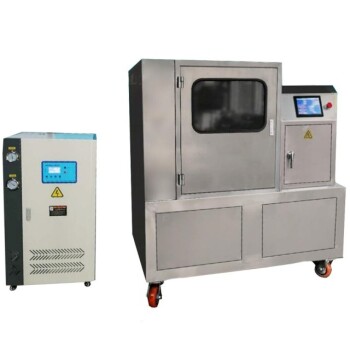
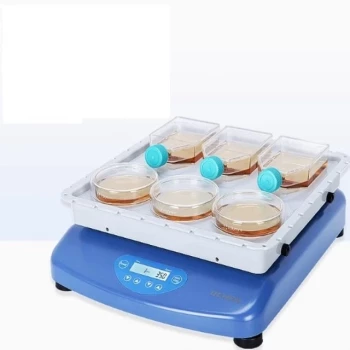
A stirring device with temperature control is essential for the alkali dissolution of aluminum ash because the process is chemically sensitive to both heat and kinetic energy. This equipment ensures a stable reaction environment, typically maintained at 50°C, while providing the mechanical force necessary to facilitate thorough contact between the solid ash and the liquid sodium hydroxide.
Core Takeaway: By synchronizing precise thermal management with mechanical agitation, you maximize the conversion of aluminum into sodium aluminate solution. This specific control prevents the formation of impurities that occur during inconsistent mixing or temperature fluctuations.
The Critical Role of Thermal Stability
The alkali dissolution reaction is not a passive process; it requires a specific thermal window to proceed efficiently.
Maintaining Reaction Equilibrium
The reaction is highly sensitive to temperature changes. The stirring device utilizes temperature control functions to maintain a consistent environment, typically targeting 50°C.
Preventing Unwanted Side Reactions
Stable temperature control is not just about heating; it is about consistency. Deviations from the optimal temperature range can reduce the efficiency of the dissolution or encourage the formation of chemical byproducts rather than the desired sodium aluminate.
The Necessity of Mechanical Agitation
Temperature alone is insufficient for this heterogeneous reaction (solid ash interacting with liquid solution).
Ensuring Thorough Contact
Aluminum ash must be fully dispersed within the sodium hydroxide solution to react completely. The device uses specific rotational speeds to ensure thorough contact between the reactants.
Optimizing Reaction Kinetics
Mechanical stirring adds kinetic energy to the system. This movement prevents the solid ash from settling at the bottom of the reactor, ensuring that fresh solution is constantly exposed to the surface of the aluminum particles.
Maximizing Yield and Purity
The ultimate goal of using this specialized equipment is to optimize the quality and quantity of the output.
High Conversion Rates
By maintaining the 50°C baseline and ensuring constant mixing, the system maximizes the conversion of raw aluminum elements into a sodium aluminate solution.
Minimizing Impurity Introduction
Inconsistent reaction zones (hot spots or stagnant areas) are primary causes of impurities. The controlled stirring device eliminates these variances, minimizing the introduction of contaminants into the final solution.
Common Pitfalls to Avoid
Understanding the risks of operating without this specific equipment is crucial for process reliability.
The Risk of Thermal Gradients
Without active temperature control, the reaction vessel may develop thermal gradients. This can lead to incomplete reactions in cooler areas or aggressive, unwanted leaching of non-aluminum elements in hotter zones.
Incomplete Dissolution
Relying on passive soaking or insufficient stirring speeds often results in "dead zones." In these scenarios, the sodium hydroxide becomes saturated locally around the ash, halting the reaction before all aluminum is dissolved.
Optimizing Your Dissolution Process
To achieve the best results in aluminum ash recovery, align your equipment settings with your specific production goals.
- If your primary focus is maximizing yield: Ensure your rotational speed is high enough to suspend all solids, preventing any ash from settling out of the solution.
- If your primary focus is solution purity: Prioritize strict adherence to the 50°C setpoint to inhibit the dissolution of temperature-sensitive impurities found in the ash.
Precision in both temperature and movement is the key to transforming waste ash into valuable chemical resources.
Summary Table:
| Feature | Role in Alkali Dissolution | Benefit for Aluminum Ash Recovery |
|---|---|---|
| Temperature Control | Maintains stable 50°C environment | Prevents side reactions and ensures reaction equilibrium |
| Mechanical Agitation | Ensures thorough solid-liquid contact | Maximizes kinetic energy and prevents ash settling |
| Rotational Speed | Disperses ash in NaOH solution | Eliminates "dead zones" for complete dissolution |
| Thermal Stability | Eliminates internal thermal gradients | Minimizes impurity introduction and ensures solution purity |
Maximize Your Aluminum Ash Recovery Efficiency with KINTEK
Precision is non-negotiable when transforming industrial waste into valuable resources. KINTEK specializes in advanced laboratory equipment designed to handle the most demanding chemical processes. Whether you need high-performance high-temperature high-pressure reactors, specialized crushing and milling systems, or precise cooling solutions, our equipment ensures your dissolution processes achieve maximum conversion rates and peak purity.
Ready to eliminate impurities and optimize your lab's output? Contact our technical experts today to find the perfect stirring and thermal management solution for your specific research or production goals.
References
- Wen‐chang Lin, Yi‐Ming Kuo. Recycling of aluminum dross for producing calcinated alumina by microwave plasma. DOI: 10.1186/s42834-022-00160-9
This article is also based on technical information from Kintek Solution Knowledge Base .
Related Products
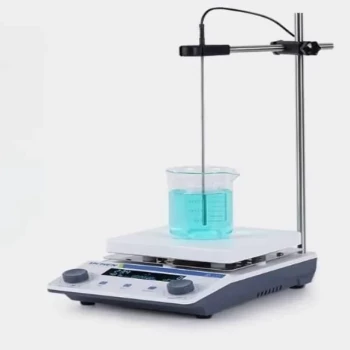
- Laboratory Small Constant Temperature Heated Magnetic Stirrer Heater and Stirrer
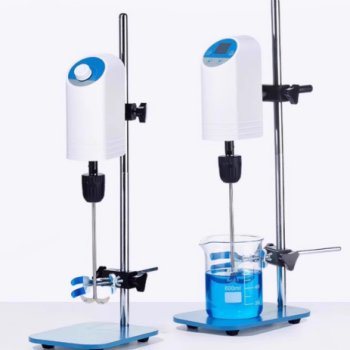
- High Performance Laboratory Stirrers for Diverse Applications
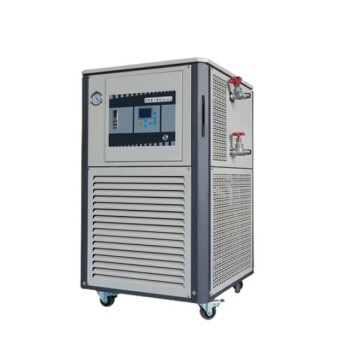
- 100L Heating Chilling Circulator Cooling Water Bath Circulator for High and Low Temperature Constant Temperature Reaction
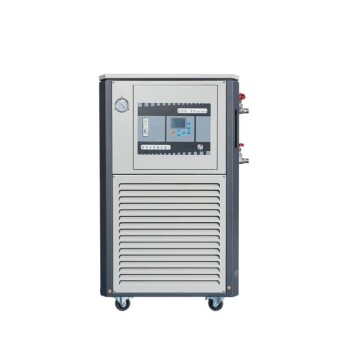
- 10L Heating Chilling Circulator Cooling Water Bath Circulator for High and Low Temperature Constant Temperature Reaction
- 5L Heating Chilling Circulator Cooling Water Bath Circulator for High and Low Temperature Constant Temperature Reaction
People Also Ask
- What role does a magnetic stirrer with heating play in ZnO nanoparticle synthesis? Precision Control for Quality Results
- What role does a constant temperature heating magnetic stirrer play in MFC-HAp synthesis? Achieve Material Homogeneity
- What is the function of a laboratory magnetic stirrer in Ni–Cr–P electrodeposition? Optimize Ion Transport & Coating
- Why is a laboratory magnetic stirrer required for benzoic acid esters? Boost Reaction Speed & Yield with High RPM
- What role does a laboratory magnetic stirrer play in TiO2 and TiO2-Ag sol preparation? Master Chemical Kinetics