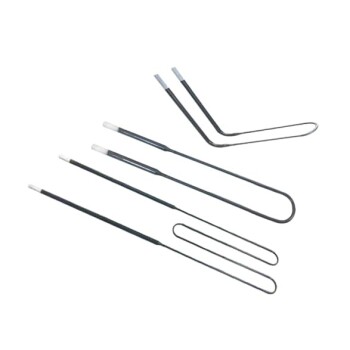
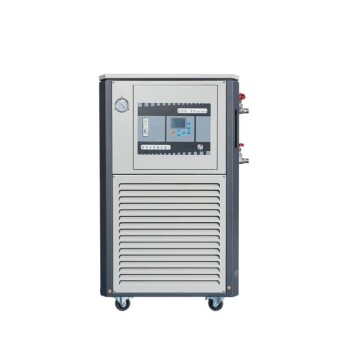
Precision temperature control is the cornerstone of reliable irradiation data. In experiments on Ultra-Fine Grained (UFG) 304L stainless steel, a system utilizing high-precision heaters and K-type thermocouples is essential to maintain a stable environment, specifically limiting fluctuations to within ±10°C. Without this tight feedback loop, temperature drift fundamentally alters how radiation damage accumulates, rendering the resulting data on swelling and vacancy aggregation invalid.
Radiation damage is inherently temperature-sensitive. By maintaining a closed-loop system that caps thermal drift, researchers ensure that observed swelling behaviors are caused by the irradiation itself, not by accidental variations in the material's thermal history.
The Physics of Radiation Damage
Sensitivity to Thermal Energy
Radiation damage is not a static event; it is a dynamic process that is highly sensitive to temperature.
Even minor deviations in thermal conditions can drastically change how defects form, migrate, and cluster within the steel's microstructure.
Vacancy Supersaturation
Irradiation creates vacancies—points where atoms are missing from the crystal lattice.
The concentration of these vacancies, known as supersaturation, is the driving force behind material swelling.
Temperature drift disrupts this saturation level. If the temperature fluctuates, the vacancy behavior changes unpredictably, introducing errors that mask the true material response.
The Role of the Control System
Closed-Loop Feedback
To combat instability, the system operates on a closed control loop.
The K-type thermocouple acts as the sensor, providing real-time thermal data to the high-precision heater.
This allows the system to constantly adjust power output to maintain a specific setpoint, such as 500°C.
Limiting Fluctuations
The primary performance metric for this system is keeping thermal fluctuations strictly within a ±10°C window.
This stability is critical for ensuring that data reflects actual vacancy aggregation.
By locking the temperature down, researchers can confirm that any observed swelling is a property of the UFG 304L stainless steel, rather than an artifact of the test environment.
Understanding the Trade-offs
Sensor Placement and Lag
While K-type thermocouples are reliable, they measure temperature at a specific point.
If the sensor is not perfectly coupled with the sample, there may be a delay between the actual sample temperature changing and the heater responding.
This lag can theoretically allow brief excursions outside the ±10°C limit if the feedback loop is not tuned aggressively enough.
Complexity vs. Reliability
High-precision systems introduce complexity.
Reliance on a specific sensor type means that any drift in the thermocouple’s calibration over time will directly corrupt the experimental data.
Regular validation of the sensor is required to ensure the "closed loop" remains accurate relative to the true temperature.
Ensuring Data Integrity in UFG 304L Studies
To maximize the value of your irradiation experiments, you must align your equipment strategy with your analytical goals.
- If your primary focus is data reliability: Prioritize the calibration of the K-type thermocouple to ensure the ±10°C limit is never breached during long-term exposure.
- If your primary focus is mechanism analysis: Recognize that swelling data is only valid if vacancy supersaturation remains constant through precise thermal regulation.
Precise thermal management transforms irradiation testing from a variable environment into a rigorous science, safeguarding the accuracy of your swelling analysis.
Summary Table:
| Component | Role in Experiment | Impact on Data Quality |
|---|---|---|
| High-Precision Heater | Constant thermal output | Prevents fluctuations beyond ±10°C |
| K-Type Thermocouple | Real-time feedback sensor | Maintains stable vacancy supersaturation levels |
| Closed-Loop Control | Automated power adjustment | Ensures observed swelling is due to irradiation, not drift |
| Temperature Stability | Environment regulation | Critical for accurate vacancy aggregation analysis |
Elevate Your Materials Research with KINTEK Precision Solutions
In the rigorous world of irradiation studies and high-temperature material science, thermal stability isn't just a feature—it's a requirement for scientific validity. KINTEK specializes in providing the high-performance laboratory equipment necessary to maintain critical experimental parameters. From advanced high-temperature furnaces (muffle, vacuum, and CVD) to specialized high-pressure reactors and thermal control systems, we empower researchers to eliminate variables and focus on results.
Whether you are analyzing vacancy aggregation in UFG 304L stainless steel or developing next-generation battery technologies, our comprehensive range of crushing systems, hydraulic presses, and cooling solutions ensures your lab is equipped for excellence.
Ready to secure the precision your research deserves? Contact KINTEK today to discuss your specific application and find the perfect equipment solution.
References
- Cheng Sun, X. Zhang. Superior radiation-resistant nanoengineered austenitic 304L stainless steel for applications in extreme radiation environments. DOI: 10.1038/srep07801
This article is also based on technical information from Kintek Solution Knowledge Base .
Related Products
- Infrared Heating Quantitative Flat Plate Press Mold
- High Temperature Constant Temperature Heating Circulator Water Bath Chiller Circulator for Reaction Bath
- Manual High Temperature Heated Hydraulic Press Machine with Heated Plates for Lab
- Laboratory Small Constant Temperature Heated Magnetic Stirrer Heater and Stirrer
- Automatic High Temperature Heated Hydraulic Press Machine with Heated Plates for Lab
People Also Ask
- Can a heat press be used as a laminator? Why It's a Risky Choice for Your Projects
- What is the difference between manual and air compressed heat press? Choose the Right Tool for Your Production Needs
- Can you use a heat press for transfers? The Definitive Tool for Professional Results
- What is the standard temperature for heat press? Master the Perfect Settings for Durable Transfers
- What is the process of hot press molding? A Guide to High-Density Material Manufacturing